Africa-Press – Eswatini. The World Bank Group (WBG) Eswatini Country Partnership Framework (CPF), covering the fiscal years 2024-2028 is set to bring hope and belief on the future prospects with the assistance the country receive from the bank.
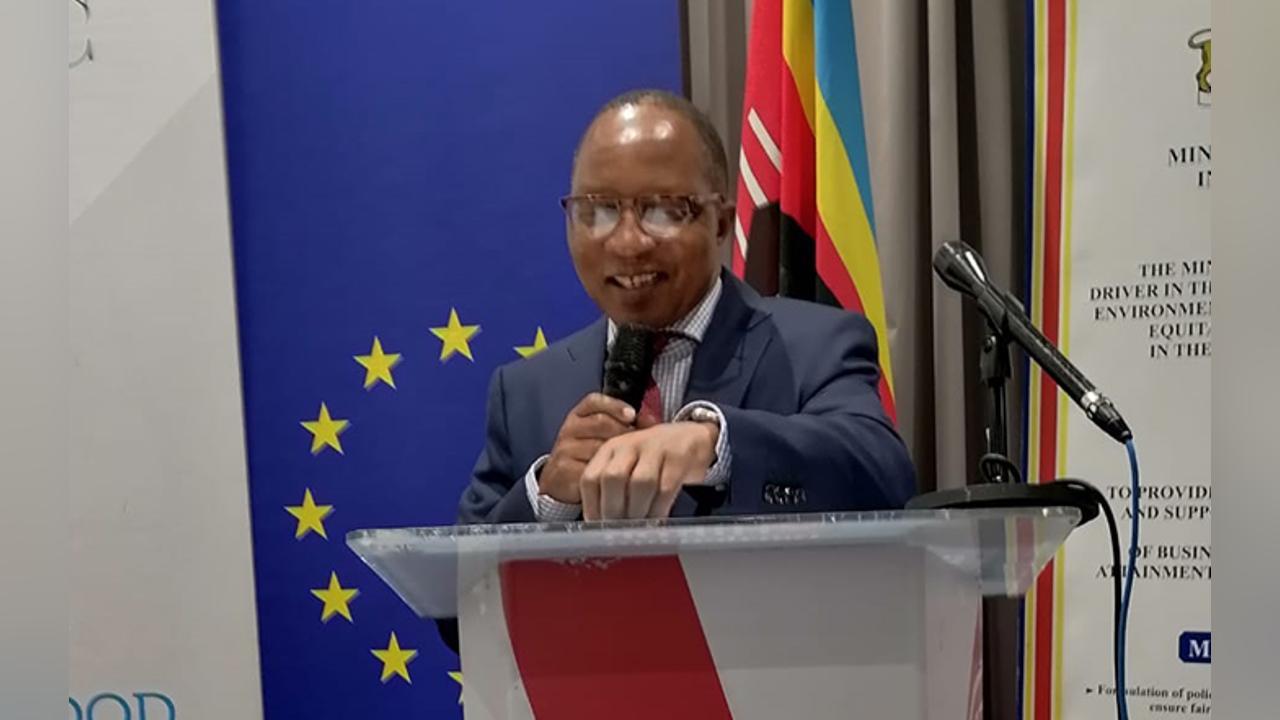
Minister of Economic Planning and development, Dr Tambo Gina was speaking during the launch of the Eswatini CPF for 2024-2028 held at the Hilton Garden Inn hotel in Mbabane, yesterday.
Gina said the World Bank Group was among the country’s trusted partners and regardless of the strenuous and unprecedented circumstances the country was faced with, the bank remained undeterred in introducing new modalities and mechanisms to finance economic development in Eswatini, including providing additional resources, to regain lost ground towards achieving the SDGs and the twin goals of eradicating extreme poverty and boosting shared prosperity.
responsibility
“Our meeting today therefore presents a unique opportunity to reaffirm our mutual commitment to achieving Agenda 2030 and the twin goals of eradicating extreme poverty and boosting shared prosperity in the Kingdom of Eswatini,” he said.
The minister stated that they all had the responsibility to ensure a better future for the children of this country and it was in solidarity that they would accomplish the ambitious goals that they had committed to.
“In difficult circumstances, we are reassured of the WBG’s commitment to the people of Eswatini through this Cooperation Framework and indeed, the WBG stands beside the people and the Government of Eswatini to help us achieve our goals,” he said.
Meanwhile Prime Minister, Cleopas Dlamini, said he was very confident in the World Bank Group Eswatini Country Partnership Framework’s ability to provide the necessary support for the country’s development goals and overcome the challenges faced by Eswatini.
“I believe that through our collaborative efforts, we can build a more prosperous and inclusive Eswatini for all Emaswati, focusing particularly on empowering women and the youth,” he said. The PM also appreciated the bank for its demonstrated commitment to the country, even during challenging times.
“I am aware that the civil unrest presented difficulties for some international partners in their engagement with the country. Despite such uncertainties, the bank remained committed to continued engagement, allowing us to secure the much-needed budget. In times of adversity, true friends are few, and the World Bank has demonstrated itself to be a genuine friend and partner to the people of Eswatini,” she said.
Dlamini further commended the World Bank and the country director for their decision in 2018 to establish a dedicated country office in Mbabane, as opposed to the previous arrangement where engagement with the country was conducted from Pretoria.
significance
“I can personally attest to the intensification of our engagement during this period, and the bank has further reinforced our perception of it as a valued partner and advisor to the government,” he said.
He said the strategic framework held great significance for Eswatini, given the array of challenges the country had encountered in recent years.
“Since 2018, our government has undertaken substantial reforms to address long-standing economic difficulties, including sluggish growth, fiscal crises, high youth unemployment, pervasive poverty and inequality, and inadequate private investment,” he said.
He explained that they were regrettably, unforeseen events such as natural disasters, the COVID-19 pandemic in 2020, followed by political unrests in June 2021 and more recently the war in Ukraine, had compounded the existing economic and social challenges confronting the nation.
“In response to these formidable challenges, we released a new National Development Plan 2023- 2027 (NDP) in December 2022, which serves as a guiding blueprint for Eswatini’s sustained recovery,” he said.
He added that in his address at Sibaya His Majesty mentioned that the country had started to turn the corner into a more positive and sustainable trajectory, and its engagement with the World Bank had certainly contributed to that.
“In March this year, cabinet had the opportunity in to engage with the World Bank on the new strategy and I am pleased to state that, although the discussions were occasionally intense, we found a strong resonance between the Country Partnership Framework and the direction we aspire to take as a country,” he said.
He added that with the CPF’s focus on supporting the country’s transition from a public sector-driven growth model to a private sector-led approach, emphasising inclusive, sustainable and resilient economic growth that is job- creating, while also emphasising human capital development, the alignment between the Country Partnership Framework and Eswatini’s NDP was quite seamless.
“I particularly appreciate the focus on addressing the challenges of lagging regions in Lubombo and Shiselweni, addressing issues such as provision of basic services such as water and electricity,” he said.
For More News And Analysis About Eswatini Follow Africa-Press