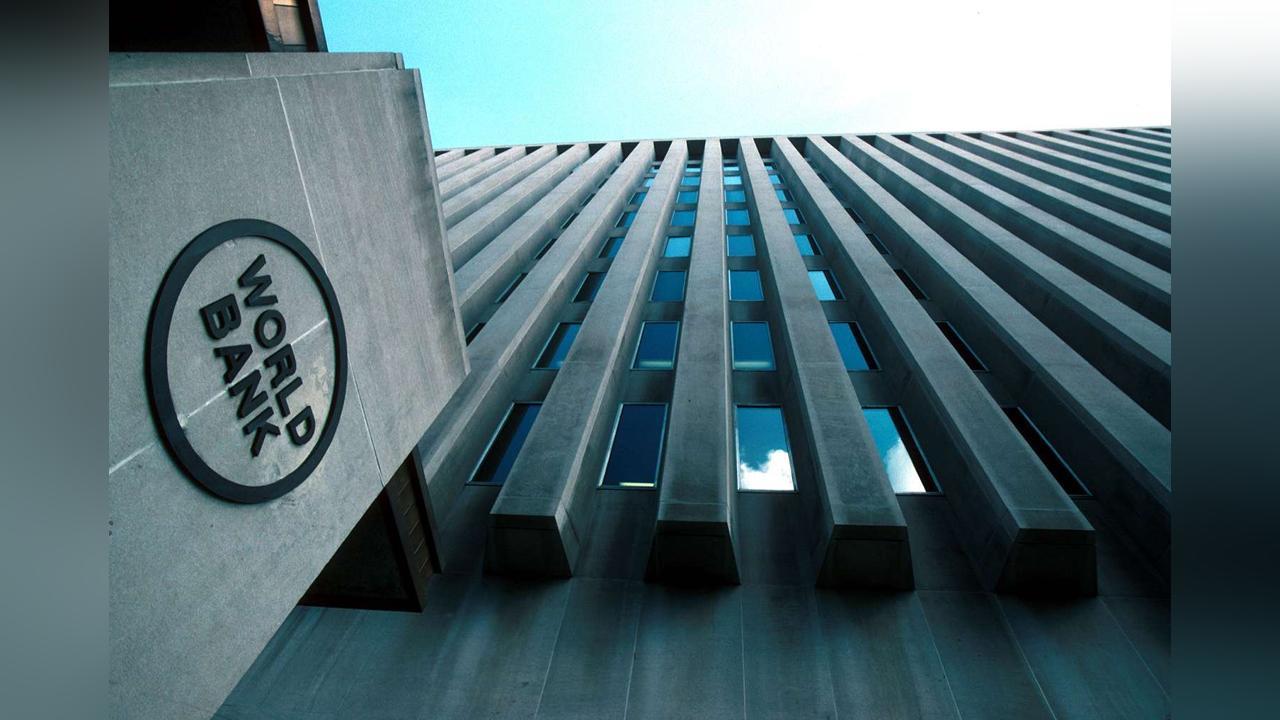
Africa-Press – Eswatini. A report by the World Bank places Eswatini below the ranking of lower-middle-income countries.
Part of the reasons why the report titled, ‘Kingdom of Eswatini Economic Update:
Raising the Game with Efficient State-Owned Enterprises’ does that is because the country harbours unprofitable state-owned enterprises (SOEs).
The report was released this month with recommendations to government on how it could ensure that the economy rebounds.
According to the report, in the past few years, there had been a persistent low growth, high fiscal deficits and that the 71 SOEs fuel the wage bill.
The World Bank recommended that the country should limit the number of SOEs as they were an expense to government, which however could be managed.
But SOEs were not the only reason for poor economic performance.
The report external factors, including global events including the war in Ukraine had been partly responsible for the inherited rating. Moreover, international prices were said to have been volatile, prompting the recommendation for economic policy reforms.
“Without significant reforms, the country is unlikely to achieve its socio-economic aspirations, poverty and unemployment are likely to remain high. In this context, the government of Eswatini recognises that the country needs a series of policy reforms to unleash the potential of the private sector.
It also needs to improve the efficiency of SOEs in strategic sectors, which deliver services to many businesses and households,” the report states.
The World Bank averred that internal socio-political uncertainties and the lack of reforms had undermined private investments and diversification. The private sector investments had been at the low of six per cent in its contribution to the growth domestic product (GDP).
regulations
The report added that this was against creating the expectation from society to create enough jobs, which would reduce the unemployment rate, which stood at 33 per cent.
The World Bank said government compensated for the low private investments due to its high public spending.
It said government’s spending continued to have soared public debt to a record 43 per cent of GDP by end of 2022. Highlighting government’s narrower economic base, the World Bank said Eswatini had an expanded public sector coupled with regulations that had become cumbersome.
According to the report, after the COVID-19 pandemic, the economic activity rebounded in 2021, but global challenges and structural weaknesses slowed economic growth.
Real GDP declined from 7.9 per cent to 3.6 per cent in 2022. The economic sectors hard hit included construction and manufacturing, with the latter affected by changes in the global economy. Economic growth over the years grew at about 2.1 per cent a year from 2015 to 2019, prior to COVID-19.
“Unsurprisingly, growth plunged during the pandemic, and the economy contracted by 1.6 per cent in 2020,” the report says. However the report acknowledges that government’s fiscal consolidation plan is yet to kick in. In this regard, the report recommended that Eswatini must implement the Fiscal Adjustment Plan, 2021/22–23/24.
The fiscal plan was aimed at sustaining macro-economic stability, reduce public debt, eliminate expenditure arrears, and increase external reserves. “Initial efforts were promising, but by 2022 implementation had become uneven, and the overall fiscal deficit rose to 5.3 per cent in 2022 from 4.6 per cent in 2021.
The public wage bill declined (due to a hiring freeze and conservative wage adjustments) and capital spending was contained, but most of these measures were not sustained. The plan’s other measures, such as SOE reforms, containment of recurrent spending, and revenue enhancement, are yet to be fully implemented,” the World Bank says.
The World Bank emphasised that with the implementation of the plan, the medium-term economic outlook looks promising. According to the report, growth is expected to reach 3.0 this year and 2.9 per cent in 2024, respectively with the public sector the most contributor.
“The public sector is likely to drive the growth, buoyed by an almost doubling of SACU receipts, but without significant reform of the business environment, the private sector is likely to remain subdued,” the World Bank says.
The report also said sustaining these gains would require the country to shift from a state-led to a private sector- and export-led growth model but encourages unlocking the private sector through a better investment climate to facilitate economic stability and the creation of jobs as well as promote sustainable growth.
For More News And Analysis About Eswatini Follow Africa-Press