
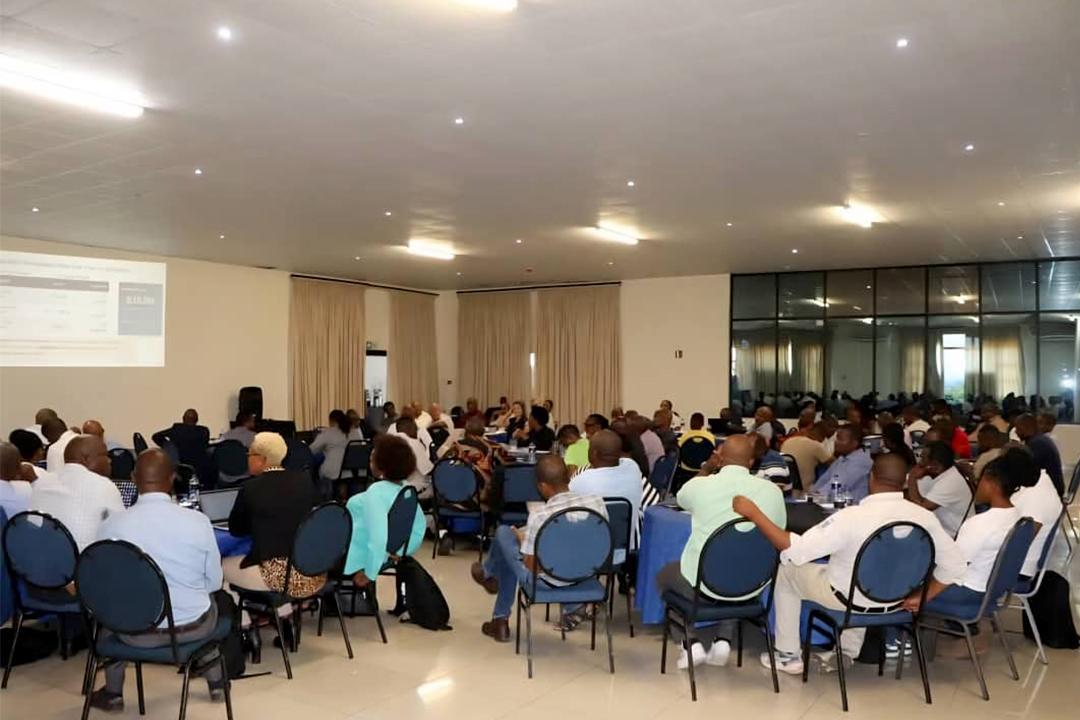
Africa-Press – Eswatini. The ongoing national consultations on the proposed Differential Water Pricing Framework gathered momentum this week, bringing together middle- to large-scale water users from the Usuthu, Umbuluzi and Ngwavuma River Basins.
The engagement was convened by the Department of Water Affairs under the Ministry of Natural Resources and Energy, with participation from supporting government institutions, Irrigation Districts, media houses and River Basin Authorities. The session forms part of a targeted phase of stakeholder consultations aimed at refining and strengthening the proposed framework before its implementation.
Deliberations centred on ensuring that the pricing structure reflects principles of equity, sustainability, cost recovery and economic efficiency, while safeguarding national water security. Officials emphasised that water, as a strategic and finite national resource, must be managed in a manner that balances developmental needs with environmental protection.
Delivering technical insights during the session, Acting Chief Executive Officer Takhona Dlamini clarified key aspects relating to water usage, allocation efficiency and long-term resource management. She explained that the Joint River Basin Authorities – Project Board is the mandated institution responsible for overseeing water allocation and ensuring efficient, equitable and sustainable management of basin resources.
Dlamini highlighted the importance of aligning water charges with actual usage patterns, infrastructure requirements and the long-term sustainability of each river basin. She noted that a differential pricing model is intended not as a punitive measure, but as a mechanism to promote responsible utilisation, improve cost recovery and support ongoing investment in water infrastructure.
Participants engaged constructively on practical implementation considerations, including sector-specific impacts on agriculture and industry, affordability concerns and the need to maintain productivity while strengthening water stewardship. There was broad acknowledgement that transparent data, consistent monitoring and stakeholder collaboration would be essential to the framework’s success.
The consultation reaffirmed Government’s commitment to transparency, inclusivity and evidence-based decision-making. As discussions continue across various user categories and river basins, authorities maintain that the ultimate objective is to establish a fair, balanced and sustainable water pricing system that secures Eswatini’s water future while supporting economic growth and social development.