Africa-Press – Eswatini. There is a particular smell that rises from the Manzini Main Bus Rank after heavy rain. A mix of wet soil, diesel fumes and impatience. For years, commuters have waded through mud while kombis jostled for space in a terminal that long ago outgrew the city it serves.
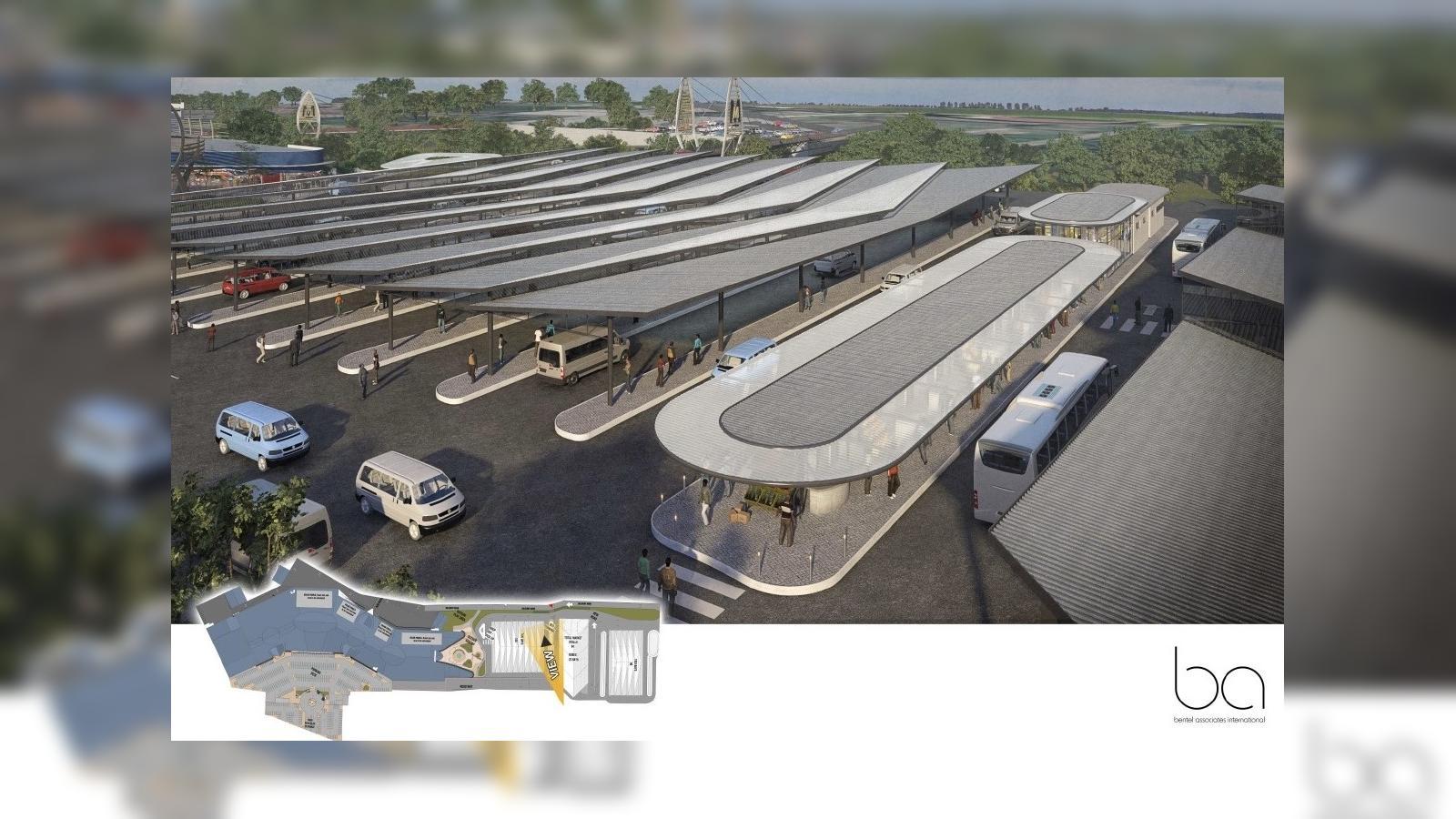
Now, the Municipal Council of Manzini says that era is coming to an end. The city has embarked on what it describes as one of the most significant development drives in its recent history. At the centre of it is the construction of the Manzini Shopping Mall at the old Trade Fair site, a project that also includes the complete reconstruction and upgrading of the Main Bus Rank into a modern public transport terminal.
Earthworks have already begun at the old Trade Fair grounds. In the coming weeks, construction will shift to the bus rank itself. If timelines hold, the transformation could be complete within six to twelve months, depending on the weather. For a city often described as the commercial heartbeat of eSwatini, the redevelopment is being framed as more than bricks and concrete.
It is a statement of intent.
Reimagining a congested crossroads
The current bus rank is a study in improvisation. Informal traders spill into narrow walkways. Public transport vehicles squeeze through tight entry points. During peak hours, the congestion is suffocating. When it rains, the ground turns into sludge, forcing commuters to pick their way carefully between puddles and potholes. City officials argue that the upgrade is long overdue.
Phumlani Matse, the Information and Communications Manager for the council, says the project forms part of a broader citywide development programme aimed at stimulating economic growth and improving quality of life.
“The temporary relocation of traders and operators is not maliciously targeted at any specific group,” Matse says.
“It is a necessary and temporary measure to enable infrastructure upgrading that will ultimately improve trading conditions, reduce traffic congestion, enhance safety and stimulate economic growth in the city.” The redesigned transport hub will feature improved road infrastructure, including additional entry and exit points to ease traffic flow.
For commuters, that could mean shorter waiting times and safer pedestrian movement. For traders, the promise is a more orderly environment with better facilities.
Inclusion or displacement?
Yet, as with most urban renewal projects, the transition has exposed fault lines. Beneath promises of renewal lies anxiety among those whose livelihoods depend on the rank’s daily rhythms.
Among those affected are the second hand clothing traders known locally as Dobha Phansi. They have publicly appealed for greater autonomy in choosing temporary operating spaces, arguing that being compelled to relocate to municipal sites undermines their independence as small business owners. Many say they are not opposed to development, but fear being sidelined in its execution.
“We the Dobha Phansi SMEs seek public support and help,” says a trader from Ticantfwini who identified herself as Make Dlamini. “This business was started by refugees and later joined by emaSwati entrepreneurs. It initially operated at Bosco and grew into a sustainable source of income for many families.”
She adds that when the municipality recognised the economic potential of their trade, negotiations were held to allow them to operate within the city. “Since then, the business has consistently generated over R70 000 per month, contributing meaningfully to the local economy.”
Another trader, who asked to be called Precious and is originally from Mozambique, says the friction began with the proposed relocation model. “With the new developments taking place in Manzini, the municipality has instructed Dobha Phansi SMEs to vacate their operating space and instead share selling areas with handicraft SMEs,” she says.
“This model has been attempted before and has proven unworkable for our type of business.” According to Precious, the traders attempted to secure private premises for storage and operations as an alternative. “Despite this, the municipality has informed the SMEs that they have only one option: to relocate to a space chosen by the municipality, with no allowance for independent alternatives. Even if they find their own space they will still have to pay the municipality rentals or that place will not be accepted by the municipality as good for their working space.”
At the heart of their complaint is a question of autonomy. “We are clients of the municipality, not its property,” one trader says. “Every business has the right to operate lawfully, independently, and with dignity.” The council insists consultations are ongoing and no final conclusions have been reached.
Matse says the municipality derives its authority from the Urban Government Act of 1969, which empowers it to manage and allocate trading spaces, but emphasises that stakeholders have been encouraged to consult among themselves and submit recommendations. The council derives its authority from the Urban Government Act of 1969, which empowers it to manage and allocate trading spacesHowever, Matse insists that the municipality has not acted unilaterally. “The Municipality has conducted and continues to conduct a series of engagements with all stakeholders who will be affected by the temporary relocation,” he says. “We are encouraged by the positive and constructive attitude demonstrated by stakeholders. While there may be temporary business disruptions, the long term benefits will significantly outweigh the short term inconveniences.”
Temporary trading spaces, the council says, will be allocated to permit holding traders, with consultations ongoing before final arrangements are formalised. The tension reflects a broader question confronting many African cities: how to modernise without marginalising the informal economy that sustains thousands of households.
A new commercial gravity
The proposed shopping mall at the old Trade Fair site is expected to expand Manzini’s retail offering and attract regional shoppers. City leaders believe it will reposition Manzini as a competitive commercial destination in the region. If realised as planned, the mall and upgraded bus rank will create a new commercial axis in the city, linking formal retail, public transport and informal trade within a redesigned urban core.
For residents who have watched Manzini’s infrastructure strain under population growth and economic pressure, the redevelopment signals ambition. It also carries risk. Construction timelines must be met. Temporary relocations must not harden into permanent exclusion. And the promised inclusivity must move beyond rhetoric. Still, there is a sense that something significant is underway. In a city where the bus rank has long been both gateway and bottleneck, the coming months may determine whether Manzini can turn congestion into opportunity and mud into momentum. If the project succeeds, the Heart of eSwatini may begin to look very different.
swazibridge