
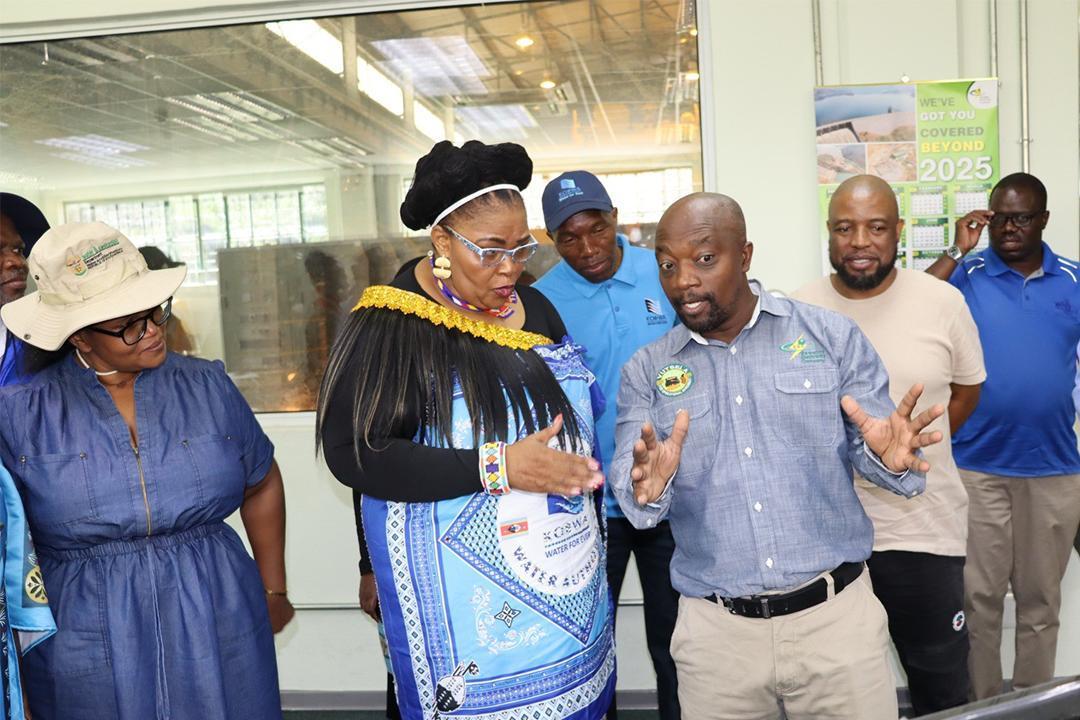
Africa-Press – Eswatini. South Africa’s Minister of Water and Sanitation, Hon. Pemmy Majodina, has praised the Maguga Dam and the Maguga Hydropower Station as a strong example of regional cooperation and sustainable infrastructure following her tour of the facility.
Hon. Majodina visited the Maguga Dam on Saturday, March 14, 2026, as part of engagements aimed at strengthening collaboration between the Kingdom of Eswatini and the Republic of South Africa in the management of shared water resources and infrastructure development.
During the tour, the minister expressed admiration for the dam and the hydropower facility, describing them as important symbols of partnership and joint development between the two neighbouring countries. She noted that the project demonstrates how regional cooperation can successfully support both water management and energy production.
Speaking after touring the site, Hon. Majodina said the Maguga Dam stands as a valuable asset for both countries, highlighting the importance of continued cooperation in managing shared natural resources. She added that projects such as Maguga serve as a model for other countries across the Southern African region that are seeking to promote sustainable development and responsible resource management.
Her visit came shortly after the signing of the revised Komati Basin Water Authority (KOBWA) Treaty between Eswatini and South Africa. The agreement, signed on Friday, March 13, 2026, is aimed at strengthening cooperation between the two countries in the management of shared water resources while also unlocking new development opportunities and supporting regional economic growth.
The minister arrived in the Kingdom on March 12, 2026 via King Mswati III International Airport to participate in the signing ceremony and related engagements.
Officials from the Eswatini Electricity Company (EEC) also used the opportunity to outline plans aimed at further developing the Maguga Hydropower facility in order to strengthen the country’s energy security and sustainability.
According to the national power utility, the planned upgrade of the hydropower facility is expected to increase Eswatini’s local electricity generation capacity by approximately 13 percent once completed. This improvement is anticipated to reduce the country’s reliance on imported electricity while strengthening the stability and reliability of the domestic energy supply.
The expansion is also expected to contribute to job creation while supporting environmentally friendly energy production. Hydropower is widely recognised as one of the most sustainable sources of electricity generation because it utilises natural water flows to produce power while minimising environmental impact.
Stakeholders have therefore emphasised the importance of continued investment in renewable energy projects such as the Maguga Hydropower Station, noting that such initiatives play a vital role in supporting both economic development and environmental protection.
Speaking on the Ministry of Natural Resources and Energy’s social media platforms, Hon. Majodina said she was particularly impressed by the condition and maintenance of the dam. She noted that the infrastructure remains well preserved, with the structural features that support the dam, including its walls, still intact and functioning effectively.
According to the minister, the Maguga Dam represents more than just a water infrastructure project. It also stands as a powerful example of how strategic infrastructure development, renewable energy generation and regional cooperation can work together to support sustainable development and secure reliable resources for future generations.