
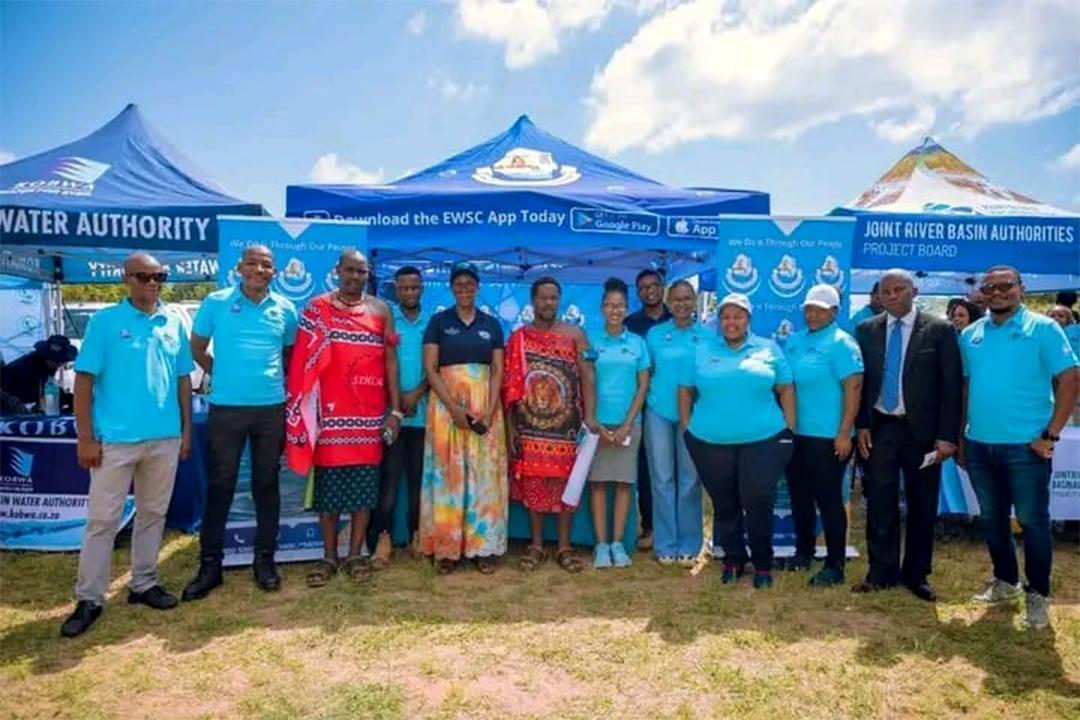
Africa-Press – Eswatini. The Ministry of Natural Resources and Energy marked World Water Day 2026 by launching a solar-powered water supply project in Phonjwane under the Gilgali Constituency on Thursday, March 27,2026 a move aimed at improving access to clean and safe water while advancing sustainable development.
The event, held at Phonjwane Sports Ground, brought together government officials, development partners and community members. Speaking during the commemoration, Principal Secretary Lindiwe Mbingo, representing the Hon. Minister of Natural Resources and Energy, His Royal Highness Prince Lonkhokhela, delivered the keynote address on behalf of the Ministry, where she underscored the importance of water and sanitation in driving development and advancing gender equality.
Mbingo explained that the Phonjwane Solar-Powered Potable Water Supply and Sanitation Scheme was introduced to address water challenges in the area by providing reliable, climate-resilient and sustainable water services. She said the project uses solar energy to ensure a consistent supply while reducing environmental impact, positioning it as a long-term solution for the community.
She further highlighted that the initiative aligns with Sustainable Development Goal 6, which seeks to ensure universal access to safe water and sanitation by 2030, adding that the government is committed to expanding similar projects across the country through strategic partnerships and targeted programmes.
“This initiative is more than just a water project it is a symbol of progress, dignity and opportunity for the people of Phonjwane,” said Mbingo. “It not only enhances access to clean and safe water but also reflects our commitment to sustainable development, gender equity and climate resilience.”
Mbingo also called on the community to take an active role in safeguarding the project to ensure its long-term success. “The sustainability of this scheme depends on the collective responsibility of all stakeholders. We urge the community to protect water sources, use water responsibly and ensure the proper maintenance of the system,” she said.
The commemoration further placed emphasis on the role of women in water governance, with stakeholders encouraging their inclusion in decision-making structures. Mbingo noted that empowering women in water management strengthens both households and communities. “Women must not only benefit from water services but also play a key role in decision-making and management processes,” she added.
The Phonjwane project is one of four pilot initiatives implemented through the Rural Electrification Access Fund, with plans under way to roll out similar schemes to other parts of the country. Partners such as the Eswatini Water Services Corporation reaffirmed their commitment to supporting government efforts in delivering sustainable
and inclusive water solutions.
The initiative stands as a positive step towards improving livelihoods, demonstrating how innovation, collaboration and community participation can drive meaningful development across Eswatini.