
Africa-Press – Eswatini. Deputy Prime Minister (DPM) Themba Masuku says the Decentralisation Bill is the cornerstone of the Tinkhundla system of governance and the second highest legislation after the Constitution.
Masuku said once the Bill was passed, the challenges faced by the kingdom in development and service delivery efforts over the years would be a thing of the past.
He lamented that as Cabinet they realised that the entire government could best deliver public services to the people within a decentralised system.
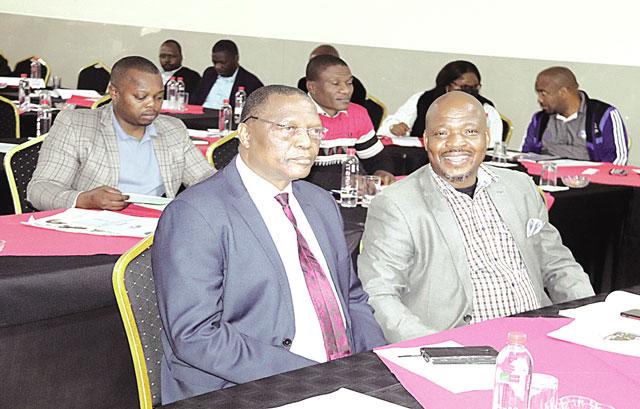
This was during the three-day consultative engagements with parliamentarians on the Decentralisation Bill, 2021 at Esibayeni Lodge yesterday.
The workshop aimed at deliberating on the legislation is scheduled to end tomorrow.
The DPM expressed his delight to be part of the noble endeavour aimed at finalising the development of the Decentralisation Bill.
“This is particularly because decentralisation has always been in my heart. Most importantly, you will all recall that the decentralisation of government is a long standing commitment of the Kingdom of Eswatini. In fact, as far as I can remember, decentralisation has always been the cornerstone in the design of the Tinkhundla system,” he said.
He said the commitment to attend the meeting by MPs gave him hope and the assurance that this time the Bill would finally go through.
Masuku said the passing of the Bill into law would be a historic milestone that they would all be proud of.
He mentioned that the country’s leadership had long been waiting for this piece of legislation as it defined the purpose for the Tinkhundla political system. “In fact, this piece of legislation is the second highest after the Constitution of the country. This legislation was first initiated during the 8th parliament without success. Since then, it has been brought to the house throughout all the past three parliaments,” he said.
He assured that Cabinet was committed to seeing the full implementation of the entire decentralisation programme including the said Bill.
The DPM said they had most importantly noted the constitutional provision that the State shall be guided by the principle of decentralisation in the conduct of public affairs as provided for in Section 58 (2).
He said the full implementation of a decentralisation was long overdue if they considered its intention and purpose.
Masuku challenged the Minister for Tinkhundla David ‘Cruiser’ Ngcamphalala, MPs and all stakeholders to commit to ensuring that the Bill went through during the tenure of the 11th Parliament.
“If we can all achieve this historic milestone, we will no doubt make history not only for ourselves but for the generations to come,” said Masuku.
He added that that would further bring to fruition the constitutional provision that the tinkhundla units or areas, inspired by a policy of decentralisation of State power, were the engines of development and the central pillars underpinning the political organisation and economic infrastructure of the country through which social services to the different parts of the Swazi community are facilitated and delivered as provided in Section 80 (3) of the Constitution.
He said on a number of instances, he heard concerns on the budget implications for the implementation of the Bill but assured that with the right approach and commitment, decentralisation saved more resources than it costs.
Masuku further stated that without this legislation, life has been difficult for both the people of Eswatini and government in ensuring sustainable development.
Challenges
With the Bill in place, all could rest assured that the challenges faced in development and service delivery efforts over the years would be a thing of the past, he said.
The DPM explained that the roles and responsibilities of government in addressing issues of planning and allocation of resources were largely centralised without this Bill.
He extended special thanks go to the country’s development partner United Nations Development Programme (UNDP) for the support towards finalising what he called the most important piece of legislation.
“Without your support, decentralisation would have only remained a dream,” added Masuku.
He also assured the UNDP representative that their support made a major contribution towards changing the lives of Eswatini people for the better.
Minister Ngcamphalala thanked the MPs for their commitment towards ensuring that the Bill was passed.
He said the Bill directly touched on the lives of all Emaswati and concurred that it was critical to ensuring adequate service delivery.
“If we can end our term with this Bill passed, there will be no more pointing fingers and this will most importantly benefit the nation we serve by improving the service delivery we all strive for,” he said.
The minister said the Bill was long overdue and pleaded with the MPs to fully apply themselves during the deliberations.
For More News And Analysis About Eswatini Follow Africa-Press