
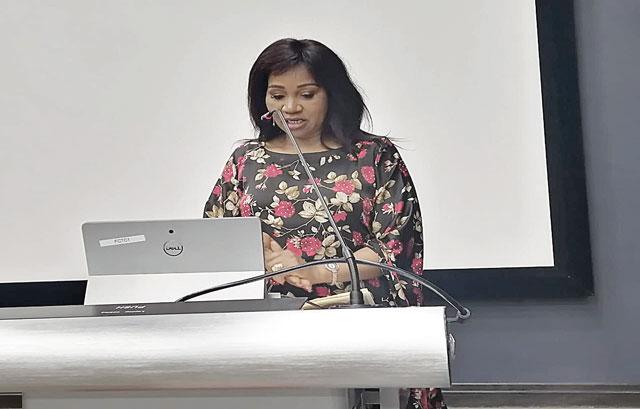
Africa-Press – Eswatini. Senate President Lindiwe Dlamini has urged the nation not to lose their identity, culture and traditions as they embrace international customs and practices.
Dlamini said as policy-makers, they should enact laws based on global instruments but must not lose sight of who Emaswati were and what they were about so they do not lose moral values in the process.
The senator was speaking during the Health Bill 1, 2022 workshop held at Ezulwini yesterday.
The Senate president, who is also a pastor, said never in the history of the nation had loyalty, core values, faith and sovereignty been put to the test as had happened in current times.
“Allow me to say God bless our King Mswati III and our country. In other kingdoms, every speaker blesses their king first and then prays for their long life. I love this practice. We are living at a time where as a Liswati you have to ask yourself who you are and if you know your nationality. This is a time where as legislators we need to reflect on our mandate; that we have a duty to enact laws, determine how government works and represent the nation as senators and MPs elected,” she said.
Adding, Dlamini appealed to the nation to do some soul-searching about who they were, their identity and be happy about it.
She further implored citizens not to envy what they have not seen and what they don’t know as everybody was at liberty to embrace differing opinions.
She said there was also a need to instill this mentality to the younger generation because such represents the values of Emaswati, where respect emanates, so that people don’t speak and address others anyhow.
Performance
The Senate president said the objective was to strengthen the health capacity system and its performance for effective service delivery and access to health.
She held such belief that the Bill would look into the welfare and health of the people hence by extension improve the health of Emaswati.
“We should not move away from our heritage, culture and traditions while at it because we could be easily influenced by others. Regardless of the basic human rights that we advocate for, we should deeply look into and consider how we better the lives of Emaswati through these laws.
“I am passionate about giving everyone a chance to live; do not choose whether or not someone should live especially when you have already lived your lives. Let us consider all sectors of this law and remember that we will one day answer before God about the decisions we make here. Let us not prioritise matters that are already covered in the Constitution,” Dlamini said.
Portfolio Committee Chairperson Senator Isaac Magagula stressed that productivity was only possible when the nation was healthy.
Magagula appreciated the ministry for enlightening them throughout the workshop, saying it would replace the Public Health Act of 1969 as everything had evolved and became dynamic.
He said there was a lot in the public domain where health issues for Emaswati were concerned.
The former police chief said he hoped the Bill would not be delayed by others (Bills) that are in the pipeline.
The senator added that the Bill came at a time when there were huge debates on teenage pregnancy, abortion and more.
“We are looking forward to what will be said about pregnancy termination, especially because the Constitution is clear that such is illegal with a few exceptions.
It worries us to see advertisements in social media where the abortion pills are sold openly as though it has been made legal. The minister once presented and piloted the Loan Bill application without touching on health issues, which was a concern.
It is imperative that Universal Health Care is budgeted for. The time for health rhetoric is gone and we should do what will help the country and this Bill is therefore a starting point and the right way to go,” he said.
Meanwhile, acting Minister of Health Moses Vilakati pointed out that health also involved research because things constantly evolve, including diseases. He noted that the Bill would assist improve the health of the nation.
“There is need to configure the staff numbers so that we know how many are needed for better service delivery. We should also be updated about what is happening in the world and around us so that there is information flow. This needs a strong research and administration that looks into certain issues,” he said.
For More News And Analysis About Eswatini Follow Africa-Press