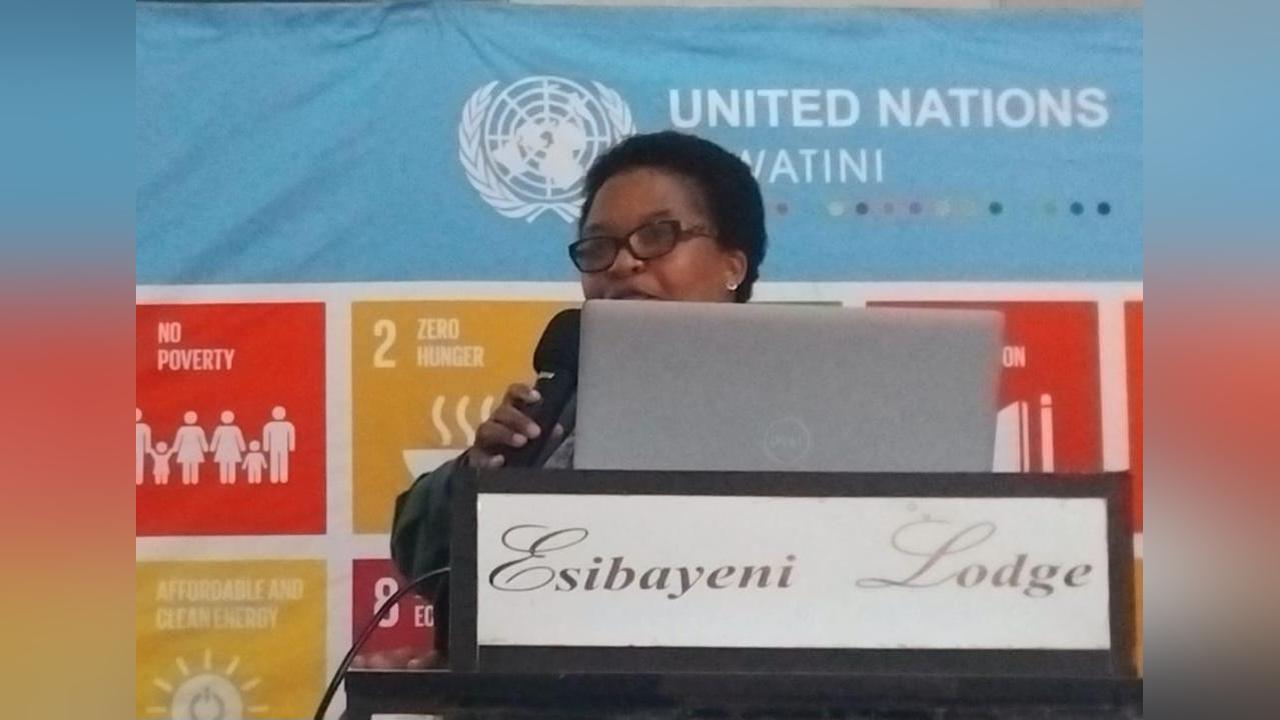
Africa-Press – Eswatini. Eswatini continues to make remarkable progress in implementing the Sustainable Development Goals (SDGs), with notable gains across social, economic, and environmental fronts.
This was presented by Phindile Masango from the Ministry of Economic Planning and Development during the National Stakeholders Consultation on Social Development: Preparation for the Second World Summit for Social Development (WSSD2), to be held in Doha, Qatar, from November 4 to 6, 2025.
Masango highlighted that the review reflects Eswatini’s collective efforts and renewed commitment to achieving the SDGs, particularly in reducing poverty, strengthening health systems, empowering women, and protecting the environment.
Strong Social Progress
Under social development, Eswatini has achieved a steady decline in HIV incidence from 1.36% to 0.61% and a reduction in tuberculosis cases. Maternal mortality remains low, while under-five mortality has dropped dramatically from 104 to 41 per 1 000 live births. Literacy levels remain above 90%, and participation in early childhood education has grown substantially.
On gender equality, Masango reported that the National Gender Policy (2023–2033) was developed to advance gender equity, with women’s representation in Parliament rising from 22% in 2018 to 26% in 2023. Intentional homicide rates have also fallen from 15.7 to 11 per 100,000 deaths, reflecting progress toward safer communities.
Economic Growth and Opportunities
Economically, Eswatini has recovered strongly from the pandemic, with GDP growth rebounding from -1.9% in 2020 to 5.1% in 2024. Employment among women has improved significantly, with female participation rising from 29.8% in 2021 to 42% in 2023, and the NET rate decreasing to 36.7%. Infrastructure development has also advanced, with a 22.1% increase in road networks.
Environmental Protection and Climate Action
Eswatini has made strides in environmental sustainability, increasing access to clean water by 11.3% and sanitation by 10.2%, while electricity access now covers 82% of the population. Waste management systems have improved, with issued licenses rising from 82 in 2021 to 149 in 2024.
Forest cover expanded by 37.3%, reflecting the country’s dedication to ecosystem restoration, while pollution levels have been effectively controlled.
Recommendations and Future Priorities
Looking ahead, Masango emphasized the need to enhance social protection coverage, strengthen transport and health systems, and boost research and development for innovation and industrial growth. Other priorities include improving early grade literacy, expanding water and sanitation infrastructure, and introducing electricity subsidies to enhance access.
The report also highlights key areas of support: strengthening data systems, advancing gender equality, promoting renewable energy, and building climate resilience.
As Eswatini prepares for the Second World Summit for Social Development (WSSD2), the country stands firm in its pursuit of inclusive and sustainable growth, ensuring that no one is left behind.
For More News And Analysis About Eswatini Follow Africa-Press