
Africa-Press – Eswatini. The brutal murder of 34-year-old Ethopian woman Tamima Nibras Juhar in Oslo over the past weekend, a case already treated by Norwegian police as a suspected far-right terrorist attack, has reignited global concern about the surge of right-wing extremism across Europe and North America.
For the growing community of Swazi migrants in countries such as Norway, Germany, England, Canada, Ireland, and South Africa, the attack is a chilling reminder of the risks posed by resurgent extremist ideologies that often target immigrants. Norwegian newspapers report that Juhar, who came from Ethiopia, was killed during a night shift, with investigators confirming links to far-right radicalisation.
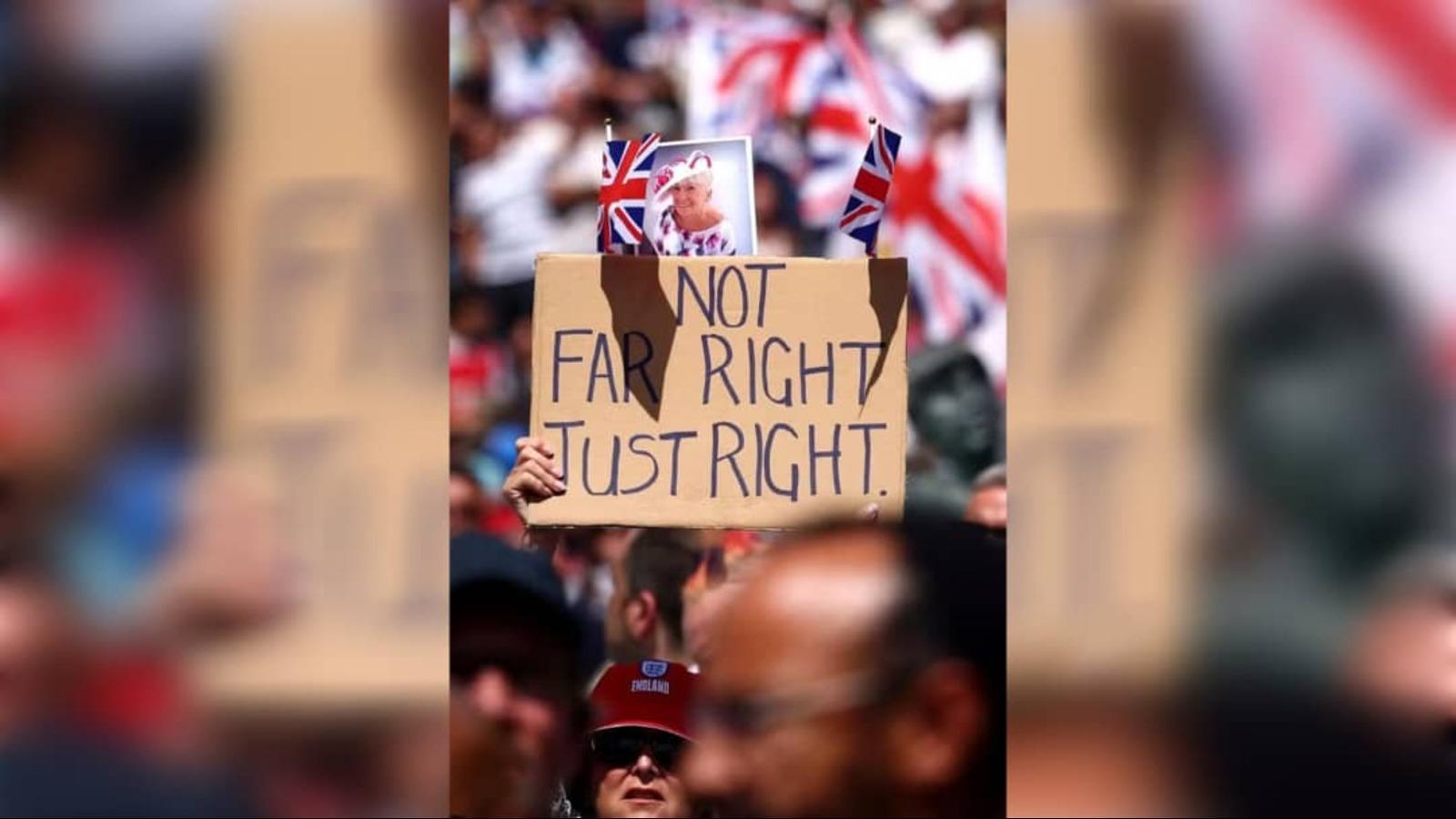
A far right wing group rally in the Uk
This comes six years after the 2019 al-Noor mosque attack, when a white supremacist stormed a prayer hall near Oslo, killing his stepsister before being subdued by worshippers. Norway’s intelligence agency has repeatedly warned that right-wing extremists remain one of the country’s biggest terror threats.
About a year ago Swazi Bridge reported the high number of Swazis increasingly migrating to Europe and Asia, with Ireland, the USA, England, Norway and Taiwan being popular destinations for migrant workers, students and political refugees.
The newspaper also detailed the struggles of Swazi political activists who fail to secure refugee status in South Africa and end up living without legal papers, prone to constant arrests and, at worst, deportation. In recent times, Ireland has become a popular destination for Swazi political refugees together with Norway, where activists benefit from a Norwegian government-led programme to educate student activists at risk.
However, rising right-wing extremism seems to threaten the utopian idea of a European heaven for frustrated activists and economic refugees. As the local media and activists share the romantic idea of Europe as a safe gateway, the reality is far more complex than acknowledged.
Norway, Germany and Ireland: safety under question
For Swazis studying or working in Norway, whose numbers have risen steadily due to education and employment opportunities, the stabbing of Juhar and looming elections, where the extreme right is poised to make serious inroads with demands for a full overhaul of Norway’s immigration policies, mean that everything could change overnight.
Though emaSwati are not Muslim by majority, extremism often casts all African and Black migrants into the same category of “outsiders.” In Germany, where a sizeable number of Swazis are based for work, study and medical training, the far-right Alternative für Deutschland (AfD) party has made unprecedented electoral gains.
Ethiopian born woman who was killed in a stabbing attack in Oslo
In 2024 it won over 30% of the vote in the state of Thuringia – a first for a far-right party in post-war Germany. German intelligence services even branded AfD an “extremist organisation” in 2025, citing links to ethnonationalist ideologies and meetings where mass deportations of immigrants were openly discussed. “Every time AfD wins an election, I fear the rules will change overnight,” said a Swazi student in Berlin.
“We are contributing to this society, but they see us only as foreigners who must eventually be sent away.” In Britain, right-wing populism has reshaped politics since Brexit. Successive Conservative governments have pursued hardline immigration policies, while far-right figures exploit anxieties about jobs, asylum seekers and national identity.
African migrants, including a growing Swazi community in London and Manchester, often report heightened racial profiling and hostility in public spaces. “You feel the stares on the train, and sometimes people shout things,” a Swazi living in Manchester explained. “The political climate makes it easier for extremists to act openly.”
Canada and Ireland: a growing foothold for the far right
Though widely seen as tolerant, Canada has also seen the rise of far-right networks, particularly during and after the 2022 “Freedom Convoy” protests. Groups spreading anti-immigrant and anti-Muslim rhetoric have gained visibility, with authorities in Ontario and Alberta tracking hate networks online.
“Canada is welcoming, but you can sense a shift,” said a Swazi postgraduate student in Toronto. “Extremist ideas are spreading on social media, and it worries us as Africans trying to settle here.” Ireland has in recent years become an important destination for Swazi refugees and students, drawn by scholarship opportunities and Dublin’s growing reputation as a hub for African exiles.
But the country has not been immune to extremism. In 2023 and 2024, Dublin saw anti-immigrant protests turn violent, with far-right groups exploiting housing shortages and asylum policy debates to stir hostility against foreigners. Clashes outside refugee centres highlighted a shift in tone, as extremist voices gained traction in both online spaces and on the streets.
“We came to Ireland believing it was a safe haven,” said a Swazi activist currently on student asylum in Dublin. “But the protests showed us that not everyone welcomes us. It’s a shock to realise even here, we can be targeted.” South Africa:
Operation Dudula sparks unrest
Closer to home, South Africa, which hosts the largest population of Swazis abroad, is also experiencing a wave of xenophobic activism.
The controversial movement Operation Dudula has gained traction by demanding that foreign nationals be denied access to jobs, healthcare, and even schools. In recent months, Dudula activists have openly declared that from next year non-South African children should not be admitted to public schools, sparking fear among immigrant communities.
Operation Dudula
Already, hospitals and clinics have reported incidents where non-citizens were refused medical treatment. For emaSwati, South Africa is the primary destination for work, education, business, and marriage. The movement’s rise has left many restless and uncertain about their future. “We are here legally, working and paying rent, but Dudula makes us feel like we are criminals,” said a Swazi woman employed as a domestic worker in Johannesburg.
“Our children were born here, yet there’s talk of shutting them out of schools. What future will they have?” The bigger picture: a global trend From Norway’s tragedy to Germany’s political shift, from England’s toxic immigration debates to Canada’s far-right movements, Ireland’s protests, and South Africa’s Dudula campaigns – one pattern is clear: extremist rhetoric against migrants is spreading. “While most citizens in these countries still welcome diversity, the Oslo murder shows how even isolated extremists can change lives forever.
For emaSwati abroad, vigilance, solidarity, and strong community ties are becoming essential in a world where right-wing extremism is no longer confined to the political margins,” said a Swazi activist who asked not to be named. The eSwatini government has been trying to curtail what it calls propaganda against the Kingdom by “dubious” exiles.
Members of Parliament like Welcome Dlamini have even called for cutting scholarships for Swazis who “bad-mouth” the country abroad. Visit www.swazibridge.com for more indepth stories like these. NB: Story has been updated to correct the details over the terrorist attack in Oslo.
swazibridge
For More News And Analysis About Eswatini Follow Africa-Press