Africa-Press – Eswatini. Prime Minister Russell Mmiso Dlamini has hailed Ethiopia’s successful construction of the Great Ethiopian Renaissance Dam (GERD), praising the East African nation for achieving the multibillion-dollar project without relying on overseas assistance.
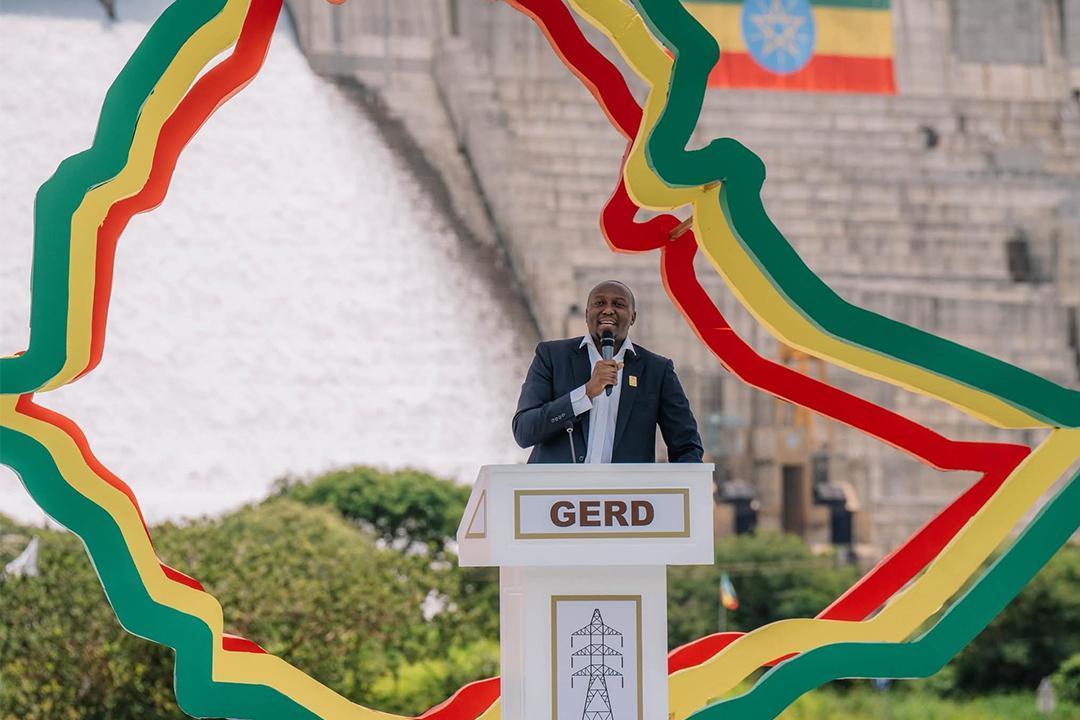
Dlamini is currently in Addis Ababa for the Second Africa Climate Summit (ACS2), which concludes today. On Tuesday, 9 September 2025, he joined fellow Heads of State and Government for the official opening of the GERD, a US$5 billion (about E87.7 billion) project located along the Blue Nile River.
Speaking on behalf of Their Majesties, the people of Eswatini, and the wider Southern African region, the Prime Minister congratulated Ethiopia for what he described as a “historic and inspiring feat.” He said the achievement stood as proof that African nations could finance and deliver large-scale infrastructure without depending on foreign lenders.
Funded by Citizens
The GERD, launched in 2011 under then Prime Minister Meles Zenawi, was financed primarily through domestic contributions. Citizens bought government bonds and contributed through mobile money platforms, demonstrating a national sense of ownership and unity in building Africa’s largest hydroelectric power project.
Delegates at the opening were informed that the dam measures 50 metres in depth and 200 metres in length, with the capacity to generate 5 000 megawatts of hydroelectric power. Prime Minister Abiy Ahmed officially inaugurated its first 5-megawatt electricity production during the ceremony.
A Symbol of Resilience
Heads of State present at the event included Kenya’s President William Ruto, Somalia’s President Hassan Sheikh Mohamud, Djibouti’s President Ismail Guelleh, and South Sudan’s President Salva Kiir Mayardit. They all praised the project, saying it was going to be beneficial to East Africa.
In his keynote address, Prime Minister Ahmed acknowledged the challenges Ethiopia had faced during the dam’s construction. Egypt and Sudan, both heavily dependent on the Nile for water and livelihoods, have long voiced concerns that the GERD would limit their access to crucial resources. The Nile flows from the meeting point of the White Nile, which originates in Uganda, and the Blue Nile, which begins in Ethiopia, before passing through Sudan and Egypt into the Mediterranean Sea.
Ahmed stressed that Ethiopia remained open to dialogue with its neighbours in order to reach an amicable solution, insisting that the dam was intended to bring development, not conflict.
Challenges and Cautions
While the dam is widely celebrated as a symbol of self-reliance, it has not been without cost. Around 33 workers lost their lives during its construction. Experts have also raised concerns about the risks associated with such a massive structure, warning that a potential breach could endanger millions across multiple countries.
Nevertheless, the successful completion of the GERD is being viewed across the continent as a landmark achievement in African-led development.
For Prime Minister Dlamini, Ethiopia’s example stands as a powerful lesson for Eswatini and the wider Southern African region: that with unity, vision, and commitment, African nations can shape their own futures without waiting for external financing.
Key Facts: Great Ethiopian Renaissance Dam (GERD)
Location: Blue Nile River, Ethiopia
Construction Began: 2011 under PM Meles Zenawi
Cost: US$5 billion (approx. E87.7 billion)
Funding Source: Domestic – citizens purchased government bonds and contributed via mobile money
Dimensions: 50m deep, 200m long
Capacity: Up to 5 000 megawatts of hydroelectric power
Inauguration of First Power: 9 September 2025 by PM Abiy Ahmed
Lives Lost During Construction: 33 workers
Regional Tensions: Egypt and Sudan worry about reduced Nile water flow
For More News And Analysis About Eswatini Follow Africa-Press