Africa-Press – Ethiopia. Unmute
Addis Ababa, December 2, 2025— Climate change deeply intertwined with drought, displacement, and food insecurity, remains one of the most underreported issues in African newsrooms, according to Somali and Kenyan IGAD Media Awards 2025 winners.
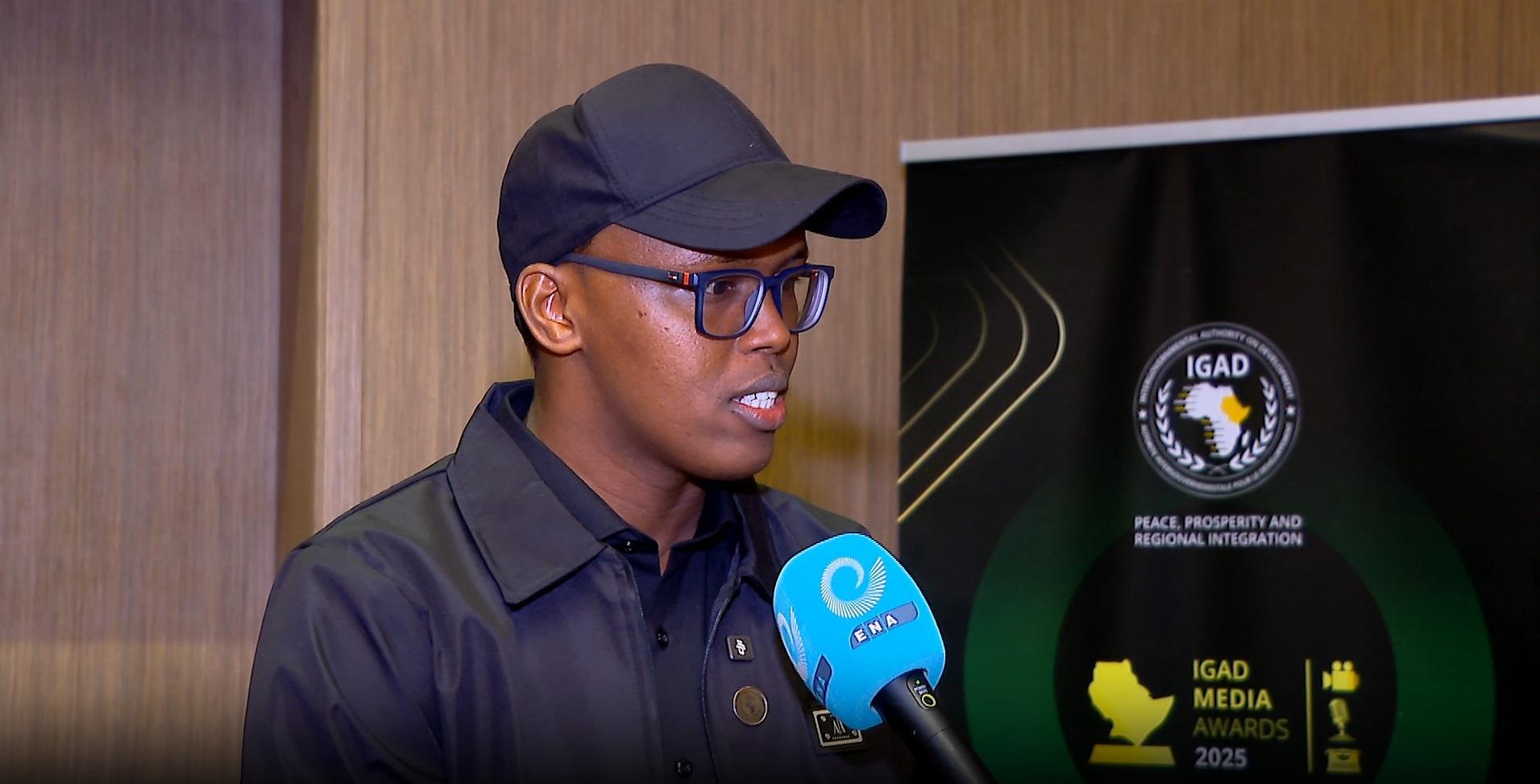
In an exclusive interview with ENA, Somali environmental advocate and journalist, Ahmed Absia, said meaningful climate reporting is central to promoting accountability, community awareness, and regional cooperation.
“Journalists have the role to inform the public about what is happening,” he noted. “They have the tools and the platforms to educate people, show how things are changing through time, and make government institutions accountable,” Absia added.
While many climate resilience projects exist across the region, he stressed that the media must investigate whether they are truly being implemented.
The Somali winner praised Ethiopia’s Green Legacy initiative for planting billions of trees, calling it a model worth amplifying across the Horn.
Absia further urged journalists to highlight untold stories of grassroots initiatives where communities are taking meaningful steps to safeguard the environment.
Jamila Mohammed, a Kenyan winner, emphasized that journalists must fully understand climate change themselves in order to explain it clearly to the public.
According to her, climate conversations feel technical and difficult, yet the most affected are local people. Many farmers or pastoralists are unaware that changing weather patterns, livestock movements, or water shortages are part of broader climate shifts.
Mohammed pointed out that African media, despite climate change being linked to drought, famine, displacement, disease, and food insecurity, often prioritize politics over climate reporting.
As a result, many climate stories are underreported and they need to be told, she undesrcored.
The Kenyan journalist urged the media to set the agenda by giving climate stories more prominence and to focus on powerful human-interest narratives. “If you tell the story of a mother who lost her children to hunger, her story represents many others.”
Mohammed stated that she believes accurate, compelling, and people-centered climate reporting is essential for informing communities, shaping policy, and strengthening resilience across the Horn of Africa.
Abdirahman Beryoow, a photographer journalist from Somalia, said climate reporting is vital for saving lives, recalling how timely media alerts helped communities respond during recent floods.
“When we experienced the big floods, the media made people aware. If communities are informed early, they can protect themselves,” he added.
Beryoow stressed that climate issues deserve the same visibility that political stories receive in African media.
Journalists must show how environmental changes directly affect daily life, he noted, describing climate journalism as a responsibility rooted in personal and communal duty.
Recall that the Horn of Africa is one of the most vulnerable regions to climate-related risks, appearing through highly variable and erratic rainfall together with rising temperatures, droughts and floods that have increased in frequency and intensity in recent years.
For More News And Analysis About Ethiopia Follow Africa-Press