
UNESCO has reaffirmed its commitment to the restitution of African cultural heritage, underscoring that the return of looted and displaced artifacts is a matter of cultural rights, historical justice and identity.
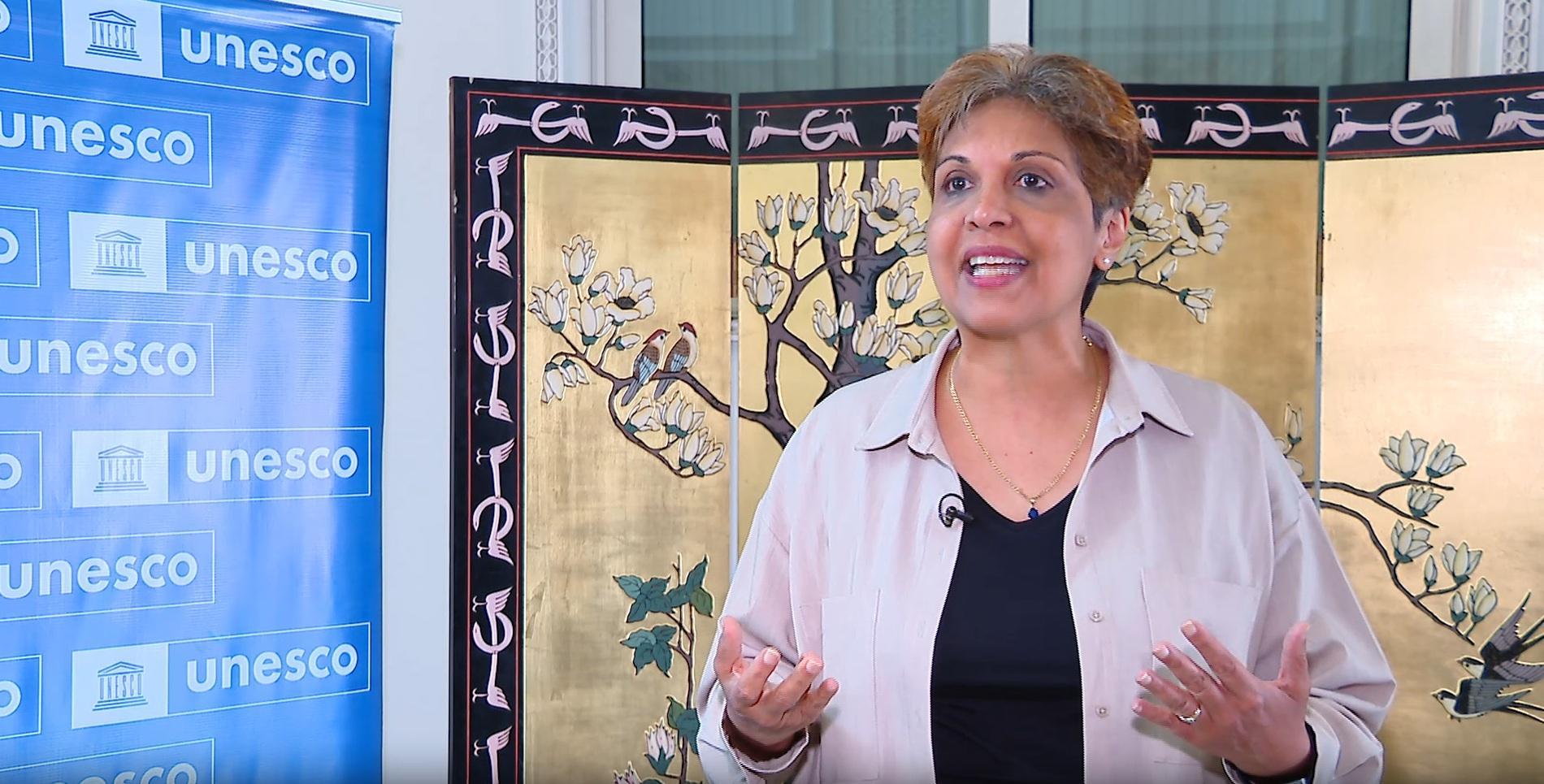
Speaking at a high-level roundtable in Addis Ababa, UNESCO AU and ECA Liaison Office Director Rita Bissoonauth said the organization is intensifying its advocacy for the restitution of African cultural artifacts in partnership with local and international stakeholders.
The roundtable, organized by UNESCO in collaboration with the Embassy of Morocco in Ethiopia and the Organisation Internationale de la Francophonie, was held under the theme “Restitution, Cultural Rights and the Right to Memory: From Africa to Latin America.”
The forum brought together experts, academics, government officials, international organizations and civil society representatives to position restitution as a fundamental cultural right and a core element of shared reparative justice between Africa and the Americas.
Discussions were aligned with Article 26 of the Charter for African Cultural Renaissance and Flagship Programme 3 of UNESCO’s Operational Strategy for Priority Africa 2022 to 2029.
Participants noted that for centuries a significant portion of Africa’s cultural heritage was displaced, looted or illicitly trafficked, particularly during the colonial period.
It was indicated that more than 90 percent of ancient African cultural objects remain outside the continent, denying communities access to tangible evidence of their own history.
The forum emphasized that restitution of African and Afro descendant heritage must be understood as a fundamental cultural right closely linked to the right to memory and cultural identity.
Addressing the gathering, Rita Bissoonauth said the time has come to advance restitution efforts with renewed determination.
“Restitution is not merely a material transfer. It is first and foremost the restoration of a legitimate right for peoples to reclaim the evidence of their history,” she said, adding that the objects that carry their spirituality and the archives of their collective consciousness.
She further elaborated that restitution represents a pillar of reparative justice as articulated in international law and reaffirmed in the Charter for African Cultural Renaissance, UNESCO conventions and Latin American normative frameworks.
“To restitute is to restore to African and diasporic communities the capacity to represent themselves through their own narratives, symbols and material expressions,” Bissoonauth noted.
“As culture and cultural artifacts are about our identity and our spiritual connectedness with our country and our people, they are also about acknowledging the social injustice that has been done to our people,” she underlined.
Nezha Alaoui M’hammdi, Morocco’s Ambassador to Ethiopia, on her part said the roundtable made a meaningful contribution to ongoing efforts aimed at the restitution of looted African cultural heritage.
“Culture is not a luxury. It is part of our DNA, part of our sovereignty and a matter that concerns us all as Africans,” the ambassador said.
Chief Executive Officer for the Cultural Sector at the Ministry of Culture and Sport, Ahmed Mohamed, also said the focus on restitution and cultural rights is of paramount significance for Africa and remains highly timely.
“As we all recognize, culture is identity, history and shared humanity. The government of Ethiopia places strong emphasis on culture and tourism as pillars of economic development,” he stated.