Africa-Press – Ethiopia. The targeting of Khartoum Airport by a drone marked the latest escalation in a country torn by war for three years, breaking the relative calm that had prevailed in the capital over the past months.
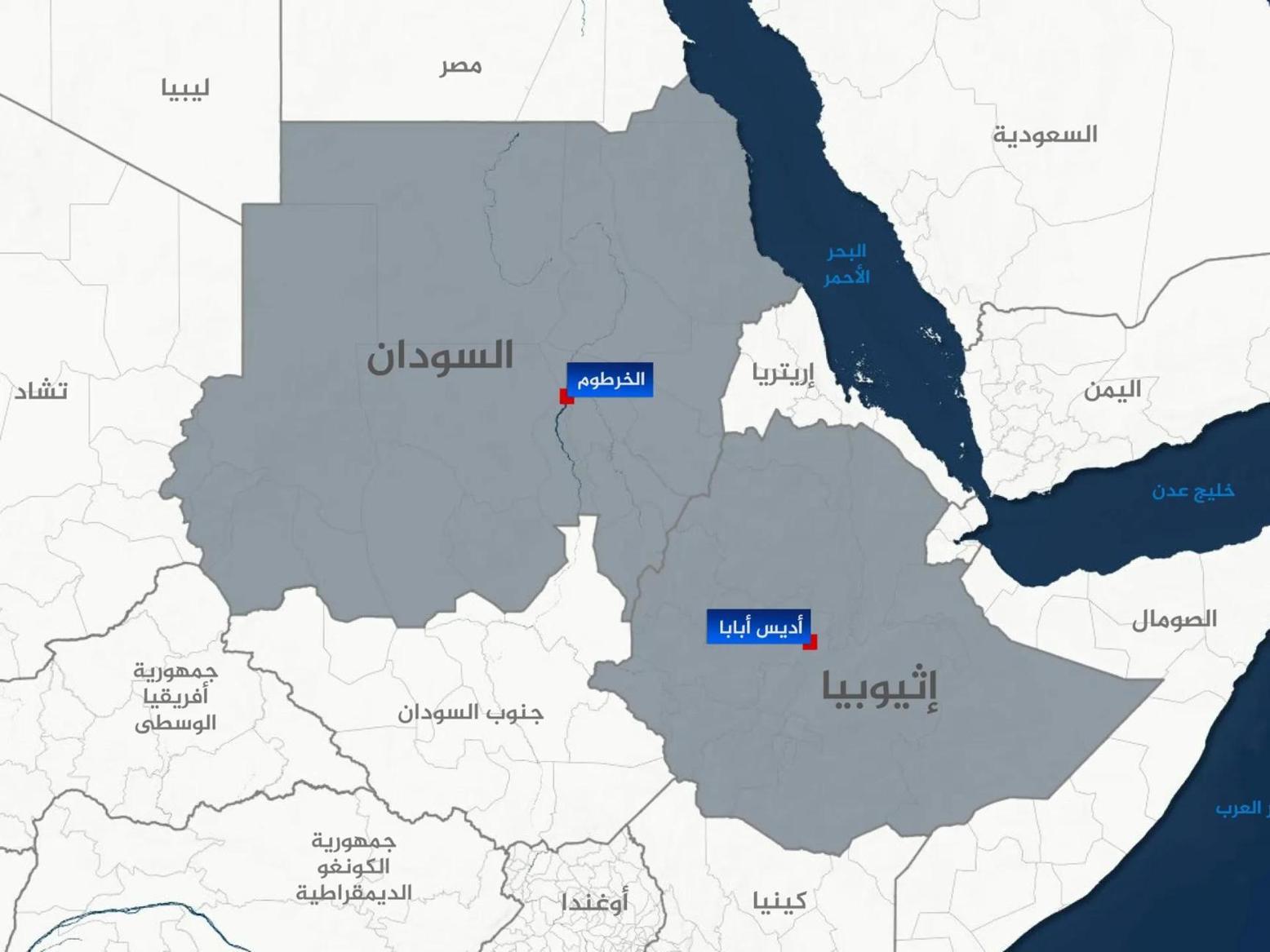
Khartoum has directed accusations towards Ethiopia, claiming it allowed drones to be launched from its territory and provided support to the Rapid Support Forces. However, Addis Ababa quickly denied these accusations, asserting their inaccuracy while reiterating previous allegations against the Sudanese government for supporting the separatist Tigray People’s Liberation Front.
So what do we know about the incident targeting Khartoum Airport, and what do the war of statements and mutual accusations between Ethiopia and Sudan conceal? Do these developments signal a new tension?
What Happened at Khartoum Airport?
On Tuesday, the Sudanese government announced the recall of its ambassador to Ethiopia for consultations, accusing Addis Ababa and Abu Dhabi of involvement in a drone attack targeting Khartoum International Airport.
Sudanese Foreign Minister Mohiuddin Salim stated at a press conference in Khartoum that the government summoned Ambassador Al-Zain Ibrahim “in light of the Emirati-Ethiopian aggression with drones on Khartoum Airport.”
The airport received its first international flight in three years last week. Although the incident did not result in casualties or disrupt air traffic, it indicates a potential escalation of tensions in a highly sensitive area amid the verbal conflict between officials from both countries, as reflected in statements from both sides:
In Sudan, the military spokesperson, Brigadier General Asim Awad Abdel Wahab, stated that drones launched from the Ethiopian airport in Bahir Dar carried out “hostile” sorties within Sudanese airspace, targeting military and civilian sites, including Khartoum International Airport.
He explained that air defenses shot down one of the drones on March 17, and after analyzing its data, it was found to be “owned by the UAE and used from within Ethiopian territory,” asserting that the attack “represents a direct aggression against Sudan’s sovereignty and will not go unanswered.”
In Ethiopia, the government categorically denied Khartoum’s accusations, with a statement from the Foreign Ministry accusing the Sudanese armed forces of supporting mercenaries from the Tigray People’s Liberation Front in the ongoing conflict in the separatist region, claiming that Sudanese military entities provided weapons and financial support to those groups.
The Ethiopian Foreign Ministry stated that it possesses documented evidence regarding the movement of Tigray People’s Liberation Front fighters in Sudan.
Does Ethiopia Support the Rapid Support Forces?
The government in Khartoum accuses Ethiopia and the UAE of supporting the Rapid Support Forces with weapons and money and harboring its fighters within Ethiopia, accusations that both countries consistently deny.
In February, Reuters reported information suggesting that Ethiopia hosts a training camp for thousands of fighters on behalf of the Rapid Support Forces and has developed the nearby Asosa airport for use in drone operations. Ethiopia has not commented on that information.
Residents’ testimonies gathered by the agency indicate that they believe the Rapid Support Forces are behind the new attacks.
What Are the Ongoing Disputes Between Sudan and Ethiopia?
Sudan and Ethiopia have had fluctuating relations for decades, fueled by conflicts over the border stretching approximately 740 kilometers and water resources, alongside security and political disputes.
The Fashaga Area at the Heart of the Conflict:
Sudan has repeatedly declared ownership of the Fashaga area, referring to old agreements, notably the Anglo-Ethiopian treaty of 1902, considering any Ethiopian military presence in the area as “occupation.”
Ethiopia considers Fashaga a disputed area despite previous acknowledgments of the borders. It also believes that Ethiopian farmers have historical rights to exploit the agricultural land.
Despite reaching a historic settlement in 2008 that officially annexed Fashaga to Sudan while allowing Ethiopian farmers and villagers to live there, this type of “flexible border” has kept the agreement fragile due to ambiguity over land ownership rights.
Tensions in Fashaga escalated again when the Sudanese army redeployed in the area in 2020 during the movement of Tigray fighters in Ethiopia, leading to intermittent clashes.
Crops like sesame in the area are viewed as part of supply chains that provide vital financial flows to support the Sudanese armed forces’ war efforts.
Tension in the Tigray Region
Current political tensions highlight the conflict in the Tigray region between the Tigray People’s Liberation Front and the federal government in Addis Ababa that began in late 2020, resulting in the deaths of around 600,000 people according to the African Union and a severe humanitarian crisis with widespread displacement.
During the armed conflict that lasted until 2022, Ethiopia accused Sudan of exploiting the situation to seize border lands.
Water Dispute Over the Grand Ethiopian Renaissance Dam
The construction of the Grand Ethiopian Renaissance Dam on the Blue Nile has sparked disputes between Ethiopia, Sudan, and Egypt.
Sudan fears the dam’s impact on water flows and the safety of its dams, demanding a legally binding agreement on the operation of the Ethiopian dam and data exchange. However, Ethiopia views the dam as a sovereign project for development and electricity generation, rejecting any agreement that restricts its “sovereignty” over the dam’s management.
The dispute over the dam remains unresolved among the three countries despite rounds of negotiations.
Does the Tension Signal Confrontation?
The Rapid Support Forces quickly took control of Khartoum but were expelled from it last year. Since then, they have strengthened their control over the Darfur region in the west and opened a new front, which has also seen repeated drone attacks in the Blue Nile state along the border with Ethiopia.
Experts rule out direct escalation from the Sudanese side towards Ethiopia, as the Sudanese army is preoccupied with regaining control over territories held by the Rapid Support Forces while the Ethiopian government works to enhance internal stability.
The United States and other countries leading mediation efforts in the conflict within Sudan are pushing to avoid escalation through targeting Khartoum Airport and expanding the drone war, which could exacerbate the dire humanitarian situation.
However, doubts linger regarding the effectiveness of diplomatic mediation by countries and organizations such as Saudi Arabia, the UAE, Egypt, the African Union, and the United Nations in a region facing significant complexities due to mutual accusations of external interventions supporting separatists in Sudan and along the border between the two countries, as well as arms supplies and logistical and financial support.
An analysis by the Georgetown Journal of International Affairs recommends that the Intergovernmental Authority on Development (IGAD), the semi-regional organization in East Africa, take the following steps:
Prioritize short-term plans, such as enhancing mediation and conflict resolution capabilities, to address existing and emerging complexities in the region and prevent resorting to the use of proxies in conflicts.
In the long term, the early warning and response mechanism for conflicts under IGAD should develop more accurate analyses and scenarios regarding external interventions through proxies and establish preventive measures.
Encourage member states to enhance regional integration in politics, economics, infrastructure, and finance to ensure regional stability.