Africa-Press – Ethiopia. The Tigray Front responded to Addis Ababa’s accusations against the front for collaborating with the Sudanese government to destabilize the region.
This came in a statement issued by the Tigray People’s Liberation Front, in response to a statement from the Ethiopian Foreign Ministry, which claimed that the front was cooperating with the Sudanese army to destabilize the region.
The front firmly rejected these accusations, describing them as “baseless, irresponsible, and reflecting a recurring pattern of diverting attention through the dissemination of misleading information.”
It added in its statement that “the region needs, at this stage, restraint and constructive engagement,” considering such allegations “only serve to fuel tensions and obscure the urgent need for accountability and genuine peace efforts.”
The statement emphasized that the front “has not engaged in or supported any activities that would undermine the stability of the region.”
It noted that “during the height of the conflict in the Tigray region, when the population faced severe violations and forced displacement, the Sudanese people and government were the ones who provided humanitarian assistance and offered refuge to fleeing civilians.”
The statement asserted that “this humanitarian work should not be distorted to serve shifting political narratives.”
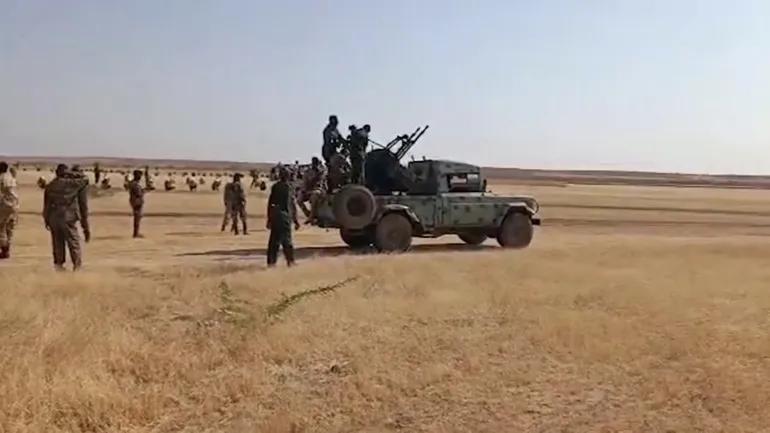
Regarding the internal situation, the statement clarified that “the people of Tigray are awaiting the full implementation of the ceasefire agreement (the Pretoria Peace Agreement 2022), including the safe, voluntary, and dignified return of the displaced,” pointing out that the front’s forces, including those deployed in western Tigray, “are committed to ensuring a safe and organized return.”
The front expressed “grave concern” over what it described as “a recurring pattern of behavior that could drag Addis Ababa and the region into further instability,” warning that “escalatory rhetoric, external entanglements, and alignments with competing regional agendas reflect short-sighted calculations that threaten long-term peace.”
The statement indicated that these policies “harm relations with neighboring countries and could drag the country into conflicts that do not serve its people’s interests.”
The front affirmed that “the people of Tigray have paid a heavy price for peace,” and that despite the challenges, “they remain committed to a peaceful solution based on negotiation,” reiterating their commitment to “peace, stability, and constructive engagement,” and their readiness “to participate in an inclusive and credible dialogue process without preconditions to achieve lasting and just peace.”
The Tigray statement called on “all parties, including the international community, to remain vigilant, reject inflammatory rhetoric, promote accountability, and support the implementation of agreed commitments,” emphasizing that “sustainable peace is not achieved through escalation or propaganda, but through responsibility and dialogue.”
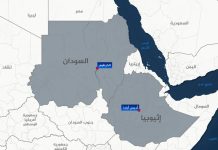
The Tigray statement comes amid rising tensions between Khartoum and Addis Ababa, as Addis Ababa accused the Sudanese armed forces on Tuesday of supplying fighters from Tigray with weapons and financial support, labeling them as “mercenaries,” and asserting that it possesses “reliable evidence” that Sudan has become a hub for hostile forces against it.
These accusations were a response to Sudanese claims of Ethiopia’s involvement in drone strikes targeting the capital Khartoum airport, which Addis Ababa categorically denied, describing them as “baseless.”
In the context of diplomatic tensions, Khartoum summoned its ambassador to Ethiopia for consultations, reflecting the depth of the rift between the two countries.
A report from a research lab affiliated with Yale University in early April 2026 revealed indicators that an Ethiopian military base near the Sudanese border had provided support to the Rapid Support Forces, adding a new dimension to the complexities of the regional crisis.
The spokesperson for the Sudanese army, supported by documents, presented flight paths of the drones that targeted Khartoum, confirming that some were intercepted.
Video footage showed that the drones launched from Bahir Dar airport within Ethiopian territory, which was the same route taken by a drone intercepted in March.
For its part, Khartoum accused both Addis Ababa and Abu Dhabi of violating national sovereignty and international law, asserting that it “does not seek to initiate aggression,” but warned that any attack would be met with a response.
This escalation comes at a time when Sudan is experiencing an ongoing war since April 2023 between the regular army and the Rapid Support Forces, while fears are increasing within Ethiopia of a potential resurgence of conflict in Tigray, which emerged from a bloody war in 2022 that claimed at least 600,000 lives, in one of the most complex humanitarian crises in the region in recent years.