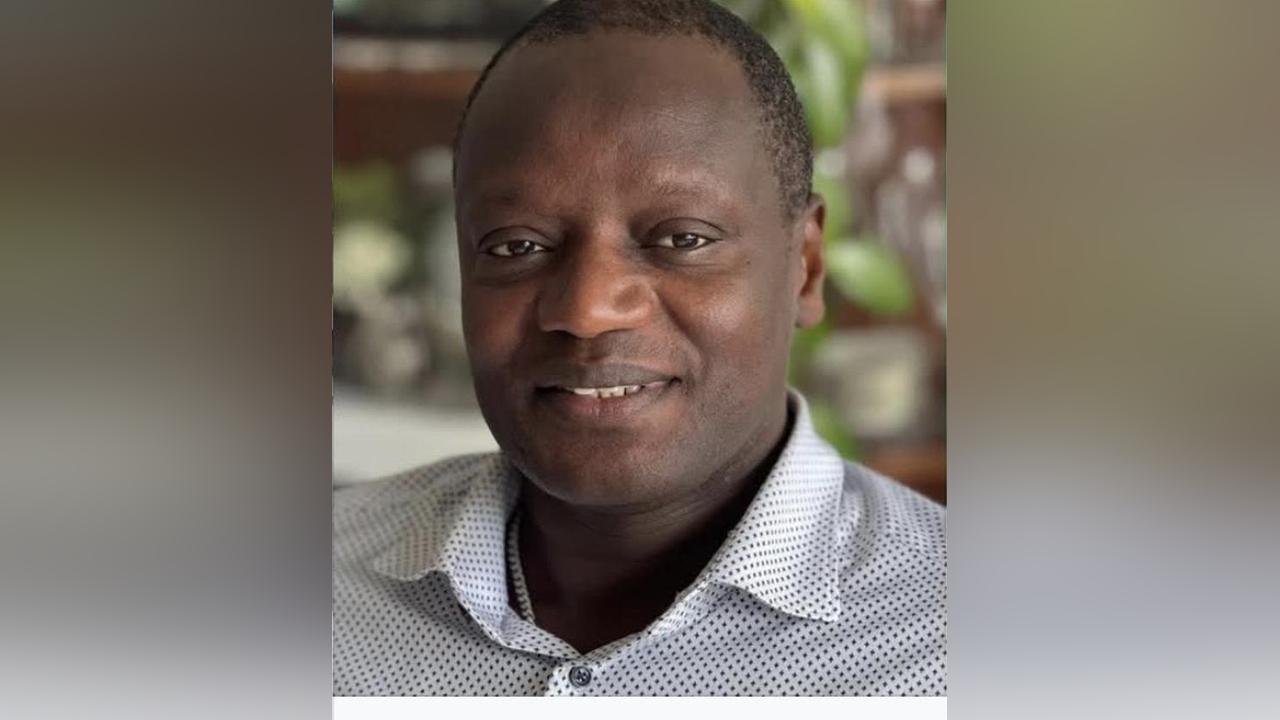
Africa-Press – Gambia. Ebrima Kitim Jarju, a veteran political commentator and outspoken critic of former Gambian president Yahya Jammeh, is questioning the No-To Alliance’s assertion that Jammeh’s long-discussed return to The Gambia was abruptly “cancelled” following the arrest of Sanna Manjang.
In a widely shared audio message circulating this week, Jarju revisited earlier claims and warnings involving Manjang—an alleged Jammeh associate—and raised doubts about the political motivations behind the Alliance’s recent announcement.
Jarju pointed listeners back to a past audio recording from Jammeh, in which the former president appeared to refer to Manjang with familiarity. “Some statements were made, and I must bring people back to that statement,” Jarju said. “Maybe some have forgotten, but I personally did not forget. Years ago, Jammeh released an audio calling Sanna Manjang ‘Suma Serer Bii’—meaning ‘my Serer’—which signaled a close relationship. I released an audio advising Jammeh not to engage with these kinds of people.”
He also cited Manjang’s reported ties to a figure known as Baitullah, describing their interactions as emblematic of the opaque personal networks that shape Gambian political life. “We saw pictures of Baitullah and Sanna together, and Sanna regularly attended his gatherings,” Jarju said. “Baitullah even released an audio warning to President Adama Barrow to be careful because Sanna Manjang had a connection in the army. I condemned that too.”
What drew Jarju’s sharpest criticism, however, was the timing of the No-To Alliance’s recent statement. The group claimed that Jammeh’s return had been “cancelled” shortly after news broke Saturday that Manjang had been detained in Casamance.
“Immediately after we heard about Sanna Manjang’s arrest, the No-To Alliance’s spokesperson issued a press release saying Jammeh’s return had been cancelled,” Jarju said. “Why now, and not before? What connection does Sanna Manjang’s arrest have to Jammeh deciding not to return to The Gambia?”
The Alliance has not responded to Jarju’s remarks, which have sparked renewed debate over the extent of Manjang’s influence and the credibility of claims surrounding Jammeh’s possible return.
For many Gambians, the episode underscores the enduring complexity of post-Jammeh politics—where alliances shift, unofficial networks wield influence, and the former president’s name continues to animate public discourse. Jarju’s comments add another layer to the controversy, raising questions that remain unanswered as political observers watch for the Alliance’s next move.
For More News And Analysis About Gambia Follow Africa-Press