
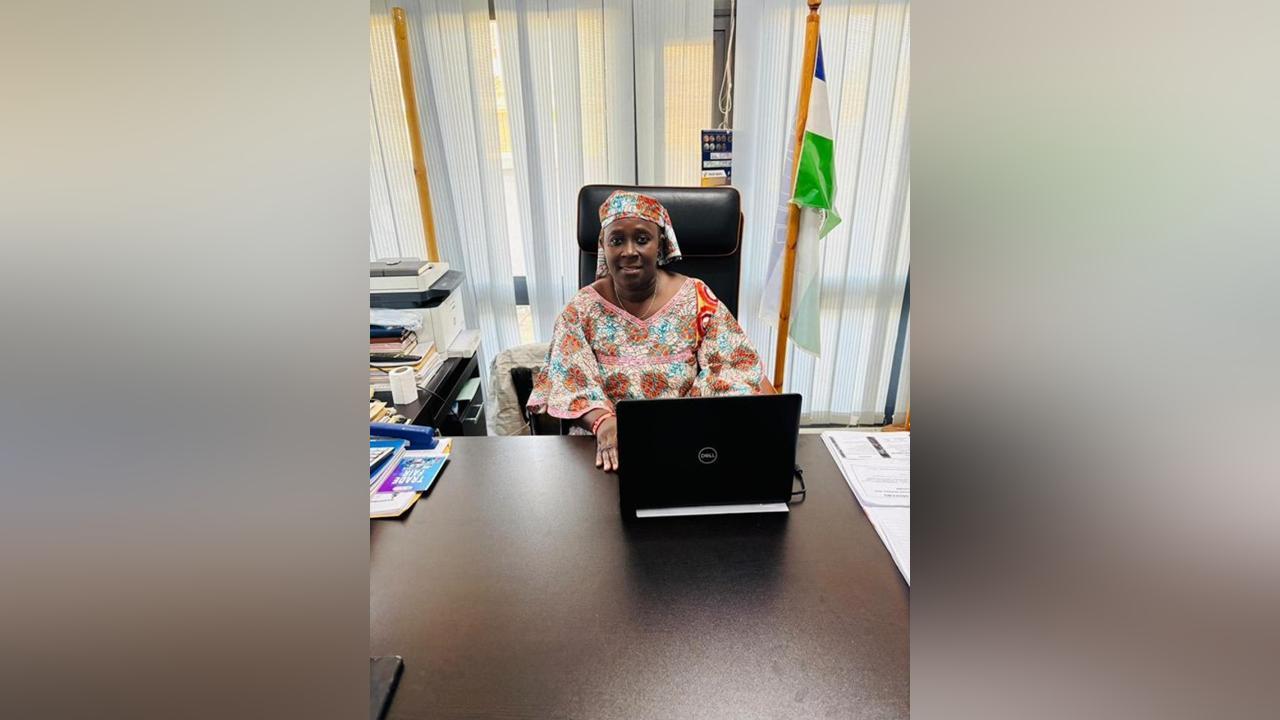
Africa-Press – Gambia. Beyond the Kitchen Walls: The Rise of Binta Janneh Jallow
Intro:- In this maiden edition of Women’s Affairs Column, our indefatigable reporter catch up with women leader par excellence. In a political environment where women are often encouraged to “stay in their lane,” Binta Janneh Jallow, Deputy Mayor of the Kanifing Municipal Council (KMC) and Councillor for the Bakau New Town–Fajara Ward, has charted her own path, shaped by years of grassroots mobilisation and community service.
Speaking to The Voice for this week’s Women’s Affairs column, Jallow reflects with calm authority on a journey she describes as “built, not inherited.”
Early Inspiration
Her entry into leadership began long before her formal political career. She traces her early political consciousness to her grandmother, a prominent community figure and former president of the Kanyeleng women’s group.
“I was always with her,” Jallow said. “I didn’t see politics as a man’s world. I saw it as a space where women were already leading, mobilising and deciding.”
This foundation influenced her engagement in community structures, including her service as secretary to the Nu De Makafu women’s group and her work with several grassroots associations in Bakau New Town.
By 2016, she ventured actively into politics, driven partly by what she observed during local elections. “All the candidates were men,” she noted. “I asked myself – why not a woman? Why not us?”
In 2018, she contested a seat against three men and one woman – and won.
Challenges for Women Leaders
Jallow acknowledges that the path for women in leadership remains demanding. Cultural expectations, financial limitations and domestic responsibilities, she said, continue to restrict women’s political participation.
“People think we can’t handle leadership,” she noted. “But women lead every day in their homes. Politics only becomes difficult when the support is not there.”
She also highlighted the intimidation women often face. “You get insulted, talked down to, sometimes even by other women. But if you stop to respond to every criticism, you won’t move,” she said.
Her advice to aspiring women leaders is straightforward: “People will talk whether you do good or bad. So choose yourself and move.”
Work on the Ground
Jallow measures her leadership by results. Among initiatives implemented during her tenure are:
She also notes the increasing number of elected female councillors at KMC—from one when she first entered office to four today, with three additional nominated female representatives.
Leadership Through Structures
Jallow emphasises the importance of functional governance systems. She describes the strengthening of Ward Development Committees (WDCs), sub-ward structures and community-based organisations as central to her work.
“For decentralisation to be meaningful, people must feel involved in the structures that serve them,” she said.
Balancing Public Service and Personal Life
Behind the public role, Jallow manages the demands of family, community work and political responsibilities.
“Sometimes it’s not easy,” she admitted. “But with support from home and a clear sense of purpose, you keep going.”
She confirms this is her final term as councillor, saying she wants to create space for other women to lead—while keeping open the possibility of higher office. “Maybe Parliament,” she said with quiet confidence.
A Call for Broader Inclusion
Jallow concluded with an appeal for greater trust in women’s leadership.
“Gender equality can’t be achieved when women are only allowed to be deputies. We are capable of leading. Society must give us the chance.”
Her story mirrors that of many Gambian women—resilient, determined and often underestimated—yet central to community development. For Jallow, women are not auxiliary players in national progress; they are its architects.
For More News And Analysis About Gambia Follow Africa-Press