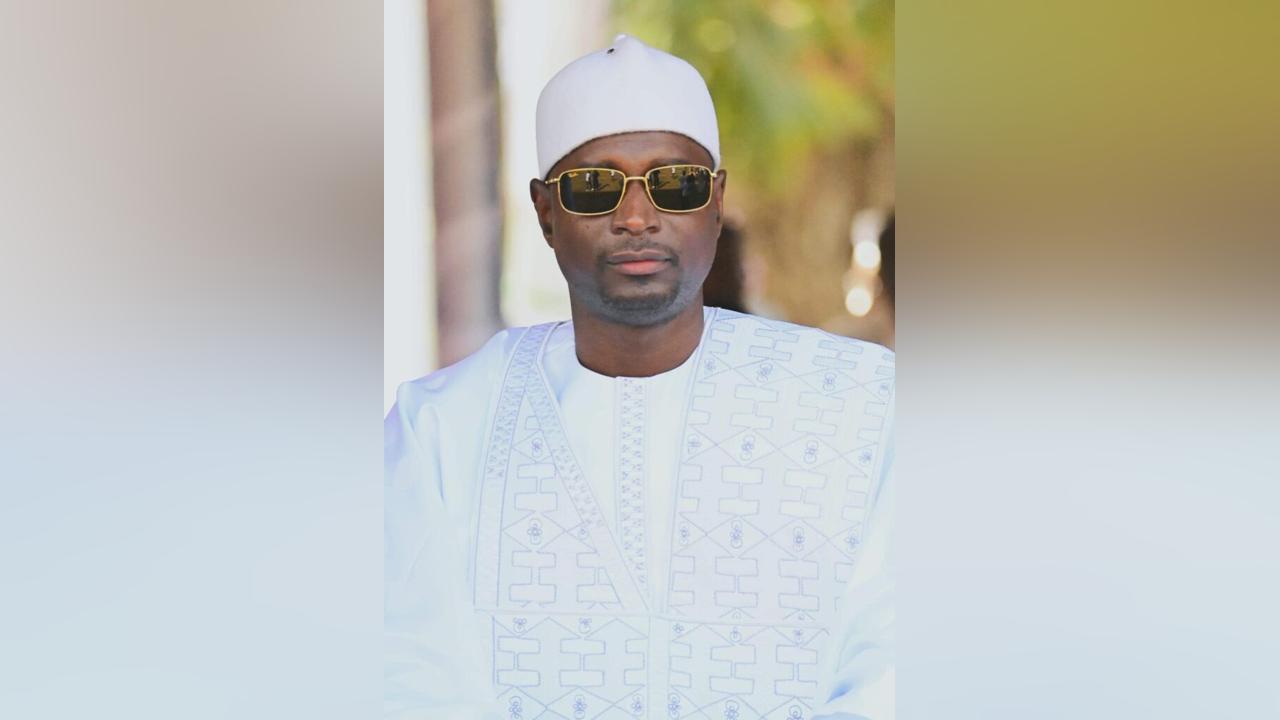
Africa-Press – Gambia. The Deputy Speaker of the National Assembly and spokesperson of the ruling National People’s Party (NPP), Hon. Seedy Njie, has cautioned residents of Old Yundum against supporting the United Democratic Party (UDP), asserting that the opposition party is opposed to national development and would undermine progress if entrusted with governance.
Addressing an NPP political rally in Old Yundum, Hon. Njie said the December 5 presidential election presents Gambians with a clear choice between sustaining development, peace, and progress, or supporting what he described as a group that does not prioritize the country’s advancement.
He accused the UDP of criticizing key infrastructure initiatives undertaken by the government, including road construction and the expansion of electricity supply, describing such projects as a “waste of public funds.”“UDP has said that the ongoing road construction and electricity expansion in The Gambia are a waste of resources. If the people of Old Yundum want these developments to continue, they should ensure they obtain their voter cards in April and vote for President Adama Barrow on December 5,” he said.
Hon. Njie further stated that several ongoing national projects under President Barrow’s administration had been opposed by the UDP, arguing that such resistance demonstrated the party’s lack of commitment to development.
“If those people were to govern this country, it would move backward, accompanied by deceit and the misuse of national resources,” he added.
He urged Gambians not to entrust the country to what he described as a political group that considers itself elite and claims ownership of the nation.
According to Hon. Njie, President Barrow and the NPP adhere to social democratic principles that prioritize the welfare of farmers, low-income earners, and vulnerable communities. He said the President’s vision is to transform The Gambia into a city-state, while ensuring that development seen in Banjul and Serekunda is replicated across rural regions such as Nianija, Sandu, Wuli, and Fulladu, particularly in the areas of road infrastructure, electricity, education, and agriculture.
He also credited President Barrow’s administration with restoring human rights, strengthening good governance, and safeguarding fundamental freedoms.
“Today, The Gambia enjoys a level of transparency and accountability in economic management that it has not experienced since independence,” he said.
Hon. Njie questioned the lack of infrastructure development between 1965 and 2017, noting that despite decades of tax payments, citizens continued to demand basic services such as roads, schools, and electricity.
“If there was no corruption during that period, where did the country’s money go?” he asked.
Similarly, he dismissed allegations of corruption under the current administration, arguing that the scale of infrastructure development since 2019 demonstrates effective resource mobilization and management.
“If there was corruption and mismanagement, where did the funds come from to build roads, expand electricity, construct hospitals and schools, and improve the economy?” he queried.
He further claimed that since 2021, members of the middle class have experienced significant income growth, which he said reflects improvements in the national economy.
“President Barrow is improving the lives and livelihoods of all Gambians. He is seeking another mandate in 2026 to continue this work,” Hon. Njie concluded.
For More News And Analysis About Gambia Follow Africa-Press