Africa-Press – Gambia. The Government of The Gambia on Tuesday launched two landmark policy frameworks aimed at strengthening professionalism, accountability, and public trust within the country’s security institutions.
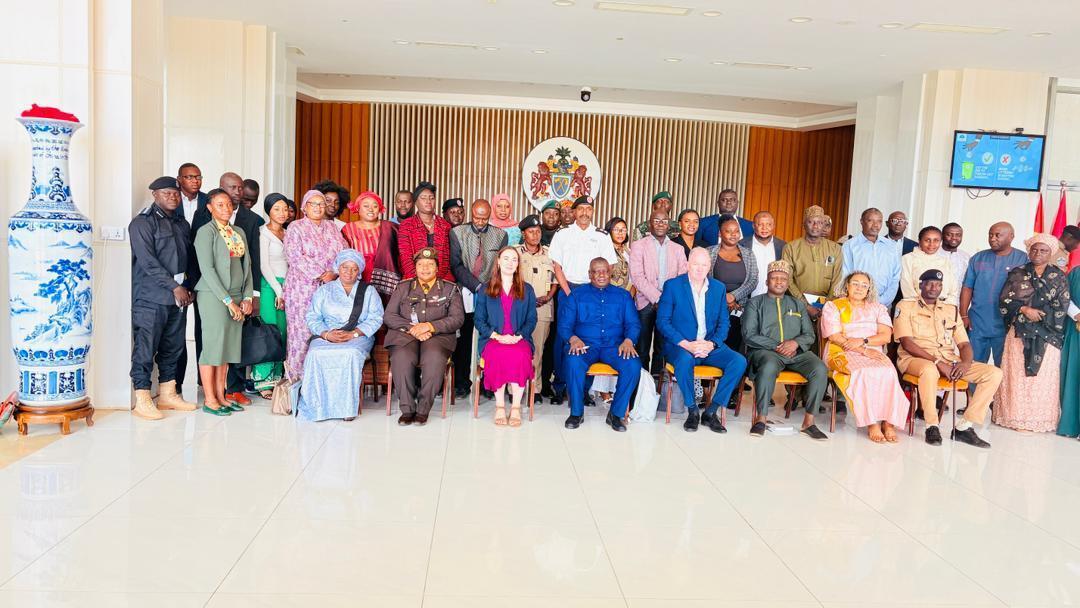
The Generic Gender Mainstreaming Policy (GGMP) and the Sexual Harassment, Exploitation and Abuse (SHEA) Policy were unveiled at a high-level ceremony at the Sir Dawda Kairaba Jawara International Conference Centre. The event brought together senior government officials, heads of security institutions, development partners, civil society actors, and members of the media.
The policies were developed through a collaborative process led by the Office of National Security (ONS) with technical support from the Geneva Centre for Security Sector Governance (DCAF), under an EU-funded security sector reform initiative.
Speaking at the launch, National Security Adviser Abubacarr Suleiman Jeng described the event as a milestone in The Gambia’s ongoing security sector reform, stressing that “security is not only about protecting borders or enforcing laws, but also about protecting people and upholding their rights.”
“A security sector that tolerates discrimination, harassment, or abuse cannot effectively fulfil its mandate,” he said, adding that the policies reflect the government’s commitment to inclusive, people-centred, and rights-respecting security governance.
The Gender Mainstreaming Policy provides a framework for integrating gender perspectives across all security institutions. It seeks to promote equal opportunities in recruitment, training, deployment, and promotion, while encouraging women’s participation in leadership and decision-making. Jeng emphasized that gender mainstreaming is about fairness, merit, and operational effectiveness, rather than lowering standards.
The SHEA Policy establishes a zero-tolerance approach to sexual harassment, exploitation, and abuse within the security sector. It sets out standards of conduct, confidential reporting mechanisms, survivor-centred response procedures, and protections against retaliation, while reinforcing accountability at all levels.
Enya Braun, representative of the EU delegation to The Gambia, described the launch as a strong demonstration of national ownership and political will. She underscored that gender equality and the prevention of sexual abuse are central to credible and effective security governance, particularly as The Gambia addresses evolving challenges such as migration, border management, and transnational threats.
Mark Lynch, DCAF Head of Office, said the policies are practical institutional tools designed to strengthen governance and operational effectiveness. Drawing from his law enforcement experience, he highlighted that misogyny and abuse are global challenges, underscoring the need for strong policies and leadership.
Presentations on both policies were delivered by members of the Technical Working Group, including gender specialists and senior police representatives.
Stakeholders acknowledged that while the launch marks an important milestone, the success of the policies will depend on sustained implementation, leadership commitment, and accountability to ensure meaningful change for both security personnel and the public.
For More News And Analysis About Gambia Follow Africa-Press