
Africa-Press – Gambia. In the current Gambian politics, love of country has become a competitive sport. At every election season, every bridge opening, every radio talk show produces a new champion of patriotism, each louder than the last. Listening to them, one is tempted to ask: who are more nationalist than the nationalists?
The question, mind you, is not academic. It goes to the heart of how we understand the Gambian nation and who has the right to speak in its name.
The first generation of Gambian nationalists who negotiated independence and built the early republic practised a modest, civic patriotism. Their nationalism was not built on drums, casting aspersions and insults but on institutions: a constitution, a neutral civil service, coexistence among many ethnicities, and the simple idea that a citizen could disagree with government and still love The Gambia.
That spirit is fading. Today nationalism is increasingly measured by the volume of praise for leaders, the number of party T-shirts in a convoy, or the size of a billboard beside the new OIC road. The nation is treated like private property, and loyalty to an incumbent is confused with loyalty to the republic. This is how people become “more nationalist than the nationalists.”
We bear testimony to the extreme version during the Yahya Jammeh years. A soldier who arrived long after independence wrapped himself in the flag and declared exclusive ownership of Gambian identity. Critics were branded enemies, foreign agents, or bad Muslims and Christians. Nationalism was reduced to obedience, citizenship to applause. The louder the praise, the purer the patriot.
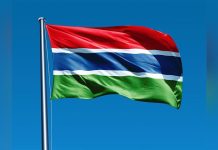
The tragedy was not only repression but the theft of meaning. The idea of The Gambia as a community of equal citizens was replaced by a personality cult dressed in green, red, white, and blue (or in exclusive green as it were).
After 2016 many hoped for a return to the older, quieter nationalism of laws and institutions. Yet a softer form of performative patriotism has crept back. Development projects, especially roads, are marketed as proof of national devotion. Anyone who insists on constitutional reform, term limits, or accountability is told they are delaying progress or undermining stability.
We are invited to believe that asphalt is patriotism; that concrete is citizenship.
But a nation is not a construction company. Roads can be built by any contractor; a republic can only be built by rules that outlive presidents. When infrastructure becomes an alibi for weakening institutions, we have again produced actors who are “more nationalist than the nationalists.”
Another troubling trend is ethnic and religious outbidding. Campaign platforms increasingly flirt with the idea that certain communities are the “natural” owners of the state. Religious imagery is deployed to sanctify political ambition. This contradicts the founding compromise of our country: Mandinka, Fula, Wolof, Jola, Alorn, Serahule, Aku, Manjago – Muslim, Christian and traditionalist all equal before one law.
Anyone who narrows Gambian identity to bloodline or pulpit is not a super-patriot; they are a small one.
Real nationalism is less theatrical. It is the market woman who pays tax without stealing, the civil servant who refuses a bribe, the journalist who prints uncomfortable facts, the youth who chooses a voter card over a bag of rice. These citizens rarely wave giant flags, yet they carry the republic on their backs.
The 2020 Draft Constitution captured this civic vision: limits on executive power, stronger local government, independent courts, and protection for dissent. Its rejection was a victory for those who prefer a noisy nationalism without legal chains. The debate was revealing: defenders of the draft were accused of hating the country, while those protecting personal interests claimed to be its truest lovers.
This inversion is dangerous. When patriotism becomes a shield for power, the nation itself disappears behind the shield.
Gambians must recover a simpler test. Ask not who praises leaders the most, but who strengthens institutions the most. Not who shouts “Gambia first,” but who puts the constitution first. Not who builds the biggest billboard, but who leaves behind fair elections, honest courts, and a civil service that serves every village.
Our history offers guidance. The early republic was imperfect, yet it understood that a small country survives through restraint, not chest-thumping. The genius of The Gambia has always been moderation: many peoples, one citizenship; many faiths, one law.
Those values need defenders today more than ever. Otherwise we will continue producing politicians who are experts at looking patriotic while undermining the very idea of a nation.
So, who are more nationalist than the nationalists? Often they are the ones who fear free constitutions, who confuse criticism with betrayal, who trade the future for the next election. They love the flag but not the rules that give the flag meaning.
The task before us is to refuse that counterfeit patriotism. The Gambia does not need louder nationalists; it needs better republicans. A road can carry cars, but only a constitution can carry a nation.
Source: By Joseph Paul Jassey, Capt.(rtd)