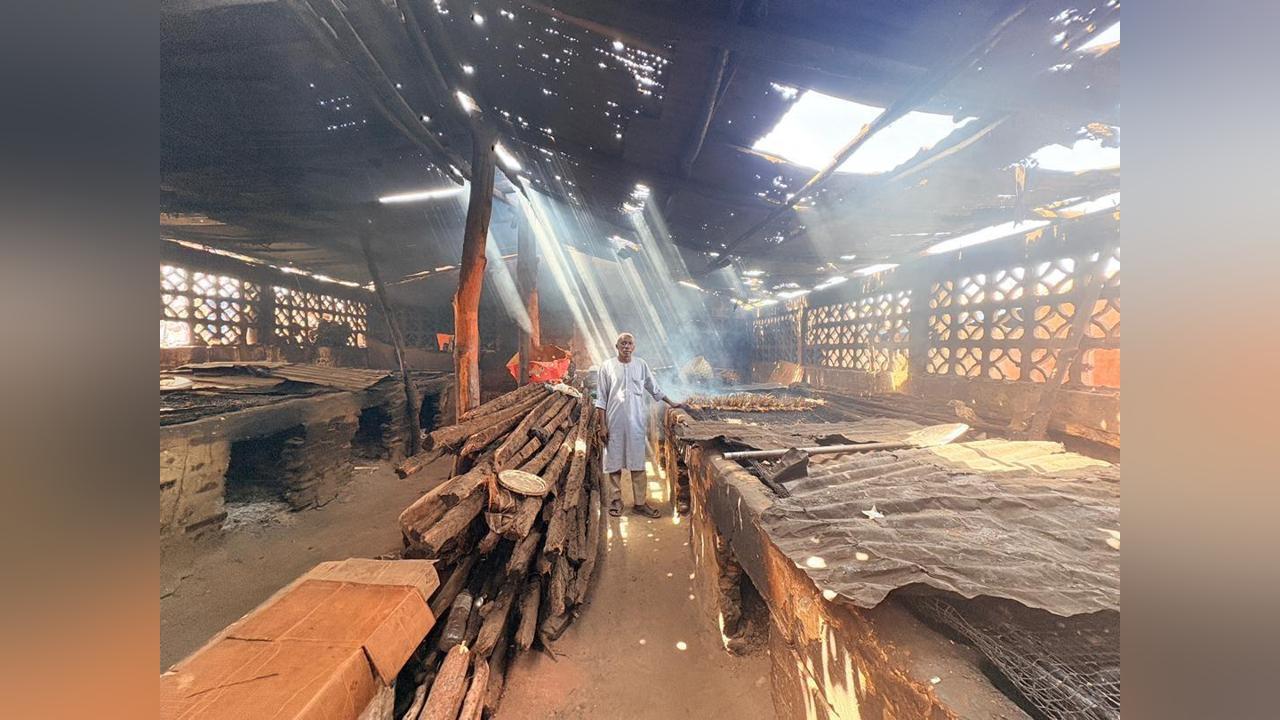
Africa-Press – Gambia. Fish smokers at the Tanji Fish Landing Site say their once-thriving trade is now struggling to survive, as a sharp decline in fish supply and rising costs squeeze their incomes and raise fears about the future of the local fishing industry.
For generations, Tanji has been known as a hub for smoked fish production, supplying markets across The Gambia and exporting to countries such as Sierra Leone and Nigeria. But traders and processors say the situation on the ground has changed drastically in recent years.
“The fish smoking before was powerful, but it is not like that now,” Lamin Ceesay, a veteran fish smoker with over 30 years of experience, said.
“Before, fish was plenty. Every day we were working. Now, sometimes you can stay two to three months without working because there is no fish to buy.”
According to the smokers, the shortage has been noticeable for over a week, with low catches reported by fishing vessels. At the same time, prices have surged, making it harder for small-scale processors to stay in business.
“Before, we could buy a basket for around D1,500, but now it is between D1,600 and D1,800, sometimes even more,” Ceesay explained. “After paying for wood, rent and everything, you are left with almost nothing.”
Omar Touray, who has spent more than four decades in the trade, said the current reality is far removed from what he inherited from his father.
“Before, we exported smoked fish to Sierra Leone, Nigeria and even Europe,” he said. “Now, even selling locally is difficult. Wood is expensive, and sometimes it is not even available because it has to come from Foni.”
The smokers attribute the falling fish supply partly to increased fishing pressure, including the presence of foreign trawlers in Gambian waters.
“There are too many vessels now, and most of them are not Gambian,” Ceesay alleged. “The noise drives the fish away, and when fish arrives, many buyers compete for it. Even getting small quantities has become difficult.”
Beyond supply challenges, working conditions at the site remain a major concern, especially for women who dominate the fish smoking business.
Mariama Saidy described how overcrowding and poor infrastructure make their work hazardous.
“When all of us are smoking fish at the same time, the smoke is too much. Sometimes you cannot even see each other,” she said.
“At night, it is very dark, and we don’t have electricity here. These are serious difficulties for us.”
Despite some support from the Ministry of Fisheries, including protective gear and training, the smokers say more needs to be done particularly in providing financial support and improving the aging facility, which dates back to the First Republic.
As challenges mount, many fear the trade that has sustained families for decades could fade away if urgent action is not taken.
For More News And Analysis About Gambia Follow Africa-Press