
Africa-Press – Ghana. Mr Samuel Okudzeto Ablakwa, Ghana’s Minister for Foreign Affairs, has called for stronger, coordinated regional action to confront the rapid proliferation of synthetic drugs across West Africa.
He warned that the crisis now posed one of the gravest threats to the region’s stability, public health and future development.
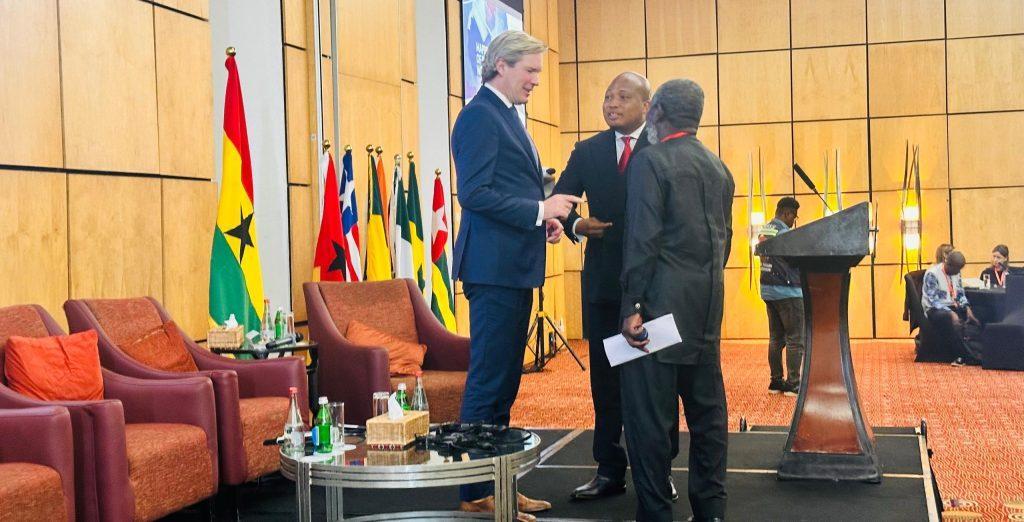
Mr Ablakwa made the call at the closing ceremony of a two-day International Conference and Regional High-Level Dialogue on Drug Markets in West Africa held in Accra, where ministers,
security heads, international agencies and drug policy experts reviewed emerging drug trends and adopted the Accra Call to Action on Drug Markets in West Africa.
The meeting was jointly convened by the Government of Ghana, the Government of the Netherlands and the Global Initiative Against Transnational Organized Crime (GI-TOC).
The Minister said Ghana remained firmly committed to the objectives of the Dialogue and to advancing a unified regional strategy.
He expressed appreciation to partners for their technical support and stressed that the rising complexity of synthetic drug markets required deeper collaboration across borders and institutions.
Mr Ablakwa noted that West Africa’s geographical position had historically made the region a major transit hub for drug trafficking networks, but warned that the situation had now evolved beyond transit concerns.
“We are witnessing the disturbing growth of domestic drug consumption and the rapid emergence of synthetic drug markets, which are exerting devastating effects on our youth and communities,” he said, citing substances such as kush, synthetic opioids and codeine-based mixtures that mimic the effects of cocaine and heroin.
He said the discussions over the two days had reinforced the need for a comprehensive, multi-sectoral drug control framework combining law enforcement, intelligence cooperation, education, prevention, rehabilitation and active community engagement.
He reaffirmed Ghana’s commitment to the ECOWAS Plan of Action on Drug Control (2020–2030) and the UNODC’s Strategic Vision for Africa, emphasising the importance of coordinated enforcement and harmonised legal standards across member states.
The conference theme, “Mapping the Future of Drug Markets in West Africa: Synthetics, Cocaine, Criminal Money and Strategic Responses,” reflected concerns that West Africa is becoming a hotspot for emerging synthetic substances, many of which are far more potent than traditional narcotics.
Studies presented at the meeting indicated that synthetic cannabinoids, nitazenes, tramadol derivatives and methamphetamine are increasingly present in local markets, often mixed with unknown compounds that heighten risks of addiction, overdose and long-term health complications.
Participants noted that the spread of online platforms, global supply chains and postal channels had enabled criminal actors to easily obtain precursor chemicals and set up low-cost production hubs across the region.
Synthetic drugs have reshaped the global illicit drug landscape, lowering barriers to entry for new criminal groups and accelerating market fragmentation.
The youth bear the greatest burden of harm, with addiction, mental health disorders, overdoses and community breakdown rising sharply in several West African countries.
Two countries have already declared national emergencies over synthetic drug use, a response once reserved for deadly epidemics, underscoring the severity of the situation.
A report by the Global Initiative Against Transnational Organized Crime point to major gaps in forensic testing capacity, weak surveillance systems and the inability of many countries to identify new compounds entering their markets.
It warned that traditional enforcement approaches were no longer adequate to confront a dynamic, technologically sophisticated and increasingly decentralised criminal economy.
The Foreign Affairs Minister stressed that the synthetic drug threat was not only a criminal problem but also a development and public health challenge rooted in socioeconomic vulnerabilities.
“Drug trafficking and illicit drug markets are both a symptom and a driver of deeper socio-economic inequality,” he said, pointing to youth unemployment, poverty, weak governance and limited access to health and social protection as factors that give criminal groups leverage over communities.
He outlined five key priorities: strengthening intelligence sharing across West African states; expanding forensic and laboratory capacity to detect new psychoactive substances; disrupting the financial foundations of drug trafficking through stronger anti-money laundering tools; scaling up prevention, early intervention and school-based awareness programmes; and ensuring accessible, rights-based treatment and rehabilitation services.
The Minister affirmed Ghana’s alignment with the Accra Call to Action, which committed governments to evidence-based policies, improved data collection and deeper international cooperation under ECOWAS, the AU and the UN systems.
Mr Ablakwa urged countries to ensure that the commitments made in Accra translate into measurable action. “We must move beyond declarations to measurable progress… Ghana stands ready to continue working closely with all her partners and sister states to build a safer, healthier and more secure West Africa,” he said.
It called for urgent political leadership to drive a coordinated, science-based regional response that integrates public health, development and security considerations.
At the close of the conference, participants reaffirmed their commitment to the Accra Call to Action, which outlined steps to strengthen scientific data sharing, disrupt transnational criminal networks, promote rights-based drug policies, ensure inclusive decision-making and deepen cooperation with ECOWAS, the AU and the UN.
The Call emphasises the need to protect young people and vulnerable communities from the harms of emerging drug markets and to ensure that state responses uphold human rights and public health principles.
For More News And Analysis About Ghana Follow Africa-Press