
Africa-Press – Ghana. Ghana Airports Company Limited (GACL) is undergoing a major strategic realignment to support the country’s 24-hour economy agenda with a clear focus on strengthening non-aeronautical revenues, enforcing robust revenue assurance measures, and expanding key infrastructure.
The company’s renewed direction is centered on sustainability, financial discipline, and global best practices — positioning Ghana’s airports as competitive economic hubs.
GACL, a fully government-owned limited liability company, has managed Kotoka International Airport (KIA) and five regional airports since 2007.
Its operations rely on two primary revenue streams:
aeronautical and non-aeronautical. While aeronautical revenues such as passenger service charges, landing fees, aircraft parking, and navigation charges remain essential, they are heavily regulated, giving little room for rate increases.
To overcome this limitation, GACL is aggressively expanding its non-aeronautical revenue base, a global growth driver for modern airports.
The company derives income from car park services, land rentals, subleases, royalties, and commercial operations within the airport enclave.
These revenue streams proved their value during the COVID-19 pandemic, when non-aeronautical earnings sustained airport operations despite halted flights.
A key pillar of GACL’s reset is the stringent land administration reforms introduced in 2024 under the leadership of Mrs. Yvonne Nana Afriyie Opare, the Managing Director.
The measures required full upfront payment for all land transactions, ending years of defaults and debt accumulation. Businesses opting for payment plans receive contracts of sublease until full payment is completed.
The company has also begun recovering long-held assets, including the retrieval of 2.6 acres of land in July 2025 from a partner owing a debt spanning over five years.
Land pricing had also been formalized. One-off 100 per cent payments may attract higher discounts, whereas staggered arrangements receive fewer concessions.
Even after full payment, lessees must continue to meet annual ground rent obligations and pay royalties between 5–15 per of gross monthly revenue.
All transactions remained subject to approval by the GACL Board, ensuring strong governance and transparency.
As part of efforts to boost non-aeronautical income and support round-the-clock operations, GACL is expanding car parking capacity from 513 bays to 2,000 bays.
The project would ease congestion, increase revenue, and create new jobs through 24-hour shift systems.
It also supports Ghana’s broader economic ambition by enabling continuous commercial activity at airport facilities.
Forward-looking infrastructure plans further align GACL with global airport standards.
The company intends to construct a connecting concourse between Terminal 2 and Terminal 3, eliminating the current need for passengers to walk outdoors or rely on vehicles to transit between terminals.
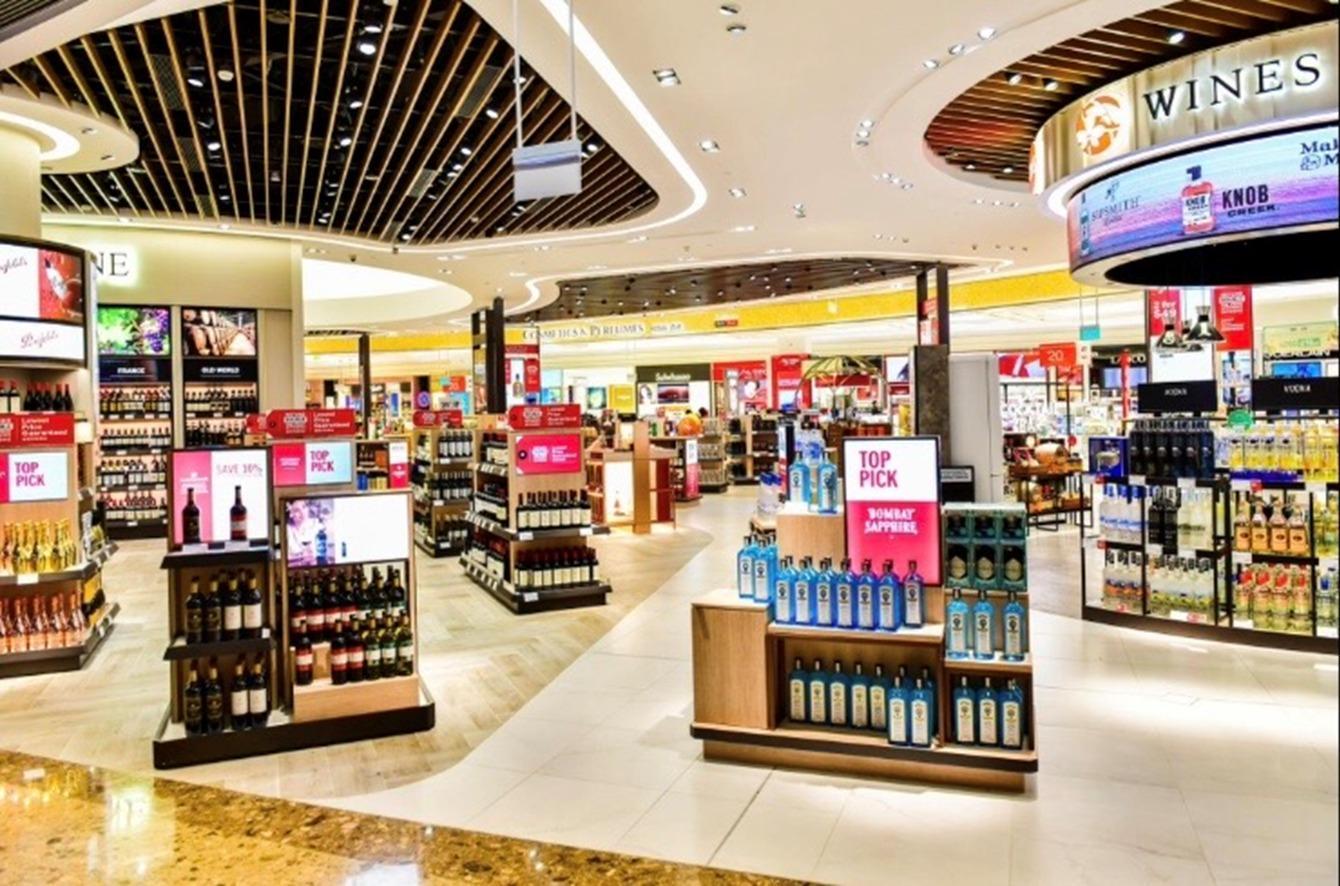
The concourse would feature retail shops, duty-free stores, lounges, and food outlets, all designed to operate 24 hours daily to create jobs and enhance passenger experience.
Such inter-terminal concourses are standard at leading airports worldwide and offer seamless, weather-protected movement.
GACL’s strategy reflected global best practices from industry leaders such as Changi, Dubai, Heathrow, and Incheon airports.
The company’s approach emphasizes revenue diversification, integrated land use, strong financial governance, infrastructure modernization, sustainability, and investor transparency.
Globally, top-performing airports generate up to 60 per cent of revenues from non-aeronautical sources, and GACL’s model aligns with this trend.
Through disciplined reforms, infrastructure expansion and transparent governance, GACL is positioning itself not only as a national aviation leader but also as a globally competitive airport operator.
Its commitment to innovation, sustainability, and commercially driven management ensures that Ghana’s airports remain vital gateways for economic growth, tourism development, and international trade.
For More News And Analysis About Ghana Follow Africa-Press