
Africa-Press – Ghana. Ghana’s textile industry revival will remain fragile unless the government creates a National Cotton Development Authority to drive seed production and value chain integration, the Legacy Crop Improvement Centre (LCIC) has warned.
The Centre said the country’s ambition to resuscitate what was once a vibrant textile sector is at risk of collapsing without urgent investment in domestic cottonseed development, arguing that the absence of a stable seed system remains the industry’s biggest bottleneck.
In a letter to the Minister of Trade, Industry and Agribusiness, LCIC stated that the current approach overlooks the core foundation of textile manufacturing, describing it as “an exercise in futility” without a proper cotton seed system.
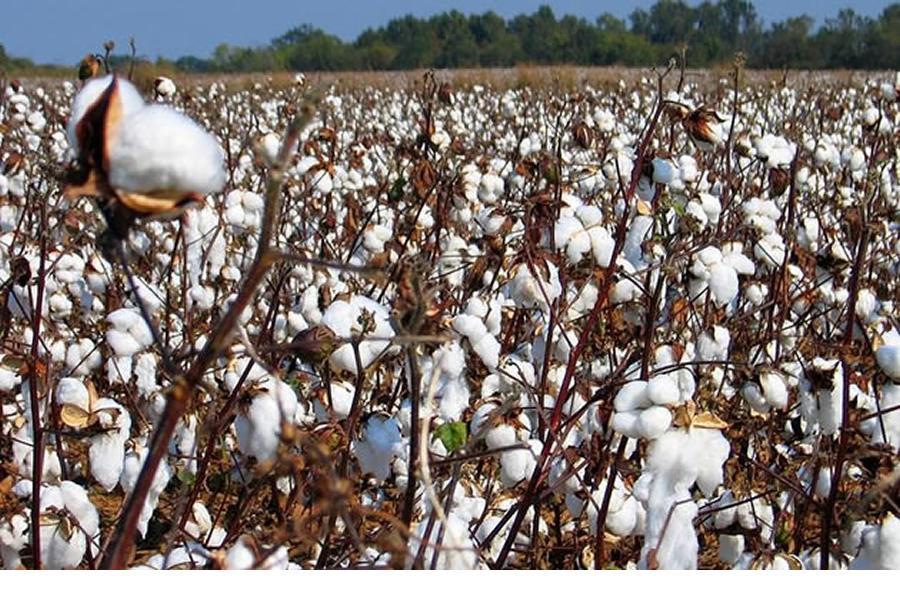
“The textile industry does not begin at the factory floor; it begins in the farm,” Dr Amos Rutherford Azinu, Founder & Chief Executive Officer of LCIC, said. “No seeds, no threads.”
Ghana’s textile sector, once a regional leader, now relies heavily on imported cotton.
Analysts describe the country’s textile and garment industry as a strategic and expanding sector, driven by the production of African prints (wax and batik) and apparel for local, regional, and U.S. markets, particularly under the African Growth and Opportunity Act.
LCIC warned that this dependence on imported raw materials leaves manufacturers vulnerable to global price swings, currency fluctuations, and supply chain disruptions.
“We are attempting to rebuild the roof while ignoring the crumbling foundation,” Azinu stated.
The Centre outlined key benefits of domestic cottonseed production, including economic independence, expanded rural employment, full value chain integration, agricultural diversification, and improved quality control.
“Cotton farming and seed production would generate income for thousands of rural families,” he noted.
LCIC identified several gaps in Ghana’s textile revival plan, including weak research capacity, inadequate extension services, outdated ginning facilities, poor logistics infrastructure, limited farmer cooperatives, weak pricing mechanisms, and insufficient technical training.
To effectively address these challenges, it urged the government to establish a National Cotton Development Authority with a clear mandate and adequate resources.
Dr Azinu stressed that Ghana must follow the example of Asian textile exporters. “Countries like Bangladesh and Vietnam did not dominate textile exports by importing all their raw materials,” he said.
“They built value chains that connected farms to factories. Ghana can and must do the same.”
With a direct appeal, he said: “Visions without foundations remain mirages. Our textile revival will only achieve lasting impact when Ghanaian cotton, grown from Ghanaian seeds by Ghanaian farmers, feeds Ghanaian factories producing world-class textiles.”
LCIC, an indigenous Ghanaian seed company headquartered in Otarese in the Eastern Region, has positioned itself as a leading advocate for agriculture‐led industrial transformation, combining commercial seed production with policy advocacy for the future of Ghana’s textile industry.
The award‐winning firm is committed to strengthening the country’s agricultural sector through innovative seed solutions.
The company is said to operate a 200‐acre farm equipped with modern irrigation systems and manages a 50‐ton seed gene bank with cold‐storage facilities, supporting the long‐term preservation of high‐quality seeds.
Over the years, its work has strengthened Ghana’s commercial seed sector and improved national food security and sustainability.
For More News And Analysis About Ghana Follow Africa-Press