
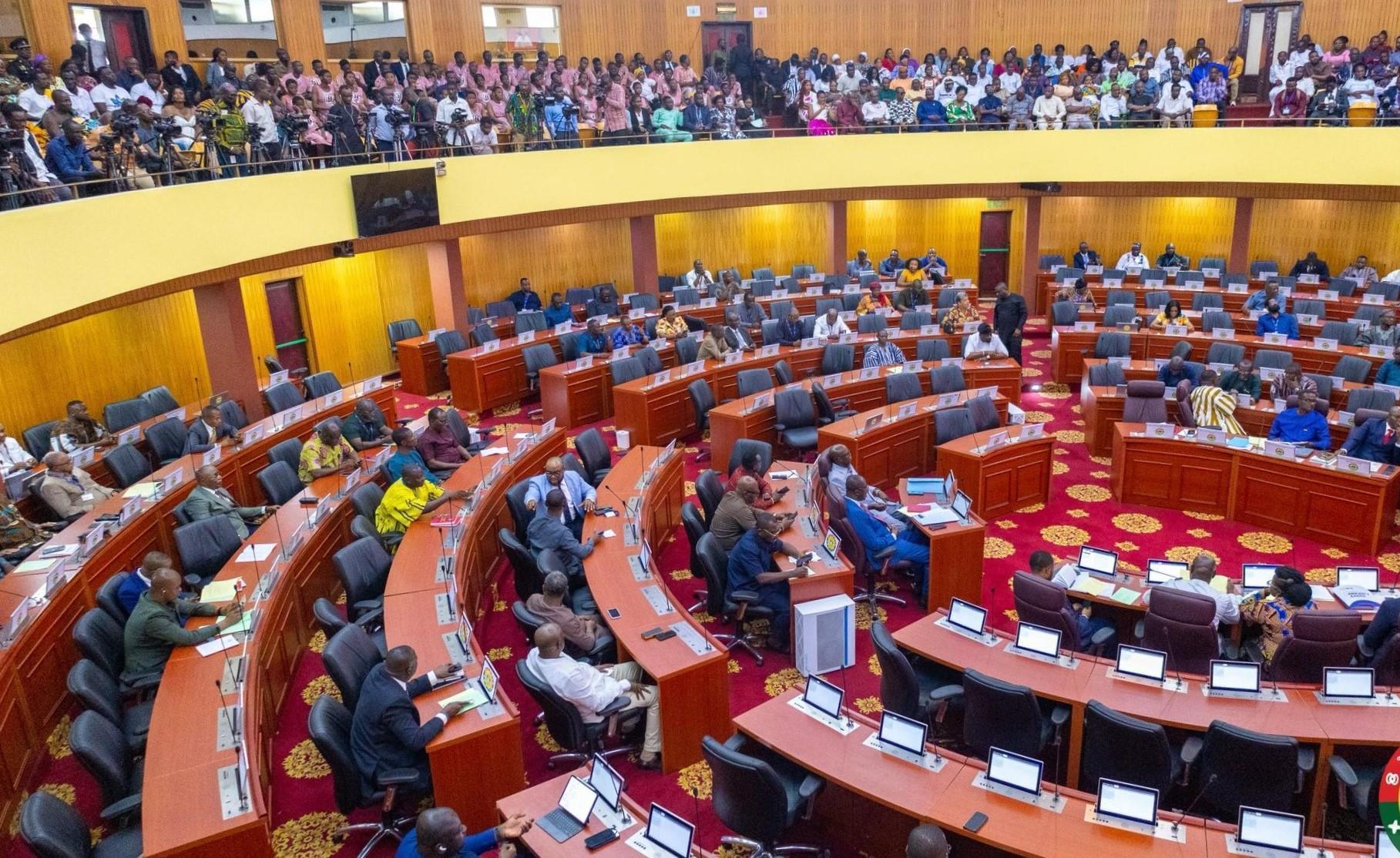
Africa-Press – Ghana. The Speaker of Parliament, Mr Alban Bagbin, has renewed his call for the construction of a permanent Parliamentary complex and urged the Executive to allocate land near the State House for the project.
Speaking at the launch of Parliament’s Corporate Strategic Plan (2026–2030) in Accra, the Speaker described the current arrangement—where Parliament operates as a tenant at the State House—as limiting and unsuitable for an independent arm of government.
“We have been crying, and I hope you will support us so that at least we should be liberated from being tenants of the State House to our own premises as an arm of government,” he said.
Mr Bagbin cited infrastructural constraints affecting parliamentary work, including restricted access to key facilities within the State House enclave. “Some of the structures we have here, we cannot even have access to them unless we pay, including the banquet hall,” he noted.
The Speaker also revealed that Parliament was piloting an electronic voting system to enhance decision-making processes.
“We are starting with the pilot, and we believe it will ease all the struggles when it comes to decision-making in the House,” he added.
He emphasized that a dedicated Parliamentary complex would strengthen the independence and operational efficiency of the Legislature—an essential pillar of Ghana’s democracy.
The Corporate Strategic Plan (2026–2030), he explained, outlines a roadmap for improving Parliament’s efficiency, oversight, and public service delivery.
It envisions an inclusive and proactive Legislature grounded in constitutional principles and supported by evidence-based decision-making.
Mr Bagbin highlighted five focus areas of the plan: legislative management, parliamentary oversight and accountability, parliamentary representation, parliamentary diplomacy, and parliamentary support services.
He reiterated Parliament’s commitment to strengthening democracy, transparency, and accountability.
He encouraged citizens to hold public officials accountable, saying, “Good governance is not just a giving. It’s the vigilance of all that keeps the politician behaving well.”
The Speaker noted that the plan was developed through extensive consultation with civil society, development partners, and other stakeholders. Describing it as “truly an ambitious strategic plan,” he stressed that its success depended on effective implementation.
Mr Bernard Ahiafor, the First Deputy Speaker and Chairman of the Steering Committee, said the new plan aligns with the Sustainable Development Goals (SDGs), the African Union Agenda 2063 and Ghana’s medium- to long-term development objectives. He added that the plan reviewed institutional achievements under previous strategic frameworks and reaffirmed Parliament’s vision, mission, and values.
He outlined key programme areas, including strengthening legislative scrutiny, enhancing the capacity of Members of Parliament (MPs), promoting evidence-based lawmaking, and improving oversight of government policies and expenditure.
He explained that the plan adopts a programme-based approach, allowing better tracking, accountability and linkage between daily activities and strategic goals.
Mr Ahiafor also named members of the Steering Committee: Madam Gizella Tetteh-Agbotui (NDC, Awutu Senya West), Mr Kojo Oppong Nkrumah (NPP, Ofoase-Ayirebi), Mr Abdul-Rashid Pelpuo (NDC, Wa Central), Mr Richmond Edem Kofi Kpotosu (NDC, Ho Central) and Mr Emmanuel Kwasi Bedzrah (NDC, Ho West).
Mrs Patricia Appiagyei, the Deputy Minority Leader, pledged her Caucus’s support for the effective implementation of the strategic plan.
The Majority Leader, Mr Mahama Ayariga, also expressed confidence in the homegrown plan, saying it was developed based on broad consultation with the citizenry.
He assured the Majority Caucus’s commitment to ensuring its success.
“This document is for making sure that the members that come here perform the critical role of passing the best legislation, advocating for their constituencies and holding other institutions accountable,” he said.