

Africa-Press – Ghana. In the cocoa-growing communities of Jato and Aponoapono in the Suhum Municipality of the Eastern Region, a quiet but determined revolution is unfolding.
Led by chiefs, teachers, parents, and adolescent girls, the communities are refusing to allow poverty and vulnerability to define their future.
With support from Plan International Ghana through its “Rooting for Change” project, which began in 2024, the two rural communities are reporting a notable decline in teenage pregnancies, alongside improved school attendance and growing confidence among girls to assert their rights.
In communities where adolescent pregnancy had once become an almost predictable occurrence during the Basic Education Certificate Examination (BECE) period, the latest statistics are now being celebrated as a breakthrough.
Zero Teenage Pregnancy: A Turning Point
“Almost every year we recorded teenage pregnancy during the writing of the BECE,” recalled Nana Baffour Tettey Adjewi Narh III, Chief of Jato.
“But through Plan’s intervention, the last batch that wrote the exams recorded no teenage pregnancy.”
Jato, officially known as Shai Mameng Jato, has an estimated population of about 1,400 people and is historically known for cocoa farming and local gin (akpeteshie) distillation.
Today, however, the community is gaining recognition for something far more transformative – protecting its girls.
The chief attributed the progress to intensive community engagement, rights education, and the establishment of Community Child Protection Committees (CCPCs) with support from Plan International Ghana.
“Before, the children were shy and did not know where to report their issues,” he said.
“Now they are bold enough to speak. Parents also understand their roles and responsibilities.”
Tackling the “Laptop” Lure
In both Jato and Aponoapono, a seemingly harmless word – “laptop” – has become a code for vulnerability.
In this context, the “laptop” does not refer to a technological device but to a pack of cooked instant noodles served in a Styrofoam takeaway container.
Mr Ivan Aivo, Line Manager for Human Rights and Community Development at Asetenapa Cocoa Cooperative and a facilitator under the project, explained that some commercial motorbike riders, popularly known as Okada riders, lured girls with such packs of noodles or small amounts of money.
“The term ‘laptop, refers to packs of instant noodles folded open and eaten from the lap: a small inducement that sometimes led to exploitative relationships; many of which resulted in pregnancies of school-going girls within the community,” he said.
“They asked me, ‘what have you people told the Jato girls? Nowadays when we approach them, we don’t get our way,” Mr Aivo recounted.
“Last year, during BECE, we recorded zero teenage pregnancy,” he said. “That is a major gain.”
Period Poverty: Breaking a Silent Barrier
Beyond teenage pregnancy, period poverty had also forced many girls to stay away from school.
At Aponoapono, a rural cocoa-farming community supported by the ABOCFA Cooperative, the headmistress of a government basic school, who pleaded anonymity, said access to sanitary pads had long been a challenge.
“When it is time for them to menstruate, some girls cannot afford pads,” she said.
“Some Okada riders take advantage of that situation.”
To address this, the project introduced sanitary pad banks in schools and created safe spaces where girls can access menstrual hygiene support without stigma.
Ms Agnes Serwaah Ofori-Boateng, a teacher and community volunteer at Jato, said the initiative had made a profound impact.
“It was very emotional listening to some of the girls,” she told the Ghana News Agency.
“Some want to return to school, while others want to acquire vocational skills. We launched pad banks in the schools and also created out-of-school clubs to support girls who have already given birth.”
Ms Ofori-Boateng noted that financial hardship had previously driven some girls to seek money or food from men.
“We are helping them understand that education is their power,” she said.
Empowering Girls Beyond the Classroom
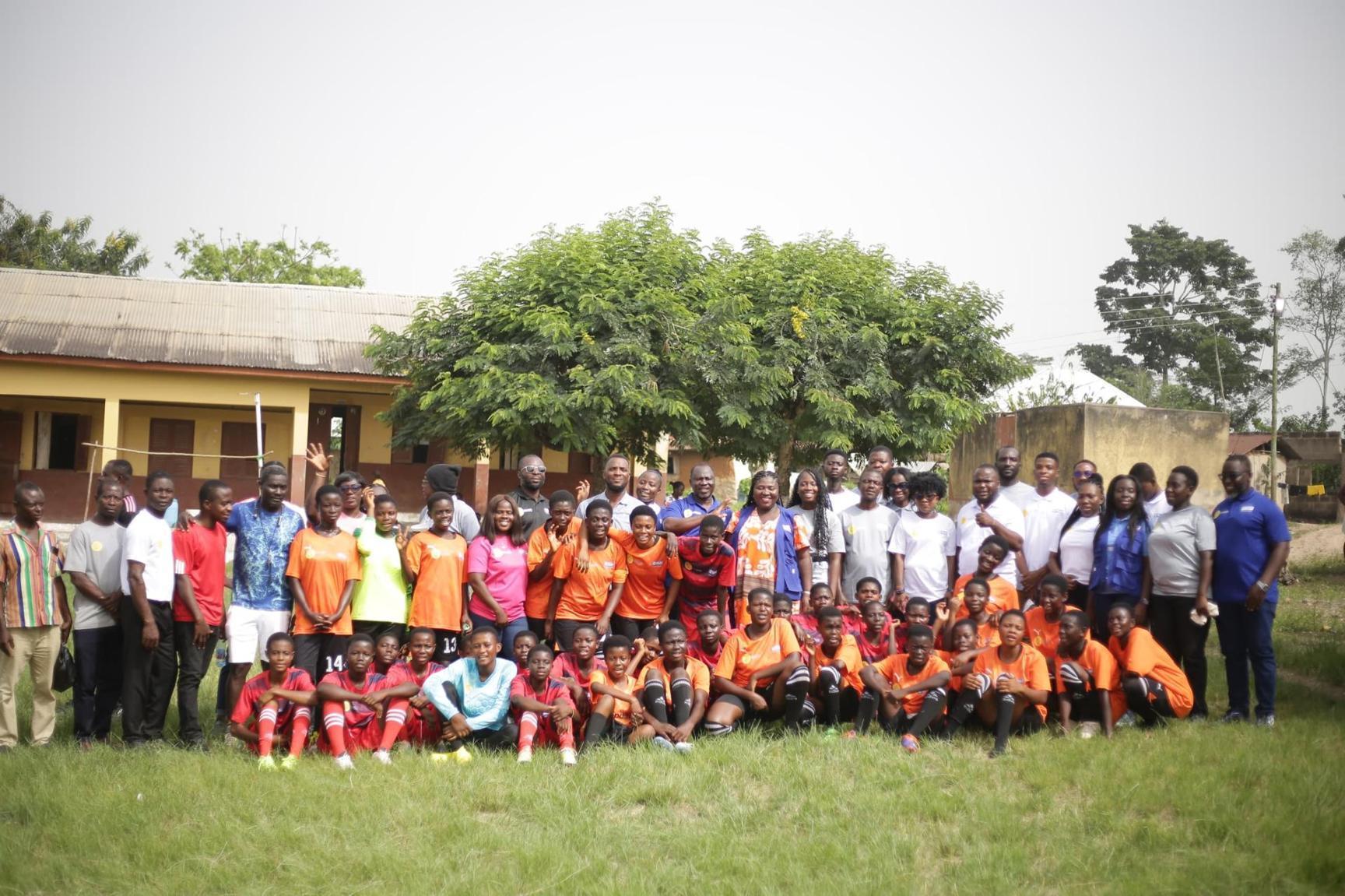
The project is also challenging long-standing gender stereotypes. Girls in the communities are now participating in football teams, an activity that had traditionally been reserved for boys.
“At first I was told football was only for boys and I was not allowed to play,” one student of Jato Nina N/A Junior High School told the GNA.
“But since the project started, I have been empowered and given the opportunity to join the soccer team.”
Multi-Sectoral Partnership Driving Change
The progress has been driven not only by community effort but also by collaboration among institutions, including the Suhum Municipal Assembly, the Ghana Health Service, and the Ghana Education Service.
Mr Ernest Evans Ewusi, the Municipal Head of the Department of Social Welfare and Community Development in Suhum, said the Assembly signed a Memorandum of Understanding with the project implementers to ensure institutional support.
“The coming of Plan has helped us to reactivate our mandates,” he said.
“We have trained community child protection committees, peer educators, and chaperones. Health, Education and Social Welfare now work together to deliver holistic support.”
He explained that Jato was deliberately selected because of its previously high teenage pregnancy rates.
“Selecting Jato was not a mistake. We knew the challenges,” he said.
“Now we can say one of the biggest burdens – teenage pregnancy – is being reduced.”
The Feeding Challenge
Despite the progress, challenges remain.
Mr Frank Odoi, Chairman of the Community Child Protection Committee in Jato, said poverty and hunger continued to affect school attendance.
“None of the high schools here benefits from the government’s school feeding programme,” he said.
“If the programme is extended to rural communities facing severe financial challenges, it will help reduce absenteeism.”
He urged policymakers to prioritise interventions in rural areas where children were eager to learn but constrained by poverty.
Linking Local Action to Global Goals
The transformation in Jato and Aponoapono aligns with several United Nations Sustainable Development Goals (SDGs), particularly: SDG 1 (No Poverty), SDG 3 (Good Health and Well-being), SDG 4 (Quality Education), and SDG 5 (Gender Equality).
By reducing teenage pregnancies, promoting sexual and reproductive health education, and addressing menstrual hygiene barriers, the initiative is helping to keep girls in school and safeguarding their futures.
UNICEF says adolescent pregnancy remains a leading cause of school dropouts among girls in sub-Saharan Africa. Evidence shows that interventions combining education, economic empowerment, and community accountability can significantly reduce these rates.
A Cultural Shift
Perhaps the most profound transformation is cultural.
“Before 8 p.m., children are now in bed,” the Jato Chief said with a smile.
“There is discipline. There is awareness. There is change.”
In communities built on cocoa farming and strong traditional leadership, the fight against teenage pregnancy and period poverty is proving that meaningful development does not only originate in urban centres; it can also take root in rural soil.
As the “Rooting for Change” project progresses in 2026, residents hope the gains will be sustained and extended to neighbouring communities.
For now, in Jato and Aponoapono, girls are saying “no” to exploitation and “yes” to education, rewriting a story that once seemed inevitable.
For these two cocoa-growing communities in the Eastern Region, that is a harvest worth celebrating.
Source: Ghana News Agency