
Africa-Press – Ghana. Stakeholders from Ghana’s financial and investment ecosystem have strongly advocated deeper collaboration between government and the private sector to provide tailored, patient capital to Small and Medium-sized Enterprises (SMEs).
The stakeholders argue that while Ghanaian SMEs are investable, the real challenge lies in the structure of available long-term financing and the absence of technical support to allow SMEs grow sustainably.
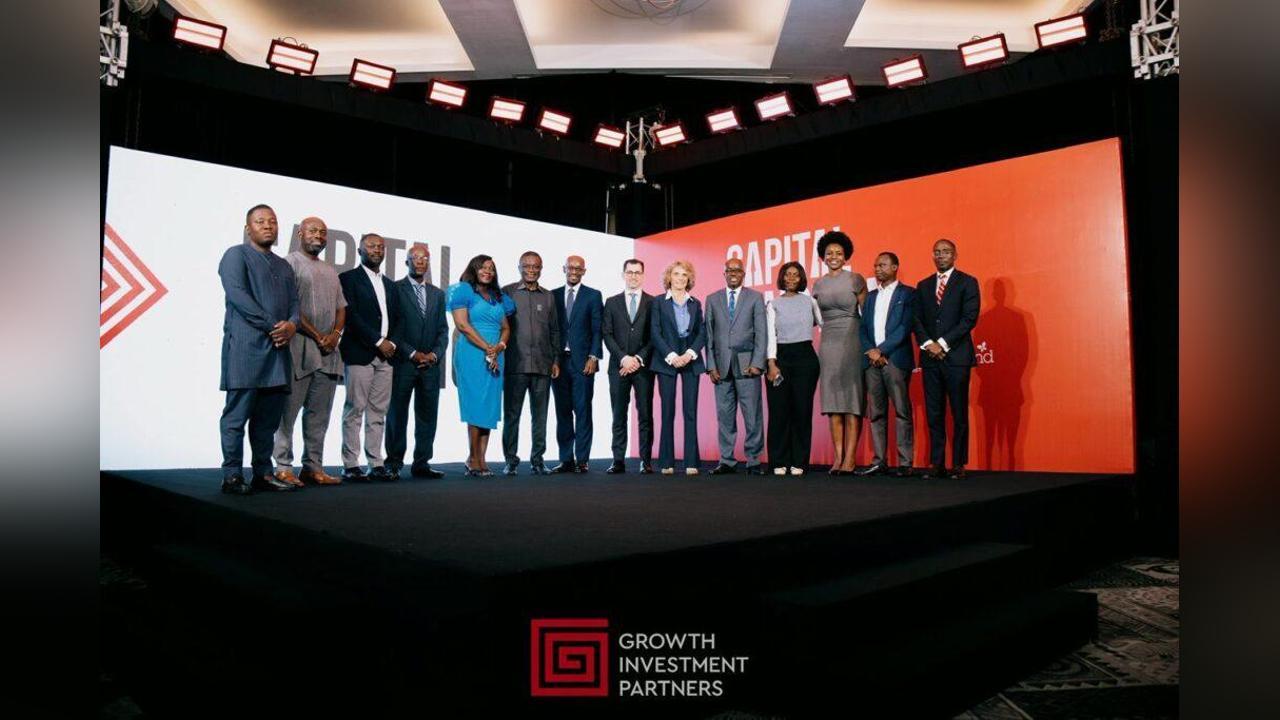
At the onboarding of two new strategic investors in Accra by the Growth Investment Partners (GIP) on Wednesday, they campaigned for urgent long-term-growth oriented financing schemes for SMEs.
At the event, GIP, an investment platform established by British International Investment (BII), welcomed Norfund and Axis Pension Trustees as New Investors, adding US$20 million to GIP’s capital base to long-term support for enterprises and scale impact.
Mr Albert Essien, Board Chairman of Growth Investment Partners, said it was not enough to mobilise capital for SMEs but it was important to ensure that capital led to growth and built stronger companies to create more decent jobs.
“Too many enterprises fail not because of lack of opportunity, but because their capital structures do not match their growth trajectories,” he said, urging investment to be paired with post-investment technical support.
“Often Ghana is asked if it has investable SMEs. The challenge has been the structure of available capital, not the absence of opportunity. They need time. The sector deserves stronger covenants, better financial management, and the will to be nurtured.”
Mr Essien disclosed that at the onset of GIP about three years ago, an extensive survey of over 300 businesses confirmed that financing gaps were limiting growth and had since deployed US$41 billion growth capital to support 16 companies.
He noted that about 99 per cent of the capital was directed into business growth – new factories, equipment, capacity expansion, and improving working capital of beneficiary SMEs, supporting the creation of over 3,375 jobs.
“It is not enough to mobilise capital. It is the businesses that can use it to expand production, increase employment, and pay better wages. Those wages in turn strengthen pension funds… This is the virtuous cycle we are building,” he emphasised.
Mr Anthony Degbato, Head of Investment Management, Securities and Exchange Commission (SEC), said Ghana’s SMEs held great potential for economic transformation, reiterating the need for patient capital and other support systems for them to grow.
“With patient capital, technical support, and strong governance, SMEs can drive industrial expansion, job creation, and inclusive growth, positioning Ghana’s private sector as a cornerstone of sustainable development,” Mr Degbato said.
He stated that since granting GIP a license for a self-managed private equity fund under Section 3(c) of the Securities Industry Act, 2016 in 2023, the fund had pursued its unique objective of providing capital products for enterprises “too large for microfinance but too small for conventional banks.”
The fund was predominantly denominated in Cedis, helping to eliminate foreign exchange risk, he explained, adding that responsible investing in SMEs was crucial for economic diversification and job creation.
Mr Degbato pledged the regulator’s continued support to GIP’s activities, ensuring compliance with governance and investor protection standards.
Mr Victor Azuma Mejida, the Deputy CEO, National Pensions Regulatory Authority (NPRA), underscored the role of pension funds as catalysts for national development.
He revealed that pension assets had grown to about 100 billion Ghanaian cedis, making them well-suited for long-term investments.
Mr John Mikal Kvistad, Norwegian Ambassador to Ghana, drawing from Norway’s experience, highlighted the importance of SMEs, on which his country’s economy was fundamentally built, with very few large companies.
He indicated that the backbone of economies like Ghana’s lay on SMEs, however, his observation revealed the lack of private risk capital for SMEs in the country to enable them to be the true drivers of national growth.
“By providing tailored capital products such as mezzanine and royalty funding, GIP is replicating the Norwegian model of nurturing SMEs into sustainable engines of growth,” he said, calling for more patient capital and structured financing for SMEs.
Mr Kvistad said supporting GIP meant participating in a scalable model that combined capital with capability, ensuring that Ghana’s SMEs were not only funded but also built into stronger, more resilient businesses.
For More News And Analysis About Ghana Follow Africa-Press