Africa-Press – Kenya. Nyayo Stadium will bear the weight of decades of rivalry on Sunday afternoon as Kenyan giants Gor Mahia and AFC Leopards collide in the 98th instalment of the Mashemeji derby.
Beyond the three league points at stake lies a far deeper prize: supremacy, pride, and the right to dominate the week’s football discourse. The derby arrives at a time when margins at the top of the table are razor-thin.
Just five points separate Gor Mahia, who sit atop the standings with 19, from Mathare United in eighth on 14—the same tally as AFC Leopards in seventh.
Yet even beyond these numbers, the fixture possesses an aura that sharpens players, amplifies supporters, and magnifies the cost of errors. Both traditional Kenyan powerhouses march into Sunday’s showpiece with emotion coursing through their veins and conviction in their voices.
The mood emanating from each camp paints a clearer picture of the contest’s stakes than any league position ever could. AFC Leopards midfielder James Kinyanjui admits the occasion is immense.
“This is a special moment in my career. It will be the first time I’m involved in such a big match,” he says. He is under no illusions about its magnitude, acknowledging that the derby is unlike anything he has experienced.
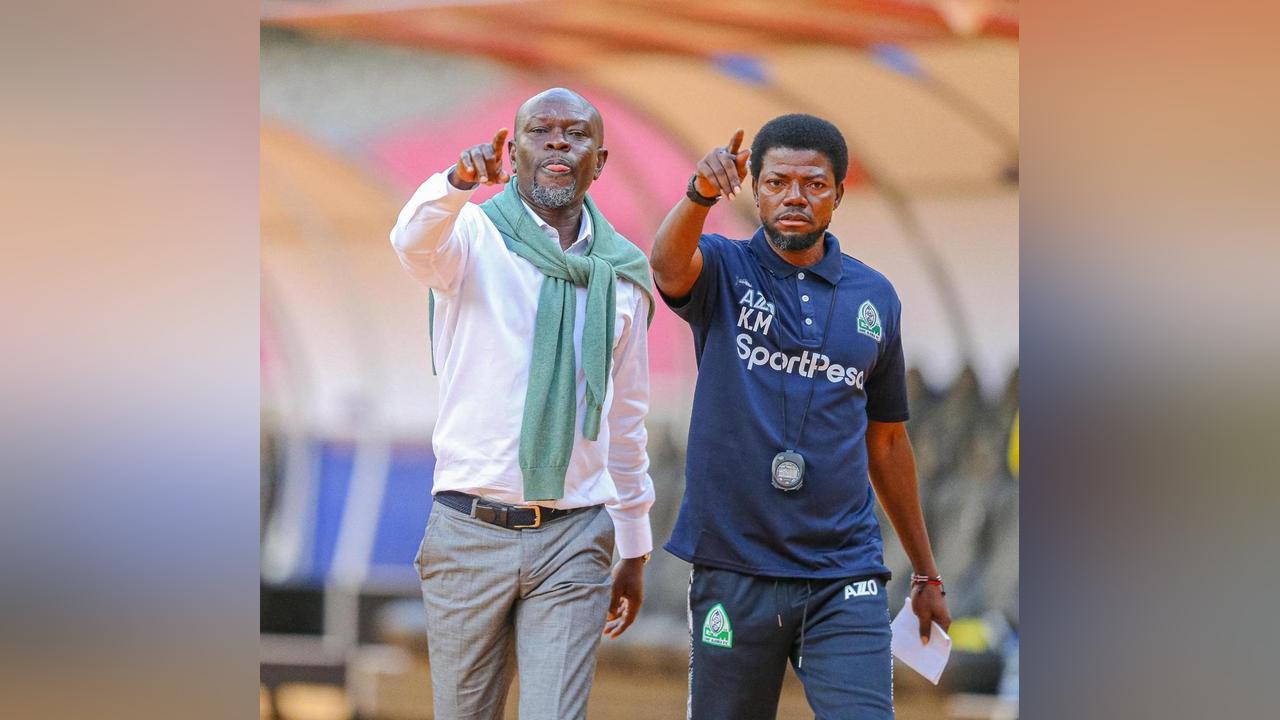
Gor Mahia coach Charles Akonnor with his assistant, Kobi Mensah/GORMAHIA“I’ve played for clubs without large fan bases,” he explains. “But this derby is motivation in itself.
It has the power to shift our season. Winning it will lift our fans. ” In a league where places are separated by just two points, Kinyanjui sees the match as both a psychological turning point and a statistical one.
AFC coach Fred Ambani echoes the need for internal drive over external hype. “Our performance will depend on how well the players motivate themselves.
It’s all about self-motivation,” he insists. He adds that the derby is also a shop window: “There are scouts at these matches. It’s the perfect opportunity for players to progress professionally.
”Across the bench, Gor Mahia head coach Charles Akonnor views the fixture in terms of legacy.
“This match is very important for the team, the coaches, the players, and the technical bench. Derby matches are snapshots in club history—they define eras and shape reputations,” he says.
And then there is Onyona, who brings the focus back to the supporters, anchoring the derby’s emotional weight in the terraces. “They only need to show up; we will do the rest,” he says. His message is not tactical—it is communal. Derbies, he reminds us, are not just played—they are lived.