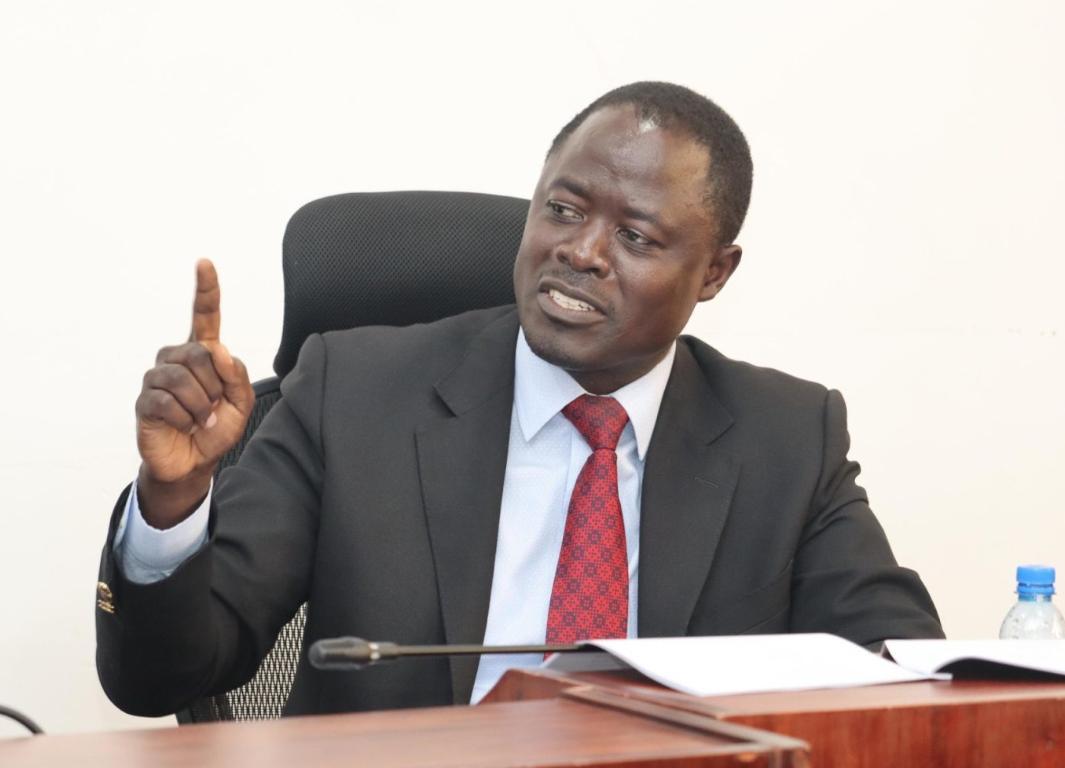
Africa-Press – Kenya. Homa Bay Town MP Peter Kaluma has ignited heated debate after declaring that the Luo community will deliver four million votes to President William Ruto in the 2027 General Election.
The legislator made the assertion in a social media post, triggering a wave of reactions from Kenyans who questioned both the feasibility and intent of his remarks.
“In 2027, the Luo Community will give President Ruto her 4 million votes,” Kaluma wrote.
The claim stunned many, with critics pointing out that the community had never amassed such a consolidated vote count even for the late ODM leader Raila Odinga, who hails from the region and has been its political torchbearer for decades.
One Kenyan responded sharply: “Which 4 million that you never gave your own son Raila?”
Another remarked, “Careless talk. Nobody commands other people’s votes,” highlighting the skepticism and frustration the comment provoked.
Official results from the 2022 presidential election show that Raila Odinga garnered a total of 6,942,930 votes nationwide, representing 48.85 percent of the vote, while Ruto secured 7,176,141 votes.
From Luo Nyanza’s core counties—Kisumu, Siaya, Homa Bay, and Migori—Raila received approximately 1.48 million votes based on IEBC tallies.
Kisumu accounted for 419,997 votes, Siaya 371,092, Homa Bay 399,784, and Migori 294,136.
Kaluma’s projection of four million votes for Ruto therefore represents a figure nearly three times higher than what the region delivered to Raila in 2022, raising questions about how such a political shift could occur within just one electoral cycle.
The MP has, however, recently positioned himself as one of the most vocal leaders urging ODM to rethink their political strategy ahead of the next election.
He has repeatedly called on ODM to consider working with Ruto, arguing that the party must move away from perpetual confrontation and embrace a pragmatic path that prioritises development and regional interests.
According to Kaluma, aligning with the Kenya Kwanza administration could unlock long-delayed projects and strengthen the region’s negotiating power in national politics.
He believes that collaboration, rather than rivalry, could yield tangible benefits for the Nyanza region, a position that places him at odds with many traditional ODM stalwarts.
His stance has fuelled debate within the Opposition, with some interpreting his comments as part of a broader push by a faction advocating for political détente.
Kaluma argues that ODM risks political isolation if it refuses to adapt to the changing political landscape and insists that supporters should not be denied access to government programmes because of political differences.
While his view remains contentious, it underscores the internal conversations taking place as parties and leaders begin positioning themselves for 2027.