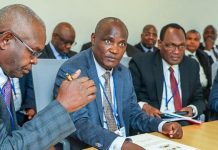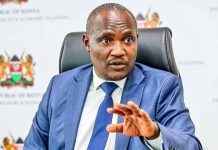

Africa-Press – Kenya. Deputy Chief of Staff in charge of Delivery and Government Efficiency in the Executive Office of the President, Eliud Owalo, has criticised leaders fixated on becoming regional political kingpins.
Speaking during a working tour of Nyanza, Owalo said the region’s politics remains trapped in kingpin battles that neither uplift citizens nor advance economic growth.
He lamented that leaders spend more time positioning themselves as political successors rather than delivering tangible improvements.
“Why can’t these guys be kingpins for development? Leadership is supposed to be service delivery to the people,” he said. “Politicians who spend their time fighting to be kingpins are not worth being called leaders.”
Owalo said residents of Nyanza, like all Kenyans, are more interested in improved livelihoods than political theatrics.
He pointed to the need for water, roads, electricity, the revitalisation of the sugar belt, a fish-processing plant along Lake Victoria, and the upgrading of Kisumu International Airport as areas demanding urgent attention.
“This is what people are interested in,” he said, urging a shift in mindset among voters as well.
“The focus and mindset of the voter in this region should also change. Let us vote in people who are preoccupied with service delivery to the people as opposed to mere rhetoric.”
He argued that Nyanza has remained politically loyal for decades without seeing proportional economic gains.
“We have done it before, since independence, and it has not taken us anywhere. We need a paradigm shift.”
Owalo described the upcoming 2027 elections as an opportunity for what he termed Kenya’s “third liberation”—an era he said should be defined by economic transformation rather than political patronage.
“The first liberation was doing away with colonialists, the second was multi-party democracy. The third, from 2027 moving forward, is economic liberation.”
Regional kingpins, figures who command loyalty within ethnic or geographic blocs, have long shaped Kenyan politics.
In Nyanza, this tradition is deeply entrenched, with charismatic leaders historically holding immense sway over voting patterns.
In recent weeks, there has been growing chatter about a “post-Raila Odinga” political landscape, following the death of the former Prime Minister.
Many politicians regard kingpin status as a pathway to national bargaining power, access to state resources, and long-term political relevance.
However, critics argue that the competition to become regional spokespersons fuels rivalry, fractures communities, and sidelines development.
Rising leaders are often perceived as threats, triggering political succession wars that hinder progress.
Owalo insisted that such politics must end if Nyanza is to break long-standing cycles of economic stagnation.
He called on leaders to shift from personality-driven politics to a results-oriented approach grounded in development.