
Africa-Press – Kenya. African countries should develop investment-ready projects to tap into the huge funding potential within the continent, currently majorly channelled into government instruments, experts now say.
This, they said, will bridge the continent’s infrastructure financing gap, which sits at $100 billion (Sh12.9 trillion) annually. The continent was told that more than 500 investors, policymakers, financial professionals, institutional leaders and private-sector executives met in Nairobi for the Africa Investment Conference (AfIC) 2025.
The continent is estimated to have up to $6 trillion in untapped funding across different sectors, including insurance, pension funds, banking and retail, but a huge amount is being invested abroad.
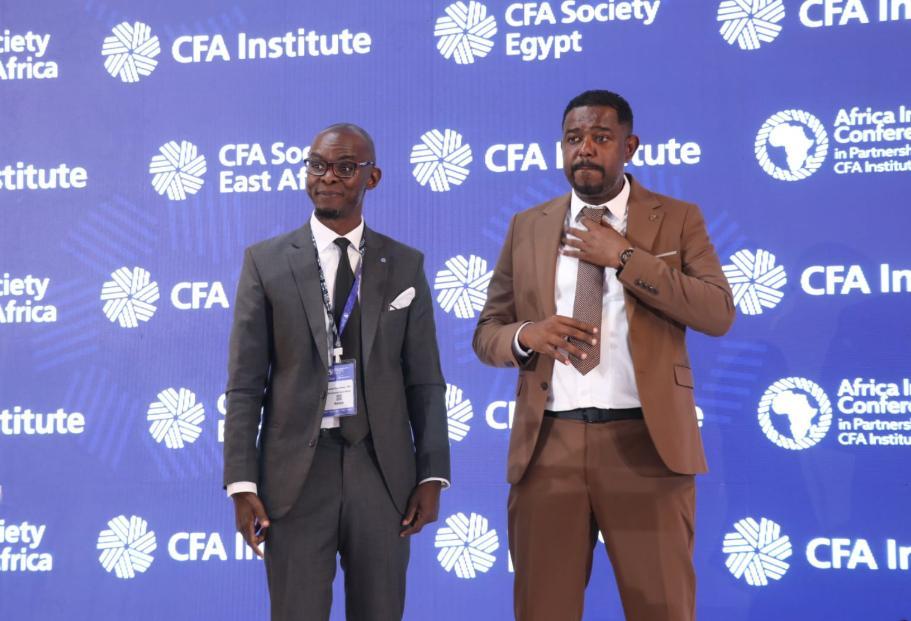
Speaking at the two-day conference, CFA Society East Africa president, Francis Nasyomba, said African pension funds alone control over $1.4 trillion (180.9 trillion), the single largest pool of long-term capital on the continent, but only 12 per cent is invested intra-Africa.
“We have adequate capital in Africa so we need to start seeing this funding going into investments… infrastructure projects, investment into businesses and not just currently sitting mostly in financial assets,” Nasyomba said.
He noted that almost 80 per cent of this funding is being pumped into financial assets, including government bonds and treasury bills.
“We need to change this and invest this money in projects. No one is coming to save us; Africa has to save itself.”
To tap these funds, Nasyomba said the continent must address policies and regulations that hinder cross-border movement and intra-Africa investments, noting the continent continues to lose about four per cent of GDP annually due to regulatory bottlenecks.
Countries must also have bankable projects and create trust among states, he said, noting currently, inter-country movement remains broken with only 17 African countries among them Kenya offering visa-free travel to all Africans.
“To make projects bankable, one, of course any investor is looking for a return and that return has to be risk adjusted. We need to be able to look at how do we de-risk most of these projects. So it’s not only risk but also liquidity,” he noted.
Africa Finance Corporation executive board member and head, financial services Oyebanji Fehintola, called for good governance to help attract more investments.
“Every single dollar, whether domestic savings, pension capital, international investment, will only flow to well-governed, well-structured, and well-managed markets. Very important for us to remember that,” he said.
AFC which mobilises funding for key sectors such as energy, transport and logistic, natural resources and industrialisation has invested over $16 billion (Sh 2.1 trillion) across 36 African countries.
Kenya’s Investment Promotion PS Abubakar Hassan Abubakar said the government is committed to enhancing the country’s position as a gateway for investment into East Africa and across the continent.
This includes improving the ease of doing business, strengthening investor protections and supporting initiatives that unlock capital for enterprise growth, innovation and sustainable development.
This, as it shifts from borrowing and aid to Public-Private-Partnership in funding key development projects.
“We don’t want to be a begging destination, an aid destination, neither do we want to continue taxing Kenyans. We have overborrowed and we need to stop and look at other solutions. That is why you are seeing the government is moving from public investment to public-private partnership,” Abubakar said.
The conference which ends today is being used to rally the continent to invest in itself under the theme ‘Africa Investing in Africa: Solutions to Challenges.
Some of the African investments that stood out during the forum includes Dangote expanding cement and fertiliser capacity in Ethiopia and Tanzania, with investments exceeding $2 billion (Sh258.5 billion) and KCB Group announcing major investment in local tech.
NSSF Uganda also recently announced the allocation of long-term pension capital into local and regional infrastructure and now holds over $4.7 billion (Sh 607.5 billion) in assets. Talanta Sports City in Kenya is also being financed by domestic capital with $200 million (Sh25.9 billion) mobilised internally.
Pension and sovereign funds in South Africa, Nigeria, Egypt, and Ghana are all increasing allocation into African markets.