
Africa-Press – Kenya. December has already settled in, and across Kenya, just like in many parts of the world, streets, homes, and villages have come alive with a festive spirit unique to this time of year.
From twinkling lights in Nairobi’s central business district to vibrant community gatherings in rural villages, Christmas in Kenya is more than a religious observance. It is a celebration of culture, family, and identity.
While many urban households embrace familiar global traditions such as Christmas trees, gift-giving, and carols, Kenya’s diverse counties observe the season through customs deeply rooted in local heritage, making the celebrations distinctly Kenyan.
Christmas offers an opportunity to blend faith with culture. Families reunite, relatives reconnect, communities engage in storytelling, and traditional music and dance animate towns and villages in ways often unseen by outsiders.
For many Kenyans, the season is not defined by snow or Santa Claus, but by homecoming, food, faith, community, and shared heritage.
With an estimated 40 to 50 ethnic communities and a wide range of languages and traditions, Kenyans celebrate Christmas in ways that reflect both Christian beliefs and local customs.
Despite this diversity, common themes resonate across most counties: travelling “up-country,” attending church services, sharing communal meals, wearing new clothes, singing carols, and extending generosity.
Together, these practices bind families and communities, making Christmas in Kenya a deeply felt and locally grounded celebration.
Heading home: cities empty, villages refill
From late November, long-distance buses, matatus, trains, and flights begin to fill as urban residents prepare to travel “home,” sometimes hundreds of kilometres away, to spend Christmas with relatives and extended family.
In cities such as Nairobi, Mombasa, Kisumu, and Eldoret, the usual bustle gives way to quieter streets on Christmas Eve.
Meanwhile, in villages and small towns, compound gates swing open to welcome returning family members.
Arriving with food supplies, gifts, and festive cheer, families exchange hugs and laughter, before turning to the work of cleaning, decorating, and preparing homes for the season.
For many, this reunion is the only time in the year when families gather in full, reconcile differences, share laughter, and reflect on shared memories.
“Christmas is when I go home, hug my grandparents, smell the cooking fire, and feel at peace. I leave the city noise behind and return to who I am,” a Nairobi-based young adult returning home told The Star.
For many Kenyans, the journey home is not only a physical return, but a reconnection with ancestry, culture, and identity.
Faith first: midnight vigils, church services, and prayer
Across regions, Christmas in Kenya remains primarily a religious celebration.
Christians attend church services, from large urban cathedrals to modest chapels in remote villages, on Christmas Eve and Christmas Day.
Many congregations hold midnight vigils, commonly known as Kesha, on Christmas Eve. These services often feature candlelight worship, hymns, prayers, and nativity performances.
At midnight, bells ring, prayers rise, and congregants mark the birth of Christ with expressions of hope and gratitude.
On Christmas Day, worship resumes early in the morning.
Services are often lively, blending sermons, gospel music, and Kenyan carols sung in Swahili or local languages. Church choirs frequently incorporate traditional rhythms into festive hymns.
For many families, worship forms the spiritual centre of the celebrations.
“Midnight mass, nyama choma, songs in Swahili and our mother tongue — that is Christmas. It reminds us where we come from and where we belong,” says James Maina from Kiambu.
Religious observance remains the foundation upon which other celebrations are built. It is also a time when extended family and friends gather, often dressed in their best, and sometimes new, clothes.
Feasts, flavours, and family meals
No Kenyan Christmas is complete without food.
Festive meals are central to the celebration, serving as moments of sharing, reflection, and togetherness.
Across the country, both rural and urban kitchens come alive long before Christmas Day, with cooking pots simmering, charcoal grills heating up, and the aroma of spices filling the air.
At the heart of many Christmas feasts is nyama choma — grilled goat, sheep, or beef — served with staples such as ugali, chapati, rice or pilau, alongside vegetables like sukuma wiki.
In many households, parents or elders slaughter a goat or chicken specifically for the holiday, a symbolic act associated with thanksgiving and abundance.
For children, the occasion often includes sweets, sodas, or treats — small luxuries not always available during the year.
Families gather around tables or mats laid under mango trees, or inside living rooms lit by lanterns or electricity, to share meals together.
Feasting often stretches into the afternoon.
Amid laughter, music, and storytelling, elders recall past Christmases, children share school memories, and generations connect over food and conversation, reinforcing a sense of belonging that transcends time.
New clothes, gifts, and acts of generosity
Christmas is also a season of renewal, marked by new clothes, modest gifts, and goodwill.
In many rural households, families save throughout the year to buy clothing for each member ahead of Christmas.
Wearing new outfits to church or festive gatherings remains a source of pride and tradition.
While expensive gifts are uncommon, practical items such as shoes, books, school supplies, or household goods are frequently exchanged.
In urban areas, some families add small luxuries, including toys, sweets, or simple electronics for children.
Acts of charity also feature prominently.
For many Christian households, Christmas is a time to remember the less fortunate.
“We may have a Christmas tree in town, but in the village we decorate with ribbons, palm leaves, and handmade crafts. When everyone comes home, smiles and laughter matter more than lights,” says Ann Munyasia.
Food, clothing, and donations to churches, orphanages, or neighbours in need are often shared, reinforcing values of compassion and community.
Music, dance, and cultural rhythms
Beyond church hymns and carols, Christmas in Kenya is animated by music and dance — traditional, contemporary, and local.
Carols sung in Swahili, vernacular languages, and English echo through homes, churches, compounds, and neighbourhoods. In some rural areas, groups move from house to house singing Christmas songs.
In certain regions, particularly along the coast or among pastoral communities, traditional rhythms and folk music add distinctive character to the celebrations.
At the coast, festive gatherings may include Taarab music blended with gospel worship. Inland, drums and communal singing bring together elders and youth.
Afternoons and evenings often feature dancing, storytelling, singing, and traditional games.
Children and young people frequently take the lead, sharing stories and memories that reinforce communal bonds.
In many parts of Kenya, December carries its own soundtrack — not sleigh bells, but drums, praise songs, laughter, and the hum of togetherness.
Regional flavours: how counties add their own touch
While Christmas customs are widely shared, local culture influences how different regions mark the season.
Central Kenya (Mt Kenya region)
In counties such as Nyeri, Murang’a, and Kiambu, Christmas coincides with lush post-rain landscapes. Farming families often offer prayers of thanksgiving. Some households prepare a goat or chicken as part of a thanksgiving meal, shared widely among relatives and neighbours. Traditional greetings and dances blend with church carols.
Western and Lake Region
In areas such as Kakamega and Kisumu, Christmas is marked by homecoming, shared meals, and community gatherings. Families exchange visits, enjoy local music, and sometimes incorporate traditional instruments into worship and celebrations.
Coast Region
In Mombasa, Kwale, Kilifi, and surrounding areas, Christmas blends Christian observance with coastal culture. Families prepare coconut-based dishes, pilau, biryani, seafood, and fish. Swahili carols and Taarab music often accompany church services and home gatherings.
Urban Centres
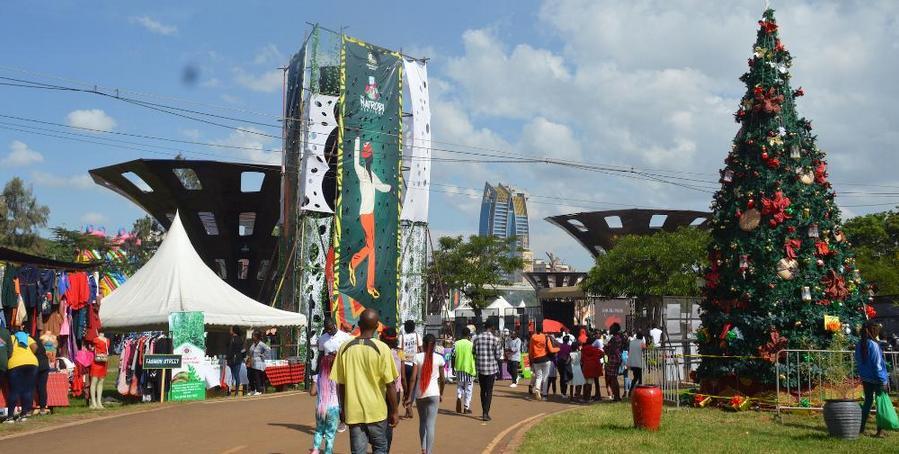
In cities such as Nairobi, Mombasa, and Kisumu, Christmas reflects stronger global influences. Christmas trees, lights, and decorations appear in malls, churches, and homes. Many urban residents still travel to rural homes, bringing gifts and food to share with extended family.
Despite regional variations, shared values — faith, family, food, and community — remain central.
Changing times: global influence and evolving traditions
Over time, Kenya’s Christmas celebrations have evolved.
Urbanisation, migration, modern retail culture, and global influences have introduced new elements such as decorated malls, imported trees, Santa imagery, and commercial events.
Yet many families continue to preserve tradition. A child may unwrap a gift under a decorated tree in the city, then join relatives the following day in a rural compound for a familiar feast of nyama choma and chapati.
In some cases, modernisation has strengthened traditions. Churches organise carol concerts, choirs rehearse Swahili hymns, and community groups host outreach activities.
Youth groups and organisations distribute food, clothing, and school supplies to vulnerable families, reinforcing the spirit of giving.
With members of the Kenyan diaspora returning home during the holidays, Christmas often becomes a reunion that bridges continents and generations.
In Kenya, Christmas is more than a holiday. It is a reaffirmation of belonging — to family, faith, culture, and country.
Social and economic differences soften as people gather in churches, homes, and villages filled with food and laughter.
Traditions, whether old or new, carry messages of gratitude, forgiveness, generosity, and solidarity.
Parents discuss harvests and challenges, elders share history, youth speak of hopes, and children delight in treats and gifts.
“Krismasi njema” becomes more than a greeting — it is a shared wish for peace, kindness, and community.
Source: The Star