
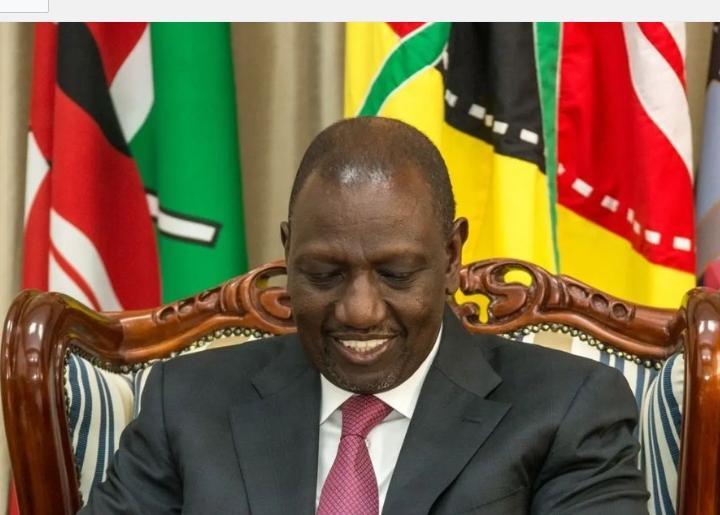
Africa-Press – Kenya. President William Ruto/FILEAs 2025 draws to a close, Kenya stands at a precarious crossroads, its political landscape scarred by relentless youth-led protests, seismic leadership shifts, and a deepening economic chasm that has exposed the fragility of President William Ruto’s administration.
What began as an anniversary commemoration of the 2024 Finance Bill uprising evolved into a year of unrelenting dissent, forcing Ruto to navigate a team of rivals in a bid for stability ahead of the 2027 polls.
From the echoes of the storming of Parliament in June to the shocking death of opposition icon Raila Odinga in October, the year redefined governance, accountability, and the social contract in Africa’s regional powerhouse.
With GDP growth dipping to a resilient yet underwhelming 4.5 percent amid global headwinds, Kenyans grappled with a debt burden swelling to Sh12.05 trillion—a stark reminder that fiscal decisions often bowed to politics over public welfare.
The year’s flashpoint arrived on June 25, when thousands of predominantly young protesters—Kenya’s Gen Z cohort, born in the late 1990s and early 2000s—flooded Nairobi’s streets to mark the first anniversary of the 2024 Parliament invasion.
What was intended as a peaceful rally against austerity and elite impunity quickly spiralled into chaos.
Security forces, accused of excessive force, clashed with demonstrators, resulting in at least a dozen deaths and hundreds of arrests.
The government, under intense pressure, branded the unrest an “attempted coup,” with then Interior Cabinet Secretary Kithure Kindiki decrying it as “the most violent and anarchic day since the 2007–2008 post-election violence.”
Chief Justice Martha Koome went further, likening the vandalism of judicial facilities to terrorism, rhetoric analysts warned could erode judicial independence.
Human Rights Watch documented widespread police brutality, including the use of live ammunition against unarmed youth demanding an end to corruption, youth unemployment, and regressive taxes on essentials such as bread and menstrual products.
The protests, amplified on social media platforms like X, transcended urban centres, drawing in rural voices alienated by the hollowing out of public services.
By August, the demonstrations had ebbed but left an indelible mark: Ruto’s approval ratings plummeted below 30 percent, and calls for his resignation echoed from opposition benches to international forums.
In a bid for legitimacy, Ruto executed a dramatic Cabinet purge on July 11, sacking nearly all ministers in a move dubbed.
The reshuffle, however, proved more cosmetic than transformative, with many ousted officials swiftly reinstated alongside figures from Raila Odinga’s Azimio la Umoja coalition.
This broad-based government experiment aimed to co-opt dissent but instead fuelled accusations of cronyism.
Former Attorney General Justin Muturi, himself a casualty of the purge, later levelled explosive corruption allegations against Ruto, accusing him of direct involvement in $2 billion deals with India’s Adani Group and a shadowy money-laundering scheme tied to Russian oligarchs.
Ruto cancelled the Adani contracts in late 2024 amid US bribery indictments, but the scandals lingered, amplifying public fury over government waste.
The administration’s internal fractures deepened with the October 2024 impeachment of Deputy President Rigathi Gachagua—a wound that festered into 2025.
Charged with corruption, ethnic incitement, and covertly backing the 2024 protests, Gachagua’s ouster highlighted rifts within the Kenya Kwanza coalition.
Parliament, dominated by Ruto loyalists, voted overwhelmingly to remove him, paving the way for Kindiki’s ascension as deputy president in early 2025.
Gachagua, once Ruto’s key mobiliser among Kikuyu voters, wasted no time plotting a comeback, forging tentative alliances with Uhuru Kenyatta’s allies and hinting at a 2027 presidential bid.
No event, however, reverberated as profoundly as the October 15 death of Raila Odinga, the 80-year-old doyen of Kenyan opposition politics.
Odinga, long dubbed Kenya’s “enigma” for his blend of charisma and resilience, collapsed during a strategy session in Nairobi, succumbing to a suspected cardiac arrest.
His passing triggered national mourning—and soul-searching.
Google data ranked it the year’s most searched event, with queries spiking around his funeral procession through Siaya County and the state ceremony at Jaramogi Oginga Odinga University.
Odinga’s earlier defeats, including his failed bid for African Union Commission chairmanship in February, had already dimmed his star, but his death created a vacuum in Azimio, splintering the opposition further.
Ruto, who had brokered a fragile truce with Odinga after the 2022 elections, eulogised him as a “bridge-builder,” though critics saw opportunism in the gesture.
“Raila’s gone, but the fight he embodied lives on in us,” tweeted youth activist Boniface Mwangi, encapsulating the generational torch-passing.
On the global stage, 2025 tested Kenya’s diplomatic mettle.
In June, Ruto’s long-promised deployment of 1,000 police officers to Haiti’s Multinational Security Support mission finally materialised, a UN-authorised effort to quell gang violence.
Though underfunded and under-equipped, the Kenyan contingent restored schools and markets in Port-au-Prince by September, earning cautious praise from the US and the UN.
Ruto touted the mission at the UN General Assembly in September, urging reforms to the Security Council’s “1945 structures” frozen in irrelevance.
Domestically, however, the deployment diverted resources from pressing needs, fuelling protest chants of “Haiti before home.”
Economically, March brought a rude awakening: the IMF and Kenya abruptly terminated a $3.6 billion four-year bailout, citing fiscal slippages and revenue shortfalls.
Negotiations for a new programme dragged into December as Ruto balanced IMF demands with public backlash against tax hikes.
Corruption probes, including the June killing of blogger Albert Ojwang in police custody, further tarnished the regime’s image, prompting the deputy inspector-general’s temporary resignation.
Yet with Gachagua lurking, Gen Z mobilised, and Odinga’s shadow looming, the upheavals of 2025 signal a republic in flux.
Source: The Star