
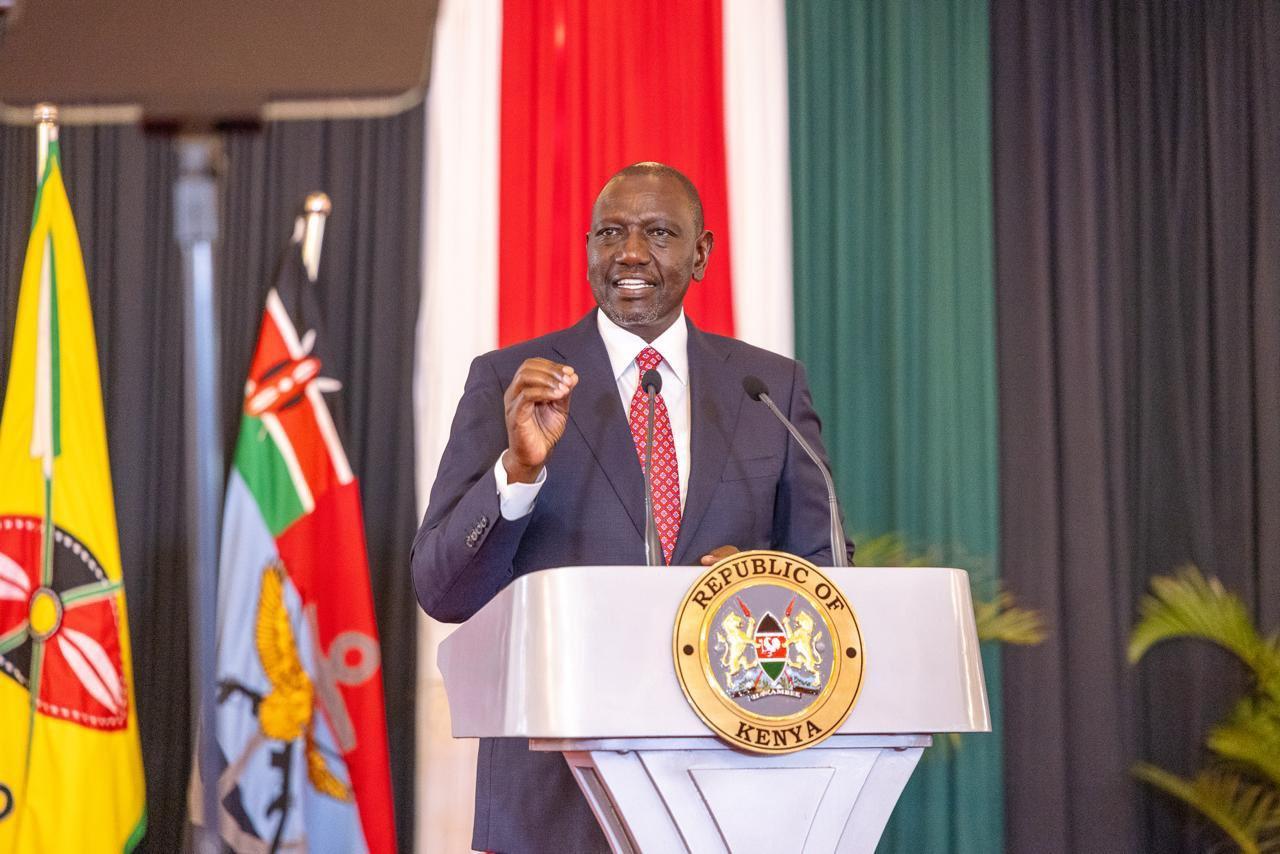
Africa-Press – Kenya. President William Ruto has announced plans to overhaul Kenya’s narcotics laws to introduce the death penalty for individuals convicted of trafficking hard drugs.
The move marks the most far-reaching policy shift yet in the government’s campaign against alcohol and substance abuse.
The President said the proposed changes would replace what he described as lenient penalties under the current legal framework, where traffickers can be fined as little as Sh1 million.
Under the new proposal, the sale of hard drugs such as heroin and cocaine would be classified as a capital offence.
Ruto argued that the trade is destroying families, fueling addiction among young people and undermining the country’s future.
“People who are selling heroin and cocaine are destroying our children. Those who are selling or their children don’t use it themselves; they come to sell to other people’s children,” he said.
“The past law stated that such people should be fined Sh1 million. We are now changing the law to make it a capital offence. Those found guilty would face the ultimate penalty.”
He accused traffickers of profiting from addiction while insulating their own families from the harm caused by drugs, describing the practice as morally indefensible.
Ruto spoke on Saturday during the engagement ceremony of Sandra Chesergon, the daughter of Moiben MP Phylis Bartoo.
He said the State could no longer tolerate a system in which traffickers treat fines as a routine cost of doing business.
The government, he said, will move to amend existing legislation to provide for capital punishment upon conviction, warning that drug abuse has spread into schools, residential estates and rural villages across the country.
In new year’s address to the nation, Ruto unveiled an expansive national strategy to confront alcohol and drug abuse, describing the crisis as a major threat to Kenya’s health, security, and economic future and pledging decisive government action beginning in 2026.
The President warned that substance abuse had reached emergency levels, affecting millions of Kenyans and disproportionately harming young people and men, the country’s most productive population.
“Alcohol and drug abuse have become a clear and present danger to Kenya’s health, security, and economic future,” Ruto said, adding that the problem could no longer be treated as a marginal social issue.
Citing official data, the President said one in every six Kenyans aged between 15 and 65—more than 4.7 million people—currently uses at least one drug or substance of abuse.
He noted that the burden was particularly heavy among men and young adults.
“One in every three Kenyan men in this age group uses drugs or alcohol. Among young adults aged 25 to 35, our most productive population, one in five is affected,” he said.
To address the crisis, the President said the government would treat alcohol and drug abuse as a national development and security emergency.
Central to the strategy is the establishment of a strengthened Anti-Narcotics Unit within the Directorate of Criminal Investigations, with expanded operational capacity.
“We will establish a strengthened Anti-Narcotics Unit within the Directorate of Criminal Investigations, with operational capacity comparable to the Anti-Terrorism Police Unit,” Ruto said.