
Africa-Press – Kenya. Kenya’s new motor vehicles industry posted a strong performance last year with a surge in sales, buoyed by low financing costs amid a pick in assembling activities.
Kenya Motor Industry Association (KMIA) data shows the number of vehicles sold by the 11 major dealers in the country in 2025 went up 19.7 per cent to 13,583, compared to 11,352 units sold in 2024, a 2,231 units year-on-year increase.
The sales rise has primarily been pegged on low interest rates in the country’s credit market which was as a result of progressive cuts on the Central Bank of Kenya (CBK) benchmark rates, which closed the year at nine per cent from a high of 13 per cent in June 2024.
CBK has made nine consecutive cuts since August 2024 with a single digit rate first achieved in June last year, when the base lending rate went down to 9.75 below further drops.
This, industry players say, stimulated the credit and asset financing markets, hence increasing appetite for new vehicles and uptake mainly by firms.
“A notable driver for the growth in 2025 was the progressive CBK interest rate decrease in the first half of 2025, with lower financing costs enabling more vehicle purchases and a recovery in business confidence,” KMIA said in its report.
Continued government leases, schools’ investment in buses and sustained activities in key sectors of the economy also pushed up new vehicles uptake.
During the year, trucks (5,496 units), pickups (3,242) and buses (2,675) dominated new vehicle sales in the country, pointing to strong activities in the transport and logistics sector, construction, mining, agriculture and retail sectors.
Isuzu East Africa maintained its market lead with a total of 6, 494 units, accounting for 47.8 per cent of industry total sales, increasing from 5,390 units in 2024 a gain of approximately 20.48 per cent.
It was followed closely by CFAO with 4, 410 units (32.5% market share), with Simba Corporation (ex-Simba Colt Motors) coming a distance third with 1, 134 units.
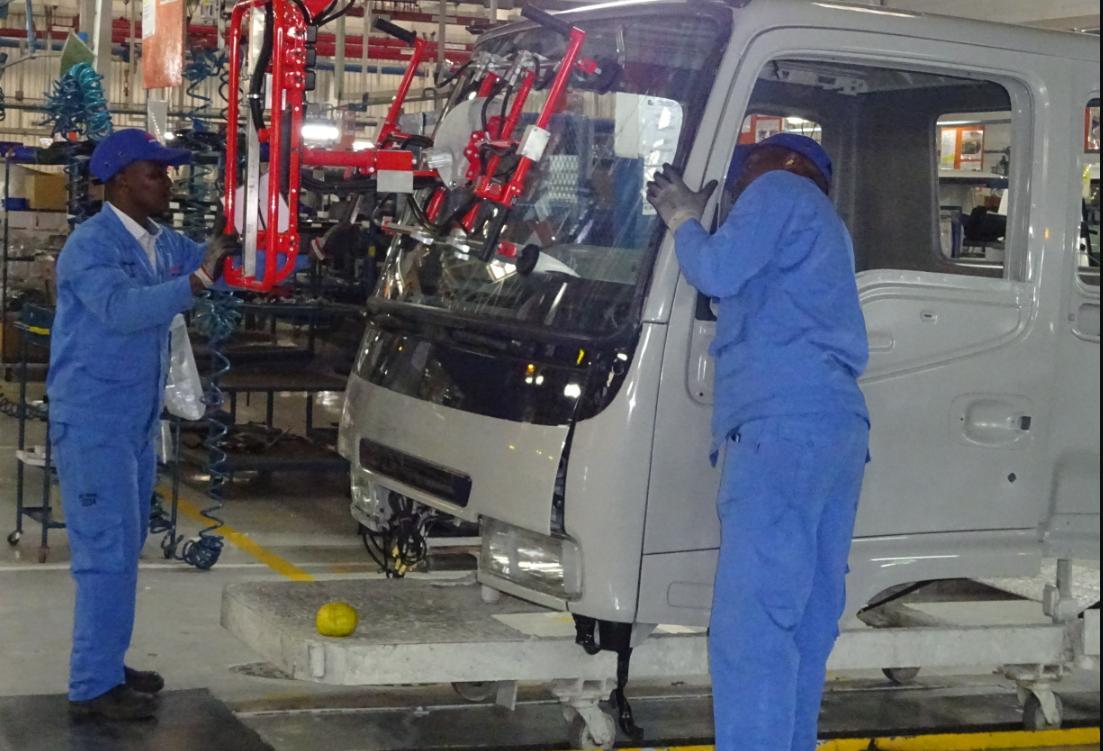
The local vehicle assembly industry has continued to experience a resurgence, with major firms like Associated Vehicle Assemblers (AVA), Isuzu East Africa and Kenya Vehcile Manufacturers (KVM) assembling models from Izuzu, Toyota, Fuso, Scania, and Hyundai.
As of 2025, locally assembled vehicles constitute nearly 85 per cent of new vehicle sales, driven by government policies, tax exemptions on kits, and a focus on EVs, such as BasiGo buses.
According to Isuzu East Africa managing director Rita Kavashe, stable interest rates in the market have made asset finance loans more affordable, driving uptake of these units.
“A stable forex exchange also inspires more confidence and stability in planning and investments,” Kavashe told the Star.
Growth in credit to key sectors of the economy, particularly manufacturing, building and construction, trade and consumer durables, remained strong in November, as lending improved to stand at 6.3 per cent, compared to 5.9 per cent in October and negative 2.9 per cent in January.
“This mainly reflects improved demand for credit in line with the declining lending interest rates. Average commercial banks’ lending rates declined to 14.9 per cent in November 2025 from 15 per cent in October, and 17.2 per cent in November 2024,” CBK governor Kamau Thugge notes in a recent post-Monetary Policy Committee briefing.
Kenya’s economy demonstrated significant resilience last year to grow by 4.9 per cent in the third quarter, supported mainly by a rebound of the construction sector, mining and growth in manufacturing and transport sectors.
While the new car sales have grown, high prices, economic hardship and stricter bank loan conditions has continued to push Kenyans towards second-hand vehicles which have lower prices and the most bought mainly when it comes to saloon and SUVs.
Kenya imports an average 7,000-9,000 units a month, mainly from Japan (80 per cent), United Arab Emirates, United Kingdom, Singapore and South Africa.
These units dominate the local market and roads (80%) with buyers in this segment spending an estimated Sh60 billion annually on the units.
Prices range from as low as Sh500,000 to an average Sh2.5 million, which is the average starting price mark for new cars.