WYCLIFFE MUGA
Africa-Press – Kenya. It is actually very difficult to know just how popular or unpopular President William Ruto is, and – following on that – what his chances are for re-election in the 2027 general election.
On the one hand, we see him addressing what Kenyans like to term “mammoth rallies” all over the country, where he is cheered by what seem like deliriously happy supporters.
But on the other hand, one recalls the sheer intensity of the contempt and disrespect for the President that poured out from the Gen Z protests of 2024, and one has to wonder: did all that incandescent fury , which ultimately led to the burning of part of the Parliament Buildings – an event unprecedented in Kenya’s history – really just fizzle out and end in sullen resignation? Or was that an exceptionally powerful anti-Ruto political movement that may yet be revived given the right combination of circumstances?
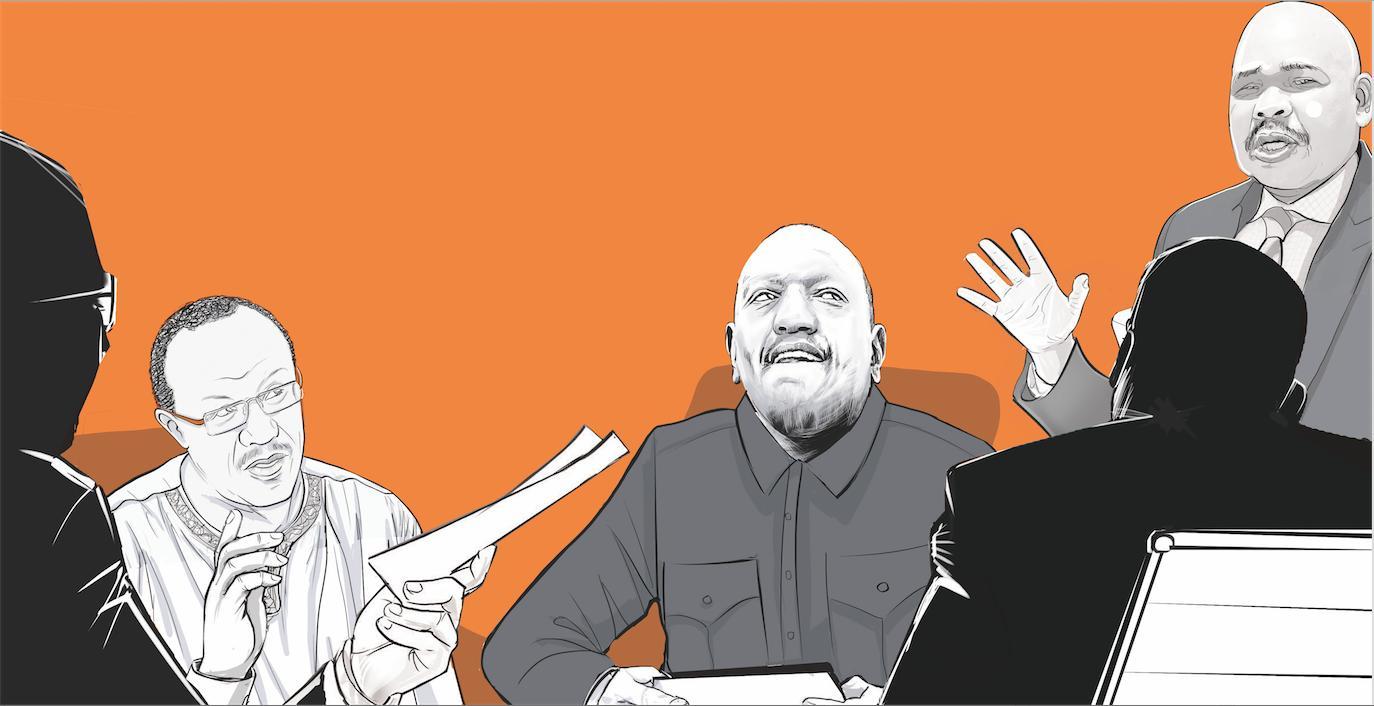
To my mind, it is issues like these which make it vital that the president should have effective advisers. For none of us can really know what others truly think of us; how deep their hatreds or affections run; who we may and who we may not be able to rely on when we get into trouble; etc.
For most of us, friends and family are all we can rely on. But for a president, independent and insightful advisers are a core necessity.
So, it seems to me to be regrettable that the President, apparently, was acting unconstitutionally when he set up the panel of advisers which the courts have recently disbanded.
Presidents need such people around them.
I was reminded, for example, of the Principal Press Officer (I think that was his official title) of President Daniel Moi, one Lee Njiru, who has since written a riveting account of his time in the corridors of power, and also given many interviews.
One of the most memorable parts of his story was his account of the 1992 general election, which marked a return to competitive multiparty politics after three decades of autocratic single-party rule.
According to Njiru, President Moi, when the reality of how unpopular he really was became manifest in 1991 or thereabouts, was ready to give up and retire from politics.
But Njiru and certain State House insiders were in no way disheartened. Where Moi saw a dead end, they could see a clear path to victory – provided enough money was spent in securing that victory.
And true enough, Moi in the end won with just 35 per cent of all votes cast, as he ran against a deeply divided opposition, which would have beaten him in a landslide if its key leaders had only united.
Under our old constitution, a simple majority was all that the winner of a presidential election needed.
And according to Lee Njiru, he and other Moi State House insiders are to be credited with having ensured – in those difficult times – that the opposition remained divided.
But the role of advisers should not be limited to coming up with strategies for election victory.
One point I have made frequently in this column is that while it is perfectly in order for our leaders to offer us visions of how they will make Kenya “the next Singapore” – or, perhaps more precisely, make Kenya a prosperous liberal democracy on the Nordic model – all that has to be in the distant future. It is not going to happen in the next five or even 10 years.
What is far more important, in my view, is to answer this fundamental question: Insofar as Kenya is likely to remain a basically agrarian economy for the foreseeable future, with most of our population making a living off the land, what path can our leaders create to take us to a place where small-scale farming is a reasonably profitable commercial activity?
In other words, how can the average Kenyan family in the rural areas adequately support itself from the proceeds of what it grows on just five acres of land?
That is the kind of question that presidential advisers should be struggling to find answers to.
Source: The Star