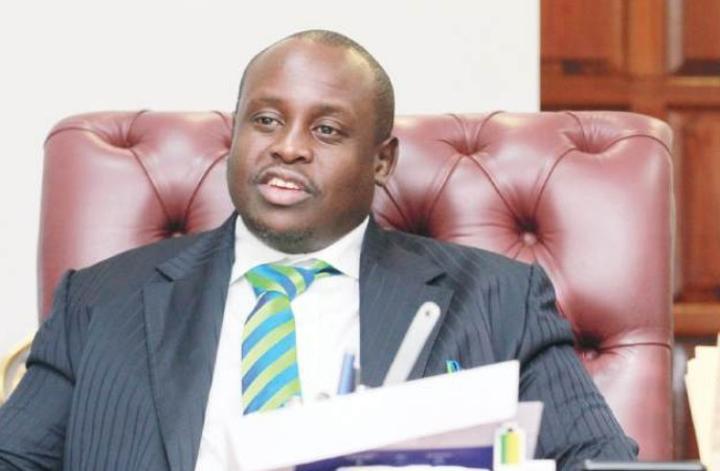
Africa-Press – Kenya. In a wide-ranging interview, Energy and Petroleum Regulatory Authority (EPRA) Director-General Daniel Kiptoo speaks on why keeping the lights on and fuel flowing is his top priority ahead of the 2027 elections, how Kenya is positioning itself to attract oil and gas investors, the future of renewables and electric vehicles, LPG reforms, and why Kenyans themselves must help fight illegal fuel operations.
As EPRA Director General, what is your top priority?
My top priority in the year 2026 going into 2027 is stability and security of supply for both electricity and petroleum products. For petroleum products, we have come from a time where we had a lot of volatility in the market, but we have seen some stability over the last couple of months, going almost half a year now. So as we gear up towards a political season in the country going into the 2027 election, the energy and petroleum sectors are really the backbone of our economy.
For me, as the DG is to ensure that one, we have availability of product when it comes to security of supply for petroleum products, then we have stability in both the supply side and also the pricing side.
For electricity, again is an issue of reliability and quality of supply and service. We must ensure that we keep our lights on, we also have to ensure that we have the quality of supply that is not a lot of fluctuations in power supply and the grid is stable and the power supplied by the utilities is there.
Talking about coming from volatility, what does that mean and how was it handled?
There was a big issue around availability of petroleum products, availability of hard currency to sort out the obligations with the suppliers. We went through a very challenging time between the years 2020, after we came out of Covid, starting with monetary policy in the US, capital flight out of frontier markets such as ours, liberating hard currency, particularly dollar-denominated payments for products and also a lot of shortages and scarcity between the year 2020, 2021, 2022. The challenges that we had at a macro level, as a country, we have managed to address them.
Where are we with the upstream segment of the petroleum industry?
We have several open blocks in the country. We have been working with the ministry on a potential data center so that we can prepare for bid rounds to auction these blocks.
There is now an increased interest in oil and gas exploration, which was not there pre-Trump administration. Banks were not willing to finance new oil and gas projects but now with the ‘drill baby drill’, there has been a lot of opening up of the upstream. So it is a window of opportunity for Kenya to market the other blocks, not only the ones in South Lokichar, where there have been commercial discoveries.
Is the 2026 target to commercialise Turkana oil realistic?
As EPRA, our mandate was to review the Field Development Plan, which we did, and we made our recommendation to the Cabinet Secretary, who then reviewed and submitted it to Parliament. The issue of the timeline of December 2026, start of 2027, is a very ambitious target, but it is achievable. But we can only make that determination or call once Parliament has given us its direction.
What would you say are some of the biggest achievements in the last five years?
When EPRA came in 201,9 having rebranded from Energy Regulatory Commission (ERC) under the Energy Act 2019, we took up a lot of expanded mandate given to us by Parliament. I think one of our biggest achievements has been taking up those big roles, the expanded mandate from the Energy Act 2019, and giving it life. We have developed over 50 regulations. The upstream regulation was not a mandate of the regulator before 2019.
It was a mandate of the Ministry. We have had a lot of innovation when it comes to petroleum pricing. We have amended the petroleum pricing regulations and addressed a lot of the macroeconomic issues. On the electricity side, we have reviewed tariffs. For the first time, a tariff review happened.
The last tariff review was in 2018. In 2023, APRA reviewed the tariff to make it cost-reflective. We have been able to do that and we have been able to ensure that the sector is stable. As I said, our role is to balance the interests of investors, consumers and all other stakeholders, including the government.
Talking of that, how is EPRA balancing investor interests with consumer protection in power pricing?
The law is very clear. Tariffs must be just and reasonable. Investors must be compensated for risks assumed, but consumers must also be protected. Access comes first. There is no affordability without access. Kenya has made remarkable progress, increasing electricity access from under 25 per cent in 2012 to over 75 per cent today. Reliability comes next, especially for industry. Cost is important, but it must be viewed in context, taking into account subsidies, taxation and infrastructure investment.
Kenya is a renewable energy leader. How is EPRA supporting the clean energy transition?
Renewable energy is embedded in our legal mandate. EPRA licenses renewable projects, electrical contractors, technicians and solar PV installers. We regulate both on-grid and off-grid projects and oversee energy efficiency programmes. We also work closely with industry, for example through energy management awards in partnership with the Kenya Association of Manufacturers.
At a global level, I currently serve as chair of the Renewable Energy Transition Accelerator (RETA), a coalition of over 80 regulators worldwide. This positions Kenya as a clean energy champion and helps attract financing and partnerships into the country.
So we are supporting the transition as a regulator, both in our legal mandate, but also in the operational side when we are reviewing projects that are coming to us.
How prepared is Kenya for electric vehicles?
Kenya has made strong progress, particularly in the two- and three-wheeler segments. EPRA issued e-mobility guidelines two years ago, which informed the national e-mobility policy recently launched by the government.
E-mobility, alongside artificial intelligence and data centres, will be a major driver of electricity demand growth. The focus now is on charging infrastructure, which is being addressed through a whole-of-government approach involving national and county governments and the private sector.
LPG uptake is also gaining momentum. Where is Kenya headed?
All the building blocks are in place. We strengthened LPG regulations, approved the LPG Growth Strategy, licensed cylinder manufacturers and technicians, and supported major infrastructure investments, including new LPG terminals in Mombasa, by both the private sector and government-supported facilities. Government programmes for LPG in schools and household cylinder distribution are rolling out.
Imports will eventually move to the open tender system once infrastructure and supply frameworks are fully aligned. So the LPG growth strategy is well underway in implementation and you will start seeing the visibility on the ground.
The legal framework has already been put in place and as the infrastructure is getting built, we will get into the supply side as well.
Kenyans often raise concerns about load-shedding. Is it happening?
Well, towards the end of last year, we were having a bit of a challenge particularly at peak, but there are some links which have really helped us in the last couple of weeks.
The energisation of the Mariakani and Kabarnet sub-stations going into Lesos, the Sondu-Awendo-Ndhiwa line has significantly improved grid stability.
We have not experienced load-shedding in western Kenya since these lines were energised because you could load-shed on account of lack of generation capacity, but you can also load-shed on account of grid constraints, transmission and distribution capacity to move the power to where it is required. However, demand is growing rapidly and reserve margins are tight. We must invest in both new generation and grid infrastructure.
What keeps you awake at night?
Ensuring that we have security of supply, especially now that we are heading into a political season. My biggest issue is to ensure that we have security of supply, we have access, we have reliability and quality of service, and we also have affordability, both for electricity and petroleum products.
What message do you have for Kenyans on illegal fuel and LPG operations?
We all have a role to play. Many Kenyans live next to illegal facilities or patronise them, yet blame the government when accidents occur. EPRA cannot be everywhere; we have fewer than 500 staff nationwide.
We urge Kenyans to report illegal activities through our hotlines, WhatsApp numbers and social media channels. Public vigilance, combined with enforcement and education, is the only way to keep communities safe.