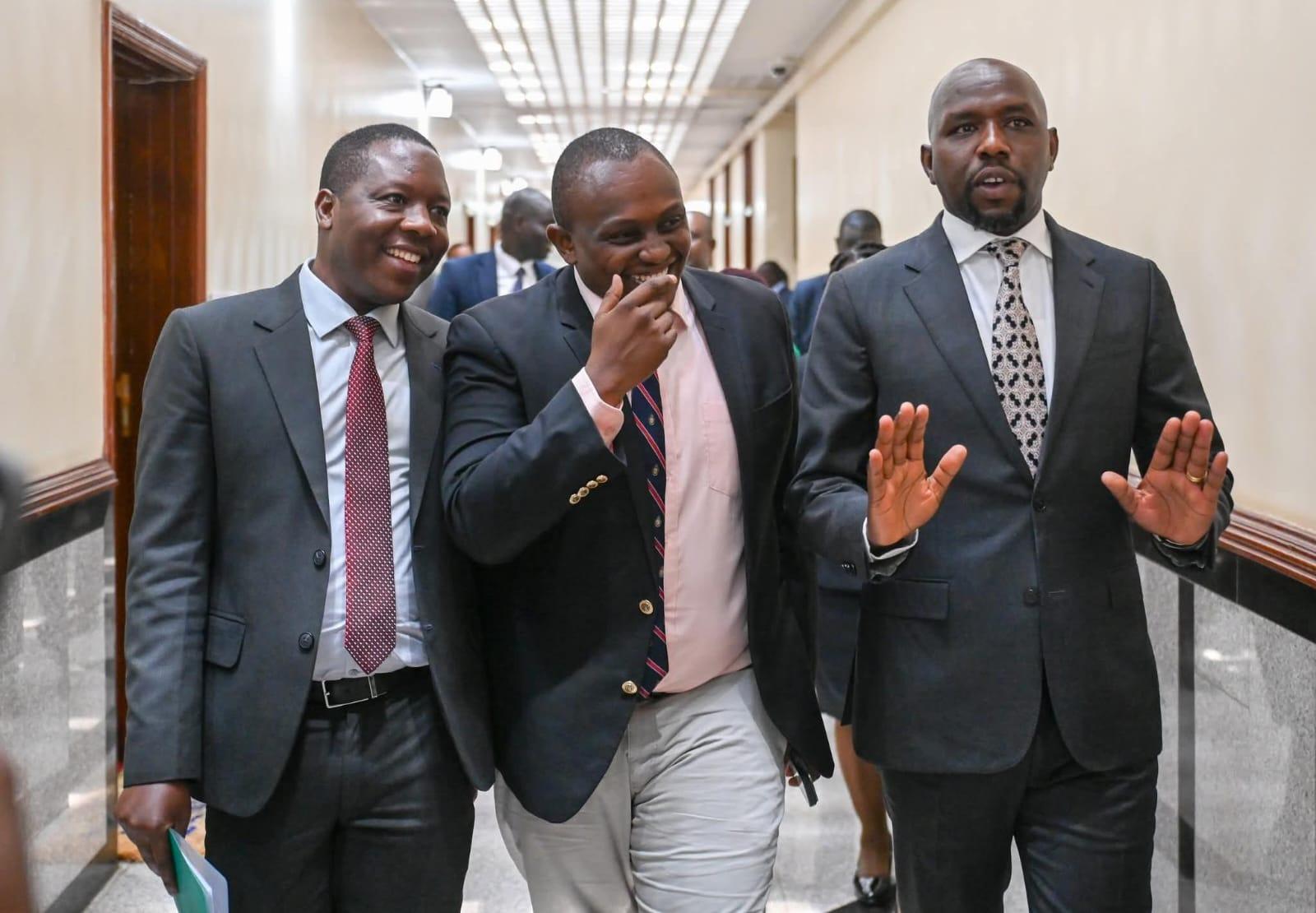
Africa-Press – Kenya. Interior Cabinet Secretary Kipchumba Murkomen has acknowledged that alcohol and drug abuse within the police service is a serious problem that requires urgent action.
Speaking to MPs on Thursday, Murkomen said addiction affects not only civilians but also police officers tasked with maintaining law and order.
“Addiction is not confined to just citizens. It affects police officers, too. They are part of society, and we have a good number of police officers who are addicted to alcohol. Some also abuse drugs. That must be confessed,” he said.
Murkomen, addressing a Speaker’s Kamukunji meeting convened by National Assembly Speaker Moses Wetang’ula, said alcohol abuse among some officers has undermined service delivery and compromised security operations in certain regions.
He cited cases where some Officers Commanding Stations (OCSs) and their juniors reportedly reported for duty while intoxicated, contributing to insecurity in their areas.
“We have a serious problem of alcohol abuse and addiction within the police service. It must be addressed firmly but compassionately,” Murkomen told MPs.
He defended ongoing security sector reforms aimed at restoring discipline and operational effectiveness, revealing that the Inspector General of Police has been directed to implement a strict framework to ensure no officer is deployed while intoxicated.
Officers struggling with addiction will be taken to rehabilitation centres, Murkomen said, but added that leniency would have limits.
“You may be given one chance for rehabilitation. Beyond that, if you are unable to serve with discipline, you must exit the service to allow others to serve,” he stated.
The CS also linked part of the indiscipline challenge to staff shortages, noting that in some instances officers remain in office despite being unfit because there are no immediate replacements.
The recent recruitment of 10,000 police officers, he said, will help plug operational gaps and restore balance across the country.
Beyond substance abuse, Murkomen raised concerns over mental health challenges within the service.
He faulted station commanders who deploy officers facing severe personal or psychological distress, saying such decisions have, in some cases, led to tragic outcomes, including fatal shootings involving civilians and fellow officers.
“OCSs will be held personally accountable if they deploy officers known to have mental health challenges or who are unfit for duty,” he warned.
The CS proposed institutionalising annual police recruitment within the national budget to prevent long gaps that strain the service and weaken operational readiness.
During the consultative meeting that brought together MPs and senior security officials, Murkomen also addressed recent incidents of insecurity, including the June 24-25 invasion of Parliament, banditry in parts of the Rift Valley and Upper Eastern regions, and rising gang violence in urban and rural areas.
He warned that indiscipline within the police service and the growing menace of criminal gangs pose a grave threat to national stability.
Murkomen defended the government’s crackdown on criminal gangs, including those allegedly sponsored by politicians.
“What begins as political goons mutates into urban banditry,” he said, cautioning MPs that gangs initially formed as political bouncers often evolve into fully fledged criminal networks that terrorise communities.
On banditry and inter-communal conflicts, he reported progress in stabilising parts of West Pokot, Elgeyo-Marakwet, Baringo, Samburu, and Laikipia, but acknowledged persistent challenges in Isiolo, Meru, Turkana, and sections of West Pokot around the Kerio Valley.
Murkomen said the Special Operations Group, though effective, remains limited in number, necessitating additional training, resources, and equipment.
He added that the ministry is exploring the establishment of police and military training facilities in volatile areas to strengthen long-term government presence.
“We want practical field training facilities in those regions to increase security presence and ensure sustainable peace,” he explained.