
Africa-Press – Kenya. The government has established 235 senior school hubs across all 47 counties to support the rollout of competency-based assessments as the pioneer cohort of the Kenya Junior School Education Assessment completes transition to Grade 10.
The hubs are sampled existing schools, five from each county, representative of public, private, rural, urban and special needs schools.
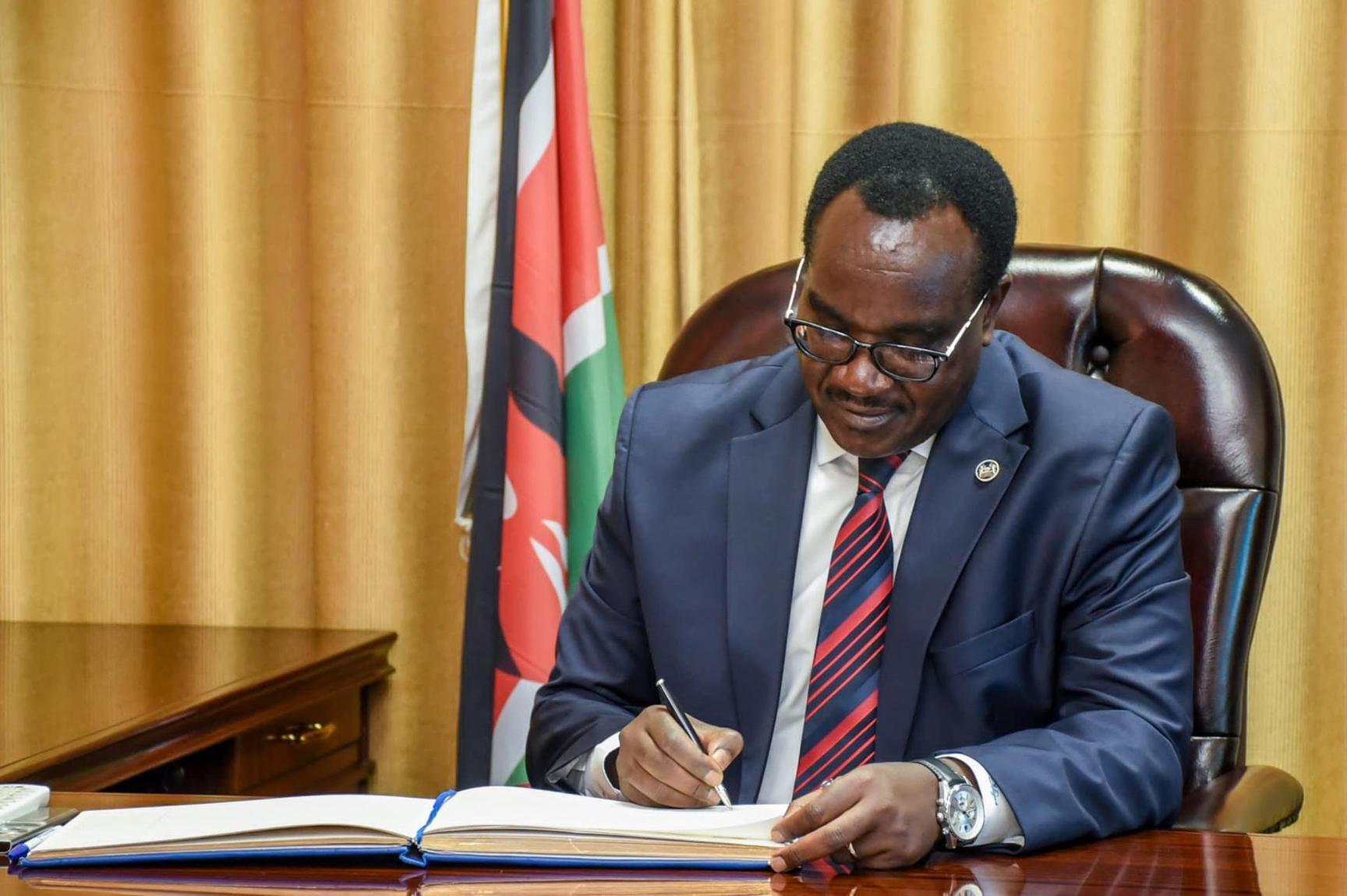
Education Cabinet Secretary Julius Ogamba said the hubs are intended to strengthen coordination between schools and the Kenya National Examinations Council (KNEC), while offering hands-on guidance to teachers and administrators implementing the new system.
A total of 1,130,459 candidates sat for the 2025 Kenya Junior School Education Assessment (KJSEA), the first national assessment used to determine progression to senior school.
The cohort comprised 578,630 boys (51.19 per cent) and 551,829 girls (48.81 per cent), and the assessment was conducted across 24,366 junior secondary schools.
Ogamba said transition to Grade 10 is nearing 99 per cent, with the ministry working through a multi-agency approach to ensure that all learners are mopped up and enrolled in their respective schools.
He said KNEC will open the portal for the registration of Grade 10 learners in readiness for School-Based Assessments once the registration of the 2026 assessment cycle is complete on March 31.
“School-based assessments are crucial because they will constitute the formative assessment that will form part of the reporting at the end of Senior School, when learners will be issued with their Kenya Certificate of Basic Education results,” Ogamba said.
Senior school comprises three years of learning, running from Grade 10 to Grade 12.
“To ensure readiness and effective assessment in senior school, we have established 235 senior school hubs in all 47 counties. These are purposively sampled existing schools, five from each county, representative of public, private, rural, urban and special needs schools,” Ogamba said.
He explained that the purpose of the hubs is to provide for closer interaction between KNEC and the Senior School learning community across the country.
The hubs will also provide support to schools within their counties in the implementation of Competency-Based Assessment.
“In addition, through KNEC’s Educational Assessment Resource Centre, we have established an online self-paced training portal for Senior School teachers. The aim is to enable teachers acquire the requisite skills for Competency Based Assessment. Currently, access to the portal is free,” Ogamba added.
He encouraged Senior School teachers to take advantage of the opportunity and to prepare themselves for the new system of assessment.
He further encouraged teachers and parents to ensure that all learners register and sit for their School-Based Assessments, and that all the scores are uploaded onto the KNEC database for use in the final grading.
Ogamba said the ministry will enhance engagement with parents and guardians through existing structures to provide guidance.
“Schools are expected to upload details of parents and guardians, including their contact details. This will facilitate communication in confirming the registration status of learners and in ensuring that their School-Based Assessment scores are properly uploaded,” Ogamba said.
He added that as part of enhancing the integrity of the education and assessment system, the ministry is also rolling out online verification of certificates.
He said KNEC will be implementing a secure, efficient and environmentally sustainable electronic certificate (eCertificate) system, which will be applicable to certificates issued from 2023.
“We aim to enhance data security, reduce operational costs, improve accessibility and align with global digital transformation standards. The service will be piloted by end of this month.”
The CS spoke on Friday during the launch of the 2026 national assessments and examination candidates’ registration season at the New Mitihani House, Nairobi.
KNEC chief executive David Njegere said preparations for senior school assessments were at an advanced stage.
“KNEC is finalising compilation of data on the pathways being offered by each senior school through Subcounty Directors of Education (SCDEs). KNEC will be opening the portal for registration of learners in Grade 10 once registration of the 2026 KCSE examination is over,” he said, adding that this will pave way for roll out of School-Based Assessments in Senior School.
Registration for KPSEA will run from February 16 to March 16, 2026. Registration for KJSEA will run from March 2 to March 31, 2026, while KCSE registration will take place from February 16 to March 31, 2026.
Njegere called on all heads of institutions to access the various tools available on the KNEC website, such as the Competency Based Assessment Framework (CBAF) for Senior School level, to familiarise themselves with the purpose, the mode, the types of tools to be used and the mode of reporting designed for learners in Senior School.
KNEC chairman Julius Nyabundi called for collective responsibility to ensure smooth administration of the national exercise, saying the council will be engaging with school heads throughout the registration and assessment cycle to ensure accuracy and timeliness.
“I do hope that the associations represented here will mobilise the heads of institutions, learners and parents towards the achievement of 100 per cent registration of all the candidates,” he said.