
Africa-Press – Kenya. Kenya has been thrust to the forefront in the battle for mobile internet access across Africa, following a partnership between Airtel Africa and Elon Musk’s SpaceX.
The deal, expected to ride on Starlink’s satellite network, targets service roll-out in 14 African markets.
Once finalised, the deal will likely see Airtel Kenya eclipse its competitors in the mobile Internet market, reaching more users, with faster speeds at more affordable rates.
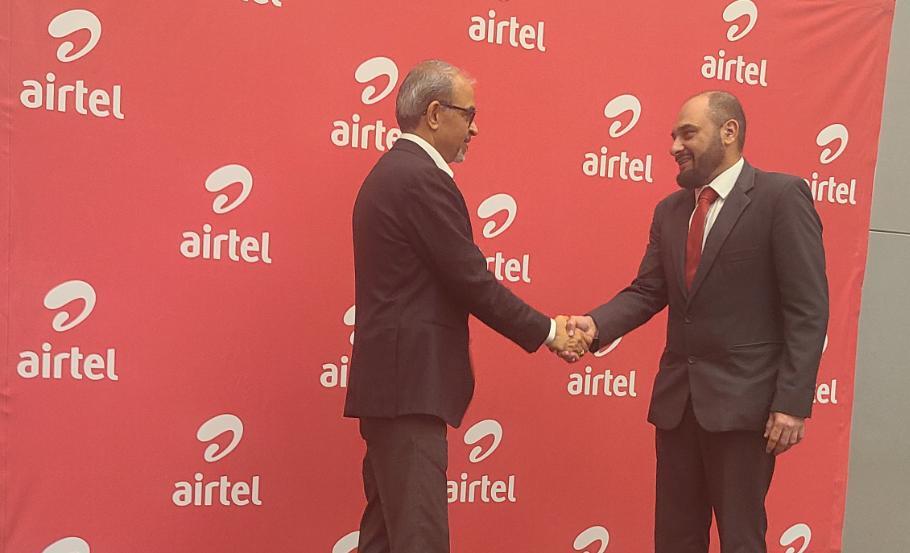
Speaking at a media roundtable in Nairobi on Thursday, Airtel Africa chief executive officer, Sunil Taldar, said that the direct -to-Cell system will offer up to 20 times improvements in data speed at much more affordable rates.
This will support video streaming, cloud services, and other bandwidth-intensive applications, once only feasible on fibre or well-served 4G/5G.
Taldar said Airtel Africa is in advanced talks with SpaceX, suggesting the deal will likely be sealed in the coming months. “We will be ready to roll out once we obtain relevant regulatory approvals.”
The collaboration was first announced in December last year and is expected bring high-speed, low-latency internet connectivity to both urban centres and hard-to-reach rural regions that have long been underserved by traditional telecom infrastructure.
It will allow compatible mobile devices to connect directly to low Earth orbit (LEO) satellites without relying on extensive ground-based networks.
“By bypassing the need for conventional towers in remote areas — where rugged geography and infrastructure costs traditionally limit connectivity — the technology is expected to widen access to digital services across our markets dramatically,’’ Taldar said.
For Kenyan consumers and businesses, the partnership will herald several breakthroughs, including broader reach in regions where 3G, 4G, or fibre infrastructure is sparse.
Although the cost benefits to users under this planned partnership are not yet clear, experts say that leveraging satellites to complement terrestrial networks could ultimately reduce the marginal cost of extending coverage — particularly in low-density areas — and exert downward pressure on retail prices in the long term.
This partnership is expected to further boost the country’s Internet penetration, currently at 49 per cent, with the latest data by DataReportal showing that at least 27.4 million people are using the Internet in the country.
The country’s internet penetration and usage rates place it among the top performers on the continent, a distinction that brings both immense opportunities for its burgeoning digital economy and significant challenges, particularly in cybersecurity.
Kenya’s mobile internet market remains dominated by a few major players, with the regulator’s latest data confirming that Safaricom holds the largest share of mobile broadband subscriptions at around 63 per cent, followed by Airtel Kenya with roughly 32 per cent.
Smaller providers, including Telkom Kenya, Equitel, and Jamii Telecommunications, account — accounting for the remainder.
Airtel Kenya has been steadily eating into its rival, Safaricom’s base, in almost all spheres apart from mobile internet, according to the most recent sector statistics by the Communications Authority (CA).
It added nearly three million new subscribers in Q4, 2025, boosting its market share to a record-high of 32.2 per cent with a total of 24.5 million users.
Safaricom subscriber base increased by a million, representing 63.3per cent of the market — its lowest in recent years- and a continued slide from 65.3 per cent in December 2024 and 65.7 per cent in September 2024.
Airtel Money hit double-digit market share for the first time in Q4, piling pressure on market leader Safaricom’s M-Pesa, which slipped below 90 per cent for the first time.
Sector data for the period under review shows that Airtel Money’s market share extended its climb, reaching 10.3 per cent, a sustained growth noted since 2023.
According to the report, Safaricom’s M-Pesa slipped to 89.7 per cent, its first reading below 90 per cent, marking a shift in a market long shaped by near-total dominance.
M-Pesa’s share has been slipping from roughly 95 per cent in 2023 to about 90.8 per cent in early 2025, while Airtel Money rose from about six per cent to 9.1 per cent on the back of lower fees, wider agent coverage and aggressive pricing.
The deal is likely to dramatically push up the satellite Internet market in the country, currently accounting for two per cent of total users.
According to state data, the country had just 769 satellite internet users in 2017, with the number rising to 1,547 in 2018 but falling to 860 in 2021 and to 730 in 2022.
The change point came in 2023 when SpaceX’s Starlink entered the Kenyan market, with subscriptions jumping to 2,933, a 302 per cent year-on-year increase, the strongest growth ever recorded in the segment.
This momentum accelerated even further in 2024, when subscriptions soared to 19,403.
Even so, the rapid expansion of satellite Internet in Kenya has also prompted regulatory action, with authorities now mulling plans to introduce stringent identification requirements for users.
Providers like Starlink have been asked to collect and verify national IDs from customers in person by May this year, a move officials say is intended to align satellite services with existing telecommunications Know-Your-Customer (KYC) rules and tackle cybercrime.
Non-compliance could lead to service disruption for users who fail to verify by the set deadline.
This requirement reflects growing concerns among regulators and incumbents about the oversight of satellite connectivity, which by design transcends borders and traditional licensing regimes.
While geared toward enhancing accountability and safety, some industry watchers caution that strict ID mandates could slow adoption among certain rural or casual users.
The Airtel-SpaceX partnership marks a strategic pivot in Kenya’s connectivity landscape.
As Kenya and the continent prepare for this next phase of internet expansion, the interplay between satellite technology, traditional telco competition, and robust regulation is tipped to shape the digital future for millions across Africa.