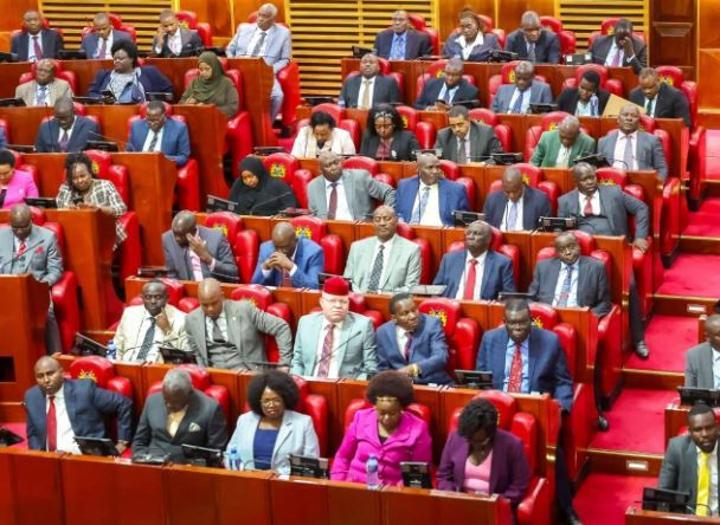
Africa-Press – Kenya. The National Assembly has approved its legislative calendar for 2026, outlining three session periods, multiple recess breaks and a long end-of-year adjournment to guide the House’s operations.
According to a Gazette Notice issued by Clerk of the National Assembly Samuel Njoroge, the calendar was adopted through a resolution passed on February 11, 2026, in line with Standing Order 28.
“It is notified for general information that the National Assembly approved the Calendar of the Assembly (Regular Sessions) for 2026 as set out,” the notice states.
The House began its first sitting on February 10 and will continue its regular sessions until December 3, 2026. Members will sit on Tuesdays in the afternoon, Wednesdays in the morning and afternoon, and Thursdays in the afternoon.
The first part of the session runs from February 10 to March 12, after which lawmakers will proceed for a short recess from March 13 to March 30. Sittings will resume from March 31 to April 30, followed by a long recess between May 1 and May 25.
The annual National Assembly Prayer Breakfast will be held on May 28. The second part of the legislative year begins on May 26 and runs until June 25.
Members will then break for another short recess from June 26 to July 20, before resuming sittings from July 21 to August 20. A second long recess is scheduled from August 21 to September 21.
The third session will run from September 22 to October 15, after which the House will take a short recess from October 16 to November 2. Lawmakers will return for the final stretch from November 3 to December 3 before proceeding on a long recess that will run from December 4, 2026, to January 25, 2027.
Committee sittings will also be suspended during the festive period, from December 14, 2026, to January 18, 2027. Njoroge noted that the timetable is designed to balance legislative work with oversight, constituency engagement and committee activities.
“In accordance with the Standing Orders, morning sittings commence at 9.30 am and afternoon sittings commence at 2.30 pm.,” he said.
However, the Clerk clarified that the House retains flexibility to adjust its programme when necessary. “The House may resolve to hold sittings on other days and times outside the published Calendar,” the notice states.
The structured calendar provides predictability for Members of Parliament, parliamentary staff, government ministries and the public, particularly for the planning of legislative business such as budget approval, debate on Bills, committee inquiries and oversight of government programmes.
The extended recess periods are also expected to allow MPs time to engage with constituents and monitor development projects in their respective constituencies. Parliament typically aligns its schedule with key national processes, including the budget cycle, which peaks between April and June.
The publication of the calendar comes as the Thirteenth Parliament enters its fifth session, with lawmakers expected to handle a busy legislative agenda, including economic reforms, governance measures and sector-specific Bills.
With the schedule now gazetted, attention shifts to the House Business Committee, which will prioritise and sequence legislative matters within the approved timetable to ensure smooth operations throughout the year.