Africa-Press – Kenya. Kenya has taken another step toward the development of its first nuclear power plant, with Parliament pledging legislative and policy support to accelerate the country’s long-term nuclear energy programme.
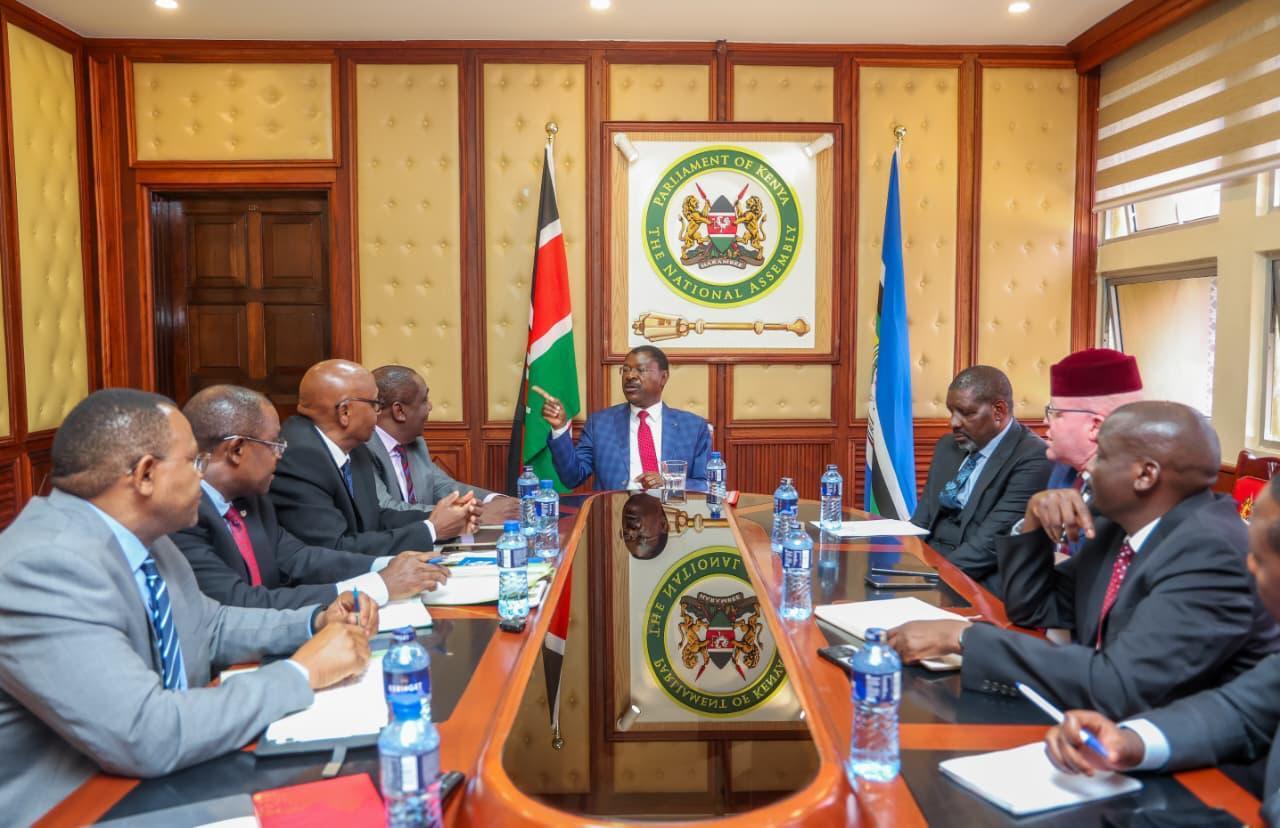
National Assembly Speaker Moses Wetang’ula today received a briefing from the leadership of the Nuclear Power and Energy Agency (NuPEA) and the Kenya Electricity Generating Company (KenGen), as the country intensifies preparations to introduce nuclear power into its energy mix.
The meeting brought together key officials overseeing the programme, including NuPEA Chairman Lawrence Gumbe, KenGen Chairman Alfred Agoi, NuPEA CEO Justus Wabuyabo and KenGen Managing Director Peter Njenga, alongside members of the National Assembly Energy Committee.
The engagement sought to strengthen institutional collaboration and ensure that Parliament remains fully informed on milestones achieved under Kenya’s nuclear power roadmap, as well as the legislative and financial frameworks required to deliver the country’s first nuclear power plant.
Kenya is pursuing nuclear energy as part of a long-term strategy to diversify its electricity sources, reduce reliance on fossil fuels, and provide a stable, low-carbon power supply capable of supporting industrialisation and sustained economic expansion.
With electricity demand projected to rise steadily in the coming decades, nuclear energy is seen as a reliable baseload option to complement geothermal, hydro, wind and solar generation.
A major highlight of the briefing was the designation of KenGen as the prospective owner-operator of Kenya’s first nuclear power plant.
The move marks a significant institutional milestone, positioning the country’s leading power producer to spearhead the technical and operational aspects of the project once it moves to construction and commissioning stages.
As owner-operator, KenGen will be responsible for selecting appropriate technology, preparing and evaluating bids, negotiating contracts, managing project implementation and applying for the licences required for construction and operation.
The company’s experience in electricity generation is expected to provide a strong foundation for the transition into nuclear power development.
Wetang’ula emphasised that the National Assembly would play a central role in building the legal foundation for the project through legislation, treaty ratification and budgetary support.
He said the House would provide legislative oversight and create an enabling legal environment for the safe deployment of nuclear technology.
“In the development of a National Nuclear Power Programme, the National Assembly serves as the ultimate custodian of public interest and the primary architect of the project’s legal foundation,” he said.
He pledged that Parliament would enact the necessary regulations and ensure adequate resource allocation to support the agencies implementing the programme.
In addition to the existing nuclear regulatory framework, lawmakers are considering enhancements to legislation to align Kenya’s programme with international best practices on safety, security and transparency.
“Nuclear technology has the potential to deliver economic benefits, support climate change mitigation, and advance the government’s development agenda,” Wetang’ula said, noting that the programme could position Kenya as a regional leader in advanced energy technologies.
The Speaker also welcomed the completion of a Strategic Environmental and Social Assessment (SESA), describing it as a critical safeguard to ensure that environmental protection and public interest considerations remain central to the project.
National Assembly Speaker Moses Wetang’ula during a meeting with top officials from NuPEA, KenGen and members of Energy committee in parliament at his office on February 25, 2026/NAAccording to NuPEA, Kenya has already established the National Nuclear Regulatory Authority and undertaken extensive capacity-building initiatives to prepare local experts for the technical demands of nuclear energy development.
Clear candidate sites for the plant have been identified in Siaya and Kilifi counties following nationwide stakeholder engagement processes.
NuPEA CEO Justus Wabuyabo urged the National Assembly to pass a resolution formally designating the nuclear power programme as a Project of Strategic National Importance.
Such a designation, he said, would grant fast-track status for land acquisition, grid integration and inter-ministerial approvals, while signalling to international partners and investors that Kenya is committed to delivering the project.
“This designation facilitates ‘fast-track’ status and signals to the global community that Kenya is a stable and committed partner,” Wabuyabo said.
NuPEA Chairman Lawrence Gumbe appealed for adequate funding to sustain momentum, cautioning that Phase Two of the programme involves capital-intensive technical studies that should not be delayed.
“Phase Two requires intensive capital for technical studies that cannot be postponed without increasing overall project costs,” Gumbe said.
KenGen Chairman Alfred Agoi Masadia emphasised the importance of parliamentary advocacy and grassroots engagement to build public understanding and acceptance of nuclear energy.
“The National Assembly is the primary advocate for the Kenyan people. Members of the relevant committees can champion the programme through stakeholder engagements at constituency levels to demystify nuclear energy,” he said.
He added that direct leadership from elected representatives would help counter misinformation and secure social licence from communities, particularly in coastal areas identified as potential host sites.
Kenya’s nuclear power journey follows a phased approach aligned with international guidelines, ensuring that institutional capacity, regulatory frameworks and human resource development are firmly in place before construction begins.
Officials stressed that safety remains paramount, with global standards guiding every stage of implementation.
If successfully implemented, the nuclear power plant is expected to enhance energy reliability, support industrial growth, attract investment and reduce greenhouse gas emissions, aligning with Kenya’s climate commitments.
According to Wabuyabo, they also intend to meet the judiciary and the executive following today’s meeting to ensure arms are on board.
“We are planning to the President and the Chief Justice,” he told.