
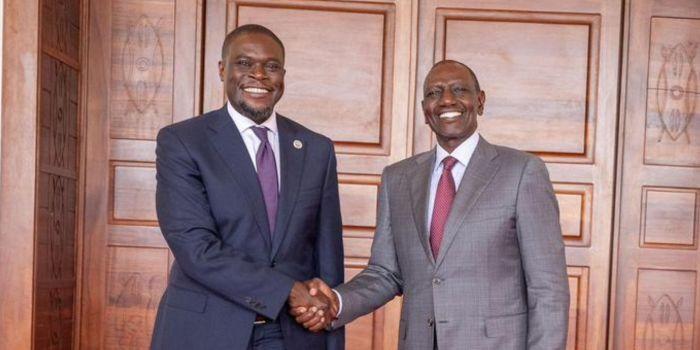
Nairobi Governor Johnson Sakaja has revealed the two circumstances that may lead to the scrapping of the cooperation agreement between the county and the national government, signed on February 17.
Appearing before the Senate Committee on Devolution and Intergovernmental Relations on Thursday, February 26, Sakaja, despite supporting the deal, said the deal can only collapse if the residents of the city reject the agreement in the ongoing public participation and if the Senate makes key changes.
“If the people reject the document, we can amend it. Amendment can involve detailing all the clauses,” he stated.
Apart from the public participation outcome, the governor noted that the deal can also be stopped if the Senate allocates more funds to the county, insisting that the city needed the agreement and more allocations to prosper.
“The capital will not change without this provision unless you tell me another provision of adding Ksh80 or Ksh100 billion to the city. Let me hear during the budget policy statement that you have added money to the city, and I will not need this agreement,” Sakaja added.
However, the Senate questioned why the deal was signed before public participation. In his response, Sakaja said that they first needed to have a document that they would then present to the people. He, however, sought guidance from the Senate.
“On public participation, I think this is for the Senate to guide. We have taken the document to the public participation because we felt there needed to be a document for the public to discuss, because what could we have presented if there was no document?” the governor said.
Sakaja’s comments come at a time when the County Assembly of Nairobi is planning to conduct public participation on the document that is aimed at promoting social and economic development in the capital.
The deal, signed between President William Ruto and Sakaja earlier this month, sought to give an additional Ksh80 billion to Nairobi for the projects. However, the court temporarily halted its implementation.
At the Senate meeting, Sakaja supported the agreement, noting that the cooperation will significantly transform the capital. He further emphasised that county roles were not transferred and he will never transfer the roles.
He framed the agreement as a necessary move to secure funding for the city’s development, challenging the senate to provide an alternative route for resource mobilisation if they disagreed with the current pact.
“As a responsible governor who cares for his people, I must find whichever way that will get me resources. I don’t have another route,” he noted.