
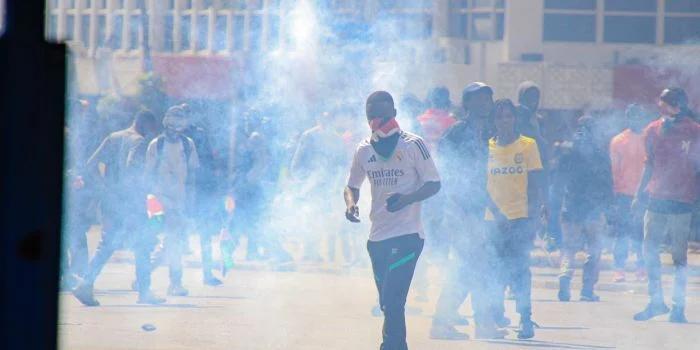
A report has been revealed by the Ministry of Interior detailing how politicians allegedly organise violence to disrupt rallies and intimidate rivals.
The report, published on Wednesday, February 25, detailed how political violence in the country is never random or spontaneous, but rather largely organised and enabled by political actors.
According to the report, which is based on historical reviews and intelligence assessment examining patterns, political elites and operatives play a central role in mobilising supporters to assert control, undermine opponents, and influence public perception during election cycles and major political events.
Intelligence further indicates that spikes in violence frequently coincide with political directives or approvals from influential figures in the political scene.
Organised violence was linked to previous election periods, including the 2007-2008 post election chaos, as well as the 2017 polls, where there were alleged connections between political operatives and coordinated violent activity.
The report also outlined a structured approach to mobilisation, identifying specific groups which are often targeted for recruitment. Among the most vulnerable groups are boda boda riders, casual labourers and unemployed youth, who tend to jump at the opportunity to make quick cash due to economic hardship.
Recruitment occurs through informal networks that operate between mobilisation and militancy, with the networks being used to quickly assemble groups whenever there is a spike in political tensions.
Once mobilised, the groups are deployed during political events in strategic positions. Their roles during these political rallies are to create the appearance of mass support, dominating public spaces and intimidating opponents.
One of the biggest points of emphasis from the report is that the operations are rarely accidental. Intelligence findings indicate that in many cases, deployment is pre-planned and financed by political actors who are intent on maintaining influence while avoiding direct accountability.
Deniability, which entails political figures distancing themselves from the incidents, is a notable feature of the strategy, according to the report. The same leaders go to the public to condemn unrest while privately benefiting from the aftermath.
Because of this pattern, the report claims there have been increased cycles of instability during election seasons – a dynamic which has reinforced a culture where locals believe that violence is a viable political tool.
By highlighting these patterns, the Ministry of Interior says it aims to strengthen preventive measures and disrupt the networks that facilitate politically motivated violence.