
Africa-Press – Kenya. Kenya is pushing for a new global deal led by the United Nations that will among others change how big international companies are taxed. In the changes, the country wants the agreement to take priority over older tax deals between two countries if the rules clash.
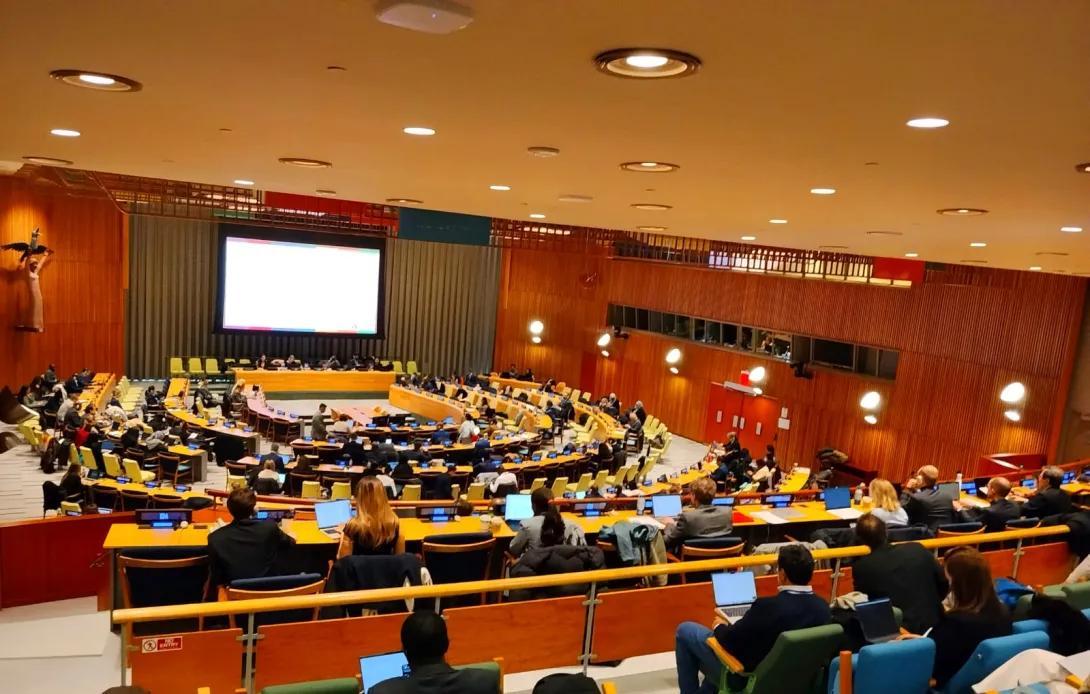
It argues that this will make multinational firms stop riding on loopholes to avoid paying taxes. The proposal, tabled during the fourth session of the Intergovernmental Negotiating Committee in New York, directly challenges decades-old agreements that have curtailed developing countries’ taxing rights.
Kenya representatives said that existing bilateral tax treaties, many which were negotiated when African countries had limited bargaining power, should not automatically prevail over a new multilateral conventions.
Tax Justice Network Africa executive director Chenai Mukumba said that despite the talks that took place in Nairobi, late last year, significant work remains to be done after New York talks.
The Nairobi talks were aimed at restoring taxing rights to the Global South. “This process must ultimately deliver the fiscal space urgently needed to support public services, strengthen climate resilience and uphold dignity for our people,” said Mukumba.
Adding that the global community must now build on the momentum from Nairobi and deliver a robust and fair Framework Convention by 2027. According to TJNA numerous treaties lock in unfavorable allocations of taxing rights, limiting Kenya and other African states’ ability to tax multinational enterprises that generate significant income from its market.
If adopted, the provision would allow the UN framework to supersede treaty clauses that conflict with the new rules, potentially reshaping the global tax architecture.
The New York session marked a shift from broad political principles to detailed legal drafting. Kenya, speaking as a leading voice within the African Group, framed the override clause as essential to ensuring that reform is meaningful rather than symbolic.
The move builds on momentum from the November 2025, session in Nairobi, where the country hosted the global tax negotiations, the first to be held in Africa.
Among the November resolutions Kenya had affirmed that jurisdictions where value is created, markets are located, or revenues are generated have legitimate taxing rights.
But negotiators say that principle would be undermined if older bilateral treaties continue to restrict source and market countries’ authority to tax.
Beyond treaty reform, Kenya also backed provisions on cross-border services taxation, linking Africa’s proposed nexus rules to service classifications supported by India in a bid to strengthen the taxation of digital services.
The issue is particularly significant for Kenya’s digital economy, where foreign technology firms generate revenue without maintaining a physical presence. Mukumba added that focus must now turn to ensuring that this promising text ultimately becomes a legally binding reality.
“The consensus achieved in advancing the text is a clear victory for multilateralism. While there remains scope to further strengthen the framework, this moment deserves recognition,” he added.
On dispute resolution, Kenya aligned with the African Group in rejecting mandatory arbitration. Instead, it supported Mutual Agreement Procedures (MAP), arguing that binding arbitration risks favoring wealthier countries with deeper legal resources.
The broader negotiations are unfolding against rising calls for reform of the global financial system. President William Ruto has repeatedly urged restructuring international financial institutions to better serve developing nations, positioning Kenya as a vocal advocate for systemic change.
A zero draft of the UN tax convention is expected before the fifth negotiating session in August 2026, with final texts targeted for adoption by the UN General Assembly in 2027.