What You Need to Know
President William Ruto announced that the Mombasa-Naivasha Standard Gauge Railway (SGR) has transported over 15 million passengers in eight years. The railway has also moved 45 million tonnes of freight, enhancing transport efficiency and contributing to economic growth. Ruto emphasized the project’s role in connecting agricultural zones and improving logistics costs.
Africa-Press – Kenya. President William Ruto has revealed that the Mombasa–Naivasha Standard Gauge Railway (SGR) has transported over 15 million passengers over the past eight years since its inception.
The President underscored the impact of the multi-billion-shilling infrastructure project on Kenya’s transport and economic growth.
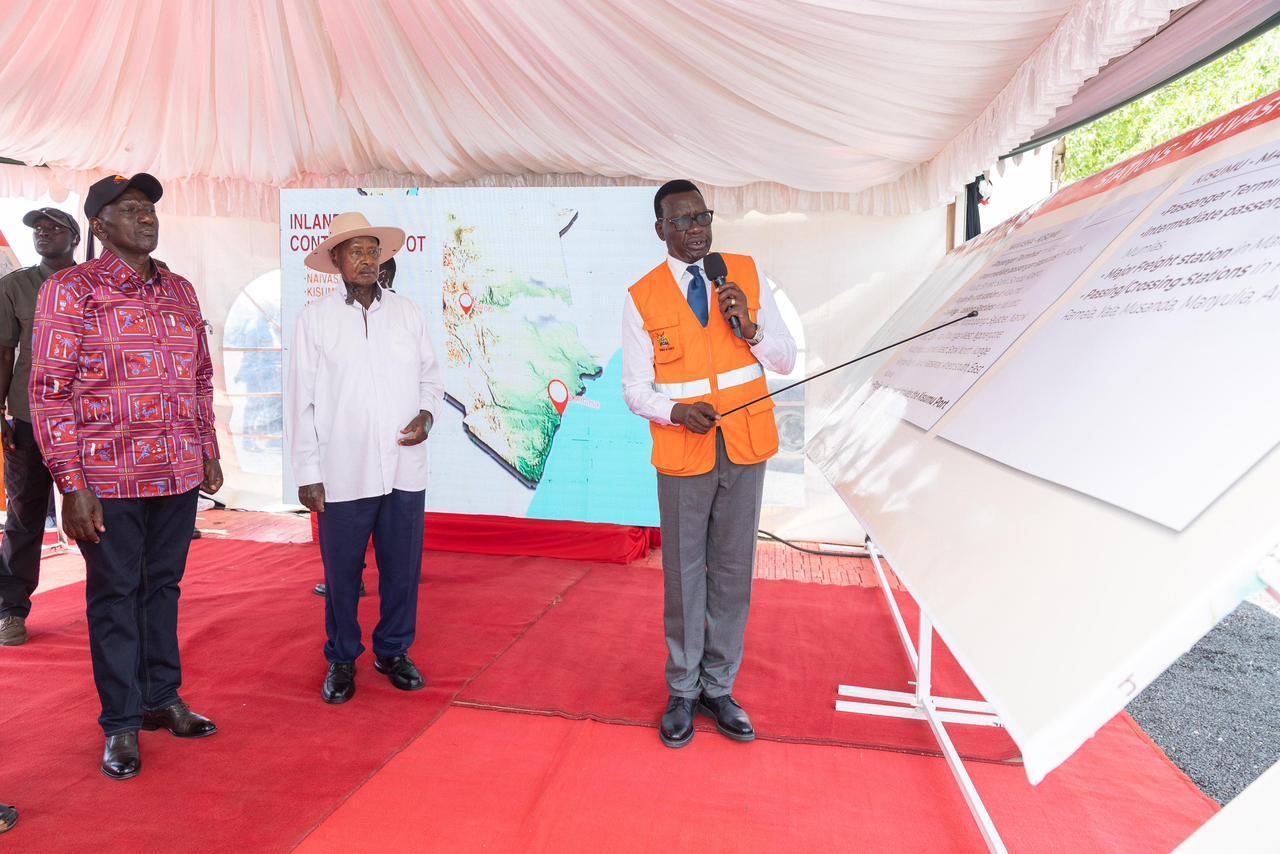
Speaking during the launch of Phase 2C of the Kisumu–Malaba SGR at Kibos in Kisumu county, Ruto said the railway has also moved over 45 million tonnes of freight, significantly improving efficiency along the Northern Corridor.
The President noted that Kenya took decisive steps in 2014 by breaking ground on Phase 1A of the SGR, which stretches 472 kilometres from Mombasa to Nairobi, before extending it inland to Suswa in Narok, covering an additional 120 kilometres and advancing the corridor toward the country’s hinterland.
“Over the past eight years, the SGR has transported over 15 million passengers and over 45 million tonnes of freight. It has reduced transport costs, improved efficiency, and contributed significantly to the growth of our economy,” Ruto said.
He added that two days earlier, the government had broken ground for the extension of the railway from Narok to Kisumu, covering 264 kilometres under Phase 2B, which will link Nairobi’s industrial corridor to key agricultural zones in Narok, Bomet, Kericho, Nyamira, and Kisumu.
The President said the newly launched 107-kilometre Kisumu–Malaba section will complete a nearly 1,000-kilometre seamless rail link from Mombasa to Malaba and provide a vital connection to the Malaba–Kampala railway line, strengthening regional integration.
According to Ruto, the railway project is not only a transport corridor but also an economic corridor that will support industrial parks, logistics hubs, and commercial centres driven by private sector investment.
He emphasised that high logistics costs remain a major challenge for regional economies, noting that transport and related expenses account for between 30 and 40 percent of the final value of goods.
Cargo, he said, currently takes about 80 hours to move from Mombasa to Malaba and more than 100 hours to reach Kampala, highlighting the need for efficient transport systems.
“With this expansion, freight costs are projected to decline by at least 40 percent per tonne per kilometre, while transit time for cargo will reduce by nearly 30 percent,” he said.
Ruto further stated that the railway will connect farmers to markets by enabling faster movement of tea from Kericho, dairy products from Bomet, grains from the Rift Valley, livestock from Narok, and fish from Lake Victoria to Nairobi and Mombasa for export.
He added that the project will also create employment opportunities for young people in construction, logistics, manufacturing, and service sectors while boosting industrial growth along the Nairobi–Naivasha–Kisumu corridor.
Beyond Kenya and Uganda, the President said the railway will serve regional partner states including Rwanda, Burundi, South Sudan, the Democratic Republic of Congo, and the Central African Republic, positioning the corridor as a key driver of regional trade and economic transformation.
The Standard Gauge Railway (SGR) project in Kenya began in 2014, aiming to enhance transport infrastructure and economic connectivity. The first phase connected Mombasa to Nairobi, significantly reducing travel time and costs. Subsequent phases have expanded the network, linking key agricultural regions and facilitating trade with neighboring countries, thus promoting regional integration and economic development. The SGR is seen as a transformative project for Kenya’s transport sector, addressing logistical challenges and fostering economic growth.