What You Need to Know
The United Opposition in Kenya is facing significant challenges in securing funding to compete with President William Ruto’s well-resourced campaign ahead of the 2027 General Election. As Ruto conducts numerous campaign activities, the opposition is struggling to mobilize resources, leading to concerns about the fairness of the electoral process and the influence of state resources on the upcoming
Africa-Press – Kenya. The United Opposition has a herculean task to match President William Ruto’s campaign war chest ahead of the 2027 General Election.
The team has been struggling to catch up with Ruto, whose campaigns are well oiled, going by the number of activities and organisation witnessed in his tours across the country.
As Ruto traverses the country, often holding close to six meetings a day, his competitors appear to have slowed down to holding a few meetings due to alleged resource constraints.
Other than the ability to raise funds, Ruto enjoys state resources as most of his tours are framed as ‘development tours’, where state machinery is deployed to his advantage.
Money required for campaigns include logistics, public address systems, tents and mobilisation. Opposition parties are coalescing around two separate teams but united in their agenda.
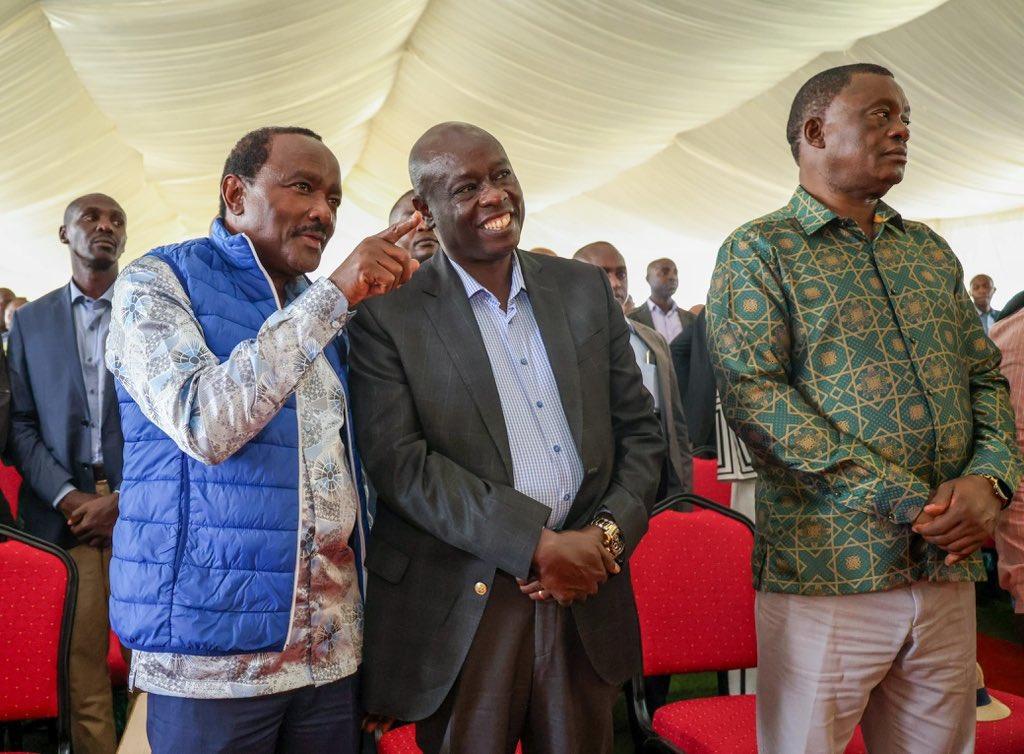
The first team, now calling itself ‘Alternative Government’, includes former Vice President Kalonzo Musyoka, former Deputy President Rigathi Gachagua, ex-ministers Eugene Wamalwa and Martha Karua and former Attorney General Justin Muturi.
On the second team, Nairobi Senator Edwin Sifuna, who has fallen out with his ODM party, is leading the Linda Mwananchi group that includes his Vihiga counterpart Godfrey Osotsi, Siaya Governor James Orengo and MPs Caleb Amisi, Wilberforce Oundo, Antoney Kibagendi, Obadia Barongo, Clive Gisairo and Caroli Omondi.
“When it comes to resources, we cannot compete with Kasongo (Ruto). He has too much,” former Igembe North MP Maoka says.
“The good thing is that we have people on our side. What we just require is a few resources to fuel cars and reach our destinations.”
Already, opposition leaders are crying foul over the new National Infrastructure Fund, alleging that Ruto’s administration is planning to use it to support political activities ahead of the 2027 General Election.
“The fund is a vehicle to rig the polls. These funds are meant to bribe Kenyans to influence the presidential campaigns,” DCP’s Gachagua said.
Key figures inside the opposition team acknowledge their struggles to mobilise resources to counter Ruto’s machinery, which they say include the proposed doubling of State House budget to Sh17 billion.
Ruto is viewed as having a significant advantage, with the opposition arguing that state projects, infrastructure funds and “empowerment” programmes are being used covertly for 2027 campaigns.
To overcome funding hurdles, the opposition is focusing on building a unified coalition to increase efficiency, holding retreats to consolidate resources and align on a single candidate to avoid splitting the vote.
For instance, the Linda Mwananchi team is not holding as many campaign programmes to counter their Linda Gound rivals, who appear to be well oiled.
The team has adopted a few events, mainly over the weekends, where they choose to attend a church service before addressing a roadside gathering in a local town.
“They [Linda Ground] have a lot of state resources unlike our team,” Kitutu Chache South MP Kibagendi said.
“We rely on goodwill from our team and supporters to hold rallies. This includes raising money from among ourselves.”
On the United Opposition side, most of its rallies appear to be attracting what can be described as an organic crowd, save for a few meetings where DCP-clad crowds appear.
“It’s expensive to ferry supporters, print T-shirts and caps, pay them allowances, while at the same time you need resources to hire security, pay for tents, etc.,” an MP associated with the Opposition contends, saying the strategy is to address rallies in market places or towns, while on top of their vehicles.
Kenya has one of the most expensive electoral environments globally, with major expenses including transport (helicopters, vehicles), media advertising and party nomination fees.
The actual figure or limits and use of election resources is hard to tell despite Kenya having passed the Election Financing Act.
The electoral commission has faced challenges in operationalising and enforcing election campaign financing laws, largely due to a lack of political goodwill to enact the necessary legislation.
The Kenya Civil Society Parallel Report on the United Nations Convention Against Corruption (UNCAC) warns that an unregulated campaign finance environment is allowing illicit funds, opaque political donations and criminal networks to shape the country’s politics.
“The Election Campaign Financing Act has never been fully operationalised due to lack of political will,” a UNCAC report released recently stated.
“Enforcement by agencies like the Office of the Registrar of Political Parties (ORPP) is limited and public access to political finance information is poor.”
Kenya’s political landscape has been characterized by intense competition and significant financial requirements for election campaigns. The 2027 General Election is expected to be no different, with candidates needing substantial funds for logistics, advertising, and mobilization. The opposition’s struggle for resources is compounded by allegations of state resources being used to bolster Ruto’s campaign, raising concerns about the integrity of the electoral process. The Election Financing Act, aimed at regulating campaign financing, has faced challenges in enforcement, contributing to an environment where illicit funding can influence political outcomes.