
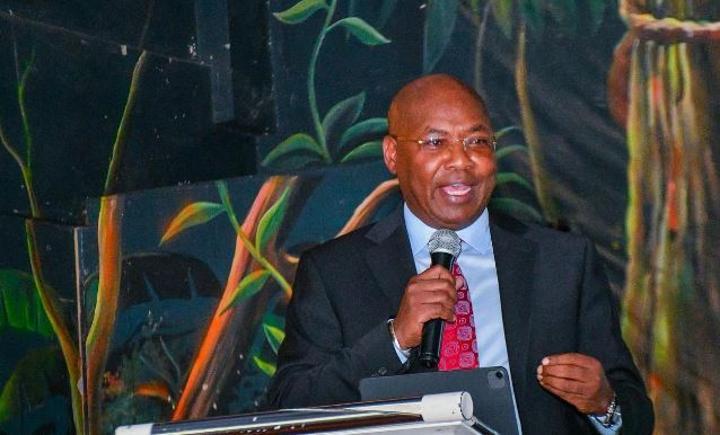
Africa-Press – Kenya. State Department for Mining Principal Secretary Harry Kimtai has urged diplomats to take a more proactive role in attracting international investors into the country’s mining sector.
Speaking during Kenya’s 19th Ambassadors’ Conference, the PS called on ambassadors and high commissioners to actively market Kenya’s mineral potential in their respective host countries.
His remarks came as part of a broader government push to unlock the country’s vast but largely underexplored mineral wealth.
“I call upon our ambassadors and high commissioners to champion Kenya’s mining sector in their respective host countries and connect potential investors with the ministry and relevant agencies, while facilitating meaningful partnerships that will drive sustainable growth and shared prosperity,” Kimtai said.
During his presentation, the PS outlined a comprehensive investment case for Kenya’s mining industry, equipping heads of diplomatic missions with actionable insights and a unified narrative to promote the country abroad.
He emphasised that Kenya holds a diverse array of mineral resources spread across multiple regions, many of which remain untapped.
Among the key deposits highlighted were gold reserves in Western Kenya, Nyanza, Turkana, West Pokot, and Marsabit counties.
He also pointed to significant soda ash deposits in Magadi, iron ore in Taita Taveta, and rare earth elements and niobium in Kwale.
Other minerals, including copper, chromite, manganese, and coltan, have been identified in Tharaka Nithi, Embu, Tana River, and Samburu counties, while Elgeyo Marakwet hosts notable fluorspar reserves.
Kimtai underscored that large portions of Kenya’s mineral-rich land remain underexplored, presenting strong opportunities for new discoveries and long-term investments.
He noted that this untapped potential, combined with ongoing reforms, makes Kenya an increasingly attractive destination for global mining companies.
The PS further outlined several competitive advantages that position Kenya as a prime investment hub.
These include its strategic location as a gateway to Africa, a stable legal framework anchored in the Mining Act 2016 and the Constitution of Kenya, and expanding infrastructure such as the Standard Gauge Railway, modern port facilities, and improved road networks. He also cited reliable energy supply and a growing pool of skilled labour as key enablers of sector growth.
Additionally, Kimtai highlighted strong government backing through integrated development frameworks aligned with Vision 2030, the BETA Agenda, and the Fourth Medium-Term Plan (MTP IV).
These frameworks, he said, provide a clear roadmap for sustainable resource development and investor engagement.
A major focus of the government’s strategy is on value addition and in-country processing of minerals to maximise economic returns. To support this goal, several facilities have been established or are under development, including a gold processing plant in Kakamega and the Voi Gemstone Value Addition Centre in Voi town.
“Kenya is committed to advancing in-country processing and value addition to ensure that our mineral resources deliver maximum benefit to our economy and our people,” Kimtai noted.
He also pointed to the transformation of the mining sector following the enactment of the Mining Act, 2016, which has ushered in a more transparent and responsive legal framework. The reforms have strengthened regulatory institutions, improved environmental and social governance, and enhanced community participation and benefit sharing.
These changes, the PS said, have significantly boosted investor confidence, positioning Kenya as a stable and forward-looking mining destination.