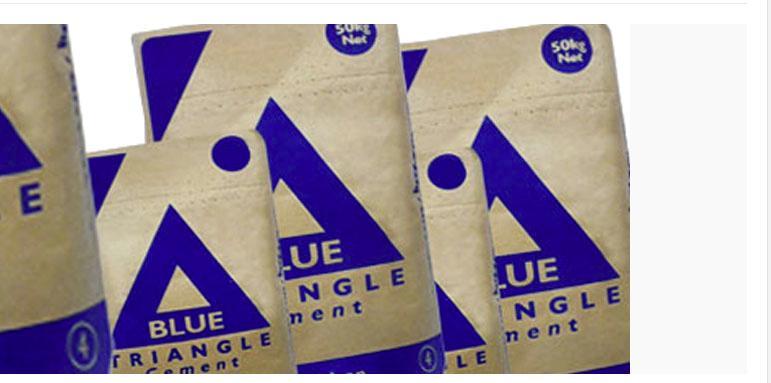
Africa-Press – Kenya. Effects of the escalating war in the Middle East have begun to hit Kenya, with firms raising commodity prices to cover rising shipping costs and dwindling raw materials.On Monday, East African Portland Cement (EAPC) increased the price of its Blue Triangle cement by Sh10 per 50kg bag, citing sustained pressure from rising raw material costs
In a notice to customers dated March 30, the cement manufacturer said the adjustment takes effect immediately and will apply to its Portland Pozzolanic Cement (CEM IV 32.5), one of its widely used construction products.
“Due to the continuous surge in raw materials prices, we will be revising our prices upwards by Sh10 per bag with effect from 31 March 2026,” David Kilonzo, head of Commercial at EAPC, said.
“Kindly be advised accordingly. We appreciate your partnership and look forward to your continued business support.”
The price adjustment translates to a 1.38 per cent increase per bag, reflecting mounting cost pressures across the cement production value chain, including energy, clinker, and transportation expenses.
This means that a 50kg bag of Blue Triangle is currently retailing at Sh748, up from Sh736 a week ago.
On Thursday, S&P Global Energy forecast global cement prices to edge up by close to 10 per cent as the ongoing war between Israel and the US against Iran disrupted petcoke supplies, a key ingredient in cement production.
Petcoke, also known as petroleum coke, is a carbon-rich solid byproduct of oil refining, primarily produced from the thermal cracking of heavy crude oil residues in coker units.
It is valued for its high-energy content and low cost, widely used as a fuel in cement kilns and power generation, as well as in aluminum manufacturing.
According to the global credit rating firm, most countries in the Gulf have massively cut down production, while other big producers of clinker, like Vietnam and India, are witnessing a huge demand, constrained by rigidity in supply due to high shipping costs.
Kenya imports about two million tonnes of clinker annually, costing the country more than $100 million in foreign exchange every year.
The worsening supply of clinker and other raw materials for cement production is coming at a time when Kenya is witnessing a high demand due to various high-profile construction projects undertaken by both the state and the private sector.
Some of the projects include: affordable housing, Rironi-Mau Summit Road, Talanta Stadium and the planned extension of the Standard Gauge Railway (SGR) to Busia, among others.
The latest data from the Kenya National Bureau of Statistics (KNBS) shows that production of and demand for cement both rose significantly in the first 11 months of 2025.
Even though production for the 11 months reached 9.49Mt, a 17 per cent increase compared to 8.09Mt in the first 11 months of 2024, demand rose by 20 per cent year-on-year over the same time period.
State data shows that demand for the product increased from 7.79Mt in the first 11 months of 2024 to 9.34Mt in the first 11 months of 2025.
“The parallel rise in both production and consumption of cement reflects strong construction sector growth supported by ongoing public infrastructure projects, private real estate developments and a gradual recovery in housing activity,’’ KNBS said.
It has projected the demand to surge further by an upward of 20 per cent.
The price hike is expected to have a ripple effect on construction costs, particularly for small contractors and individual homebuilders who rely heavily on bagged cement purchases.