
What You Need to Know
The National Transport and Safety Authority (NTSA) has established compliance checkpoints at Uthiru along the Nairobi–Nakuru Highway to monitor motorists returning from the Easter holiday. This initiative aims to enhance road safety and reduce accidents, particularly during the busy post-holiday period. Despite these efforts, 24 fatalities were reported over the Easter weekend, highlighting the on
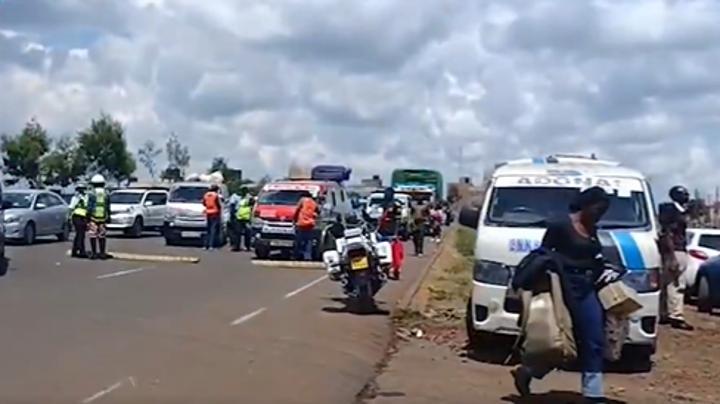
Africa-Press – Kenya. The National Transport and Safety Authority (NTSA) has set up a roadblock at Uthiru along the Nairobi–Nakuru Highway to conduct compliance checks on motorists ferrying passengers back to the city after the long Easter holiday.
The highway links Nairobi to Nakuru, Eldoret and the border town of Malaba, making it a critical transport corridor for travellers from the North Rift, Western and Nyanza regions.
The route is typically congested during holiday periods, with increased traffic and heavy trucks transporting cargo from the port of Mombasa to Uganda and the wider East African region contributing to frequent accidents.
In a pre-Easter advisory issued on April 2, the authority urged all road users to prioritise safety, warning that speeding and drunk driving remain leading causes of fatalities.
NTSA director general Nashon Kondiwa said the authority, in collaboration with the National Police Service (NPS), had intensified enforcement operations nationwide to curb fatal crashes during the festive period.
“Slow down and adhere to posted limits. Drunk driving impairs judgment and reaction time; if you have consumed alcohol, do not get behind the wheel,” Kondiwa said.
He warned that a combination of irresponsible driving and slippery roads during the rainy season heightened the risk of accidents as families travelled to and from holiday destinations.
Kondiwa also advised motorists to rest adequately before embarking on long journeys and to take breaks every two hours, noting that driver fatigue can be equally dangerous.
“Failure to maintain lane discipline, including dangerous overtaking and weaving, puts all road users at risk. For those whose vehicles break down, ensure you park safely off the road and place warning triangles at a sufficient distance,” he added.
During the compliance checks on Monday, some passengers were seen alighting from vehicles with their luggage, indicating possible impoundment over suspected traffic infractions.
Police officers were also observed removing number plates from some vehicles, suggesting non-compliance with regulations, including unroadworthiness or dangerous loading.
Motorists whose vehicles are flagged must undertake repairs, obtain clearance or inspection reports, and pay the requisite fines before recovering their number plates.
NTSA said vehicles found to be unroadworthy, including those with defective brakes, worn-out tyres or faulty lighting, would be impounded immediately.
“We shall deploy traffic enforcement officers, speed cameras, and sobriety checkpoints at strategic points. Remember: every life matters,” Kondiwa said.
Despite the heightened surveillance, at least 24 people died in road accidents across the country during the Easter weekend, largely attributed to speeding, making it one of the deadliest periods in recent memory.
Major fatalities were reported along the Nairobi–Nakuru and Mombasa–Nairobi highways. On the night of April 3, a crash on the Nairobi–Nakuru highway near Gilgil claimed 10 lives after a PSV vehicle rammed into a stationary lorry.
In a separate incident, a vehicle belonging to the Kenya Ports Authority managing director William Ruto crashed into a stationary lorry, resulting in his daughter’s death.
Multiple other accidents recorded between April 3 and 4 on major highways claimed at least 14 lives.
The Nairobi–Nakuru Highway is a vital transport route in Kenya, connecting major cities and facilitating trade across the region. During holiday seasons, this highway experiences significant congestion due to increased travel and freight transport, leading to a rise in road accidents. The NTSA has been proactive in implementing safety measures to mitigate these risks, especially during peak travel times. Historically, the authority has faced challenges in enforcing road safety regulations, particularly concerning speeding and drunk driving, which are prevalent during festive periods.